


What winter here does to a heat pump
Harding County heats seven months a year, and the average overnight low across December, January and February is 21°F. That matters because a standard heat pump starts losing ground before it even gets that cold. Below 40°F it puts out less heat than its rating says. Below about 35°F it often needs backup heat to make up the difference. The average winter night here is below both marks, and so is every one of the roughly 140 nights a year that drop to freezing or colder.
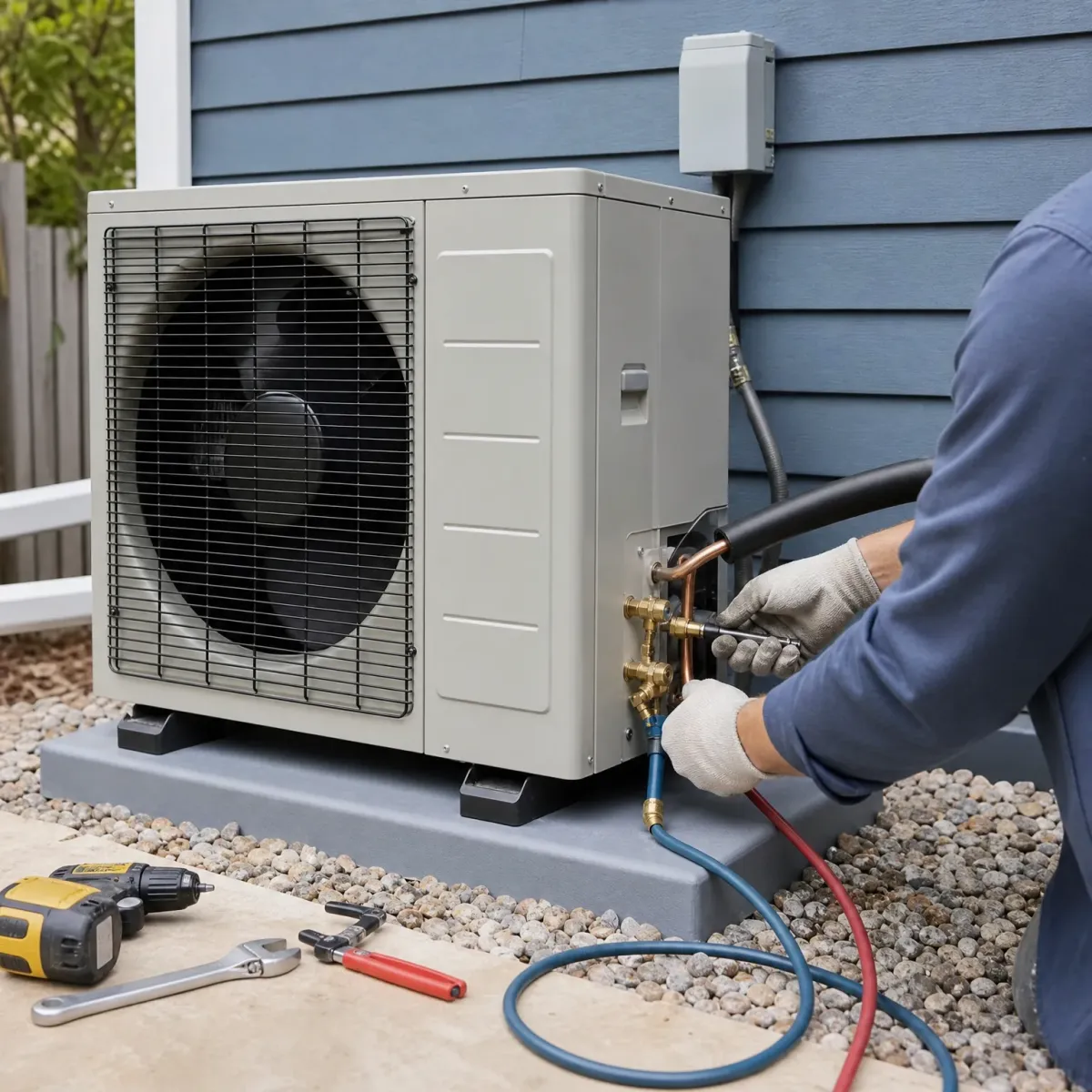
That doesn't mean a heat pump quits. In field tests of cold-climate heat pumps running through real winters, backup heat only carried a small share of the load between 0°F and 35°F, and the equipment ran on backup alone only rarely, even near 0°F. But that result holds for cold-climate models built and certified to hold their output at low temperatures, the ones rated to make at least 1.75 units of heat per unit of electricity at 5°F. A standard heat pump, built to the federal minimum, is a different machine, and it's the one the running cost on this page is based on.
The cold nights here are not rare exceptions you can plan around. They're over half the nights in the heating season. A heat pump that leans on backup heat that often is leaning on it for most of the winter, not just a few bad weeks.