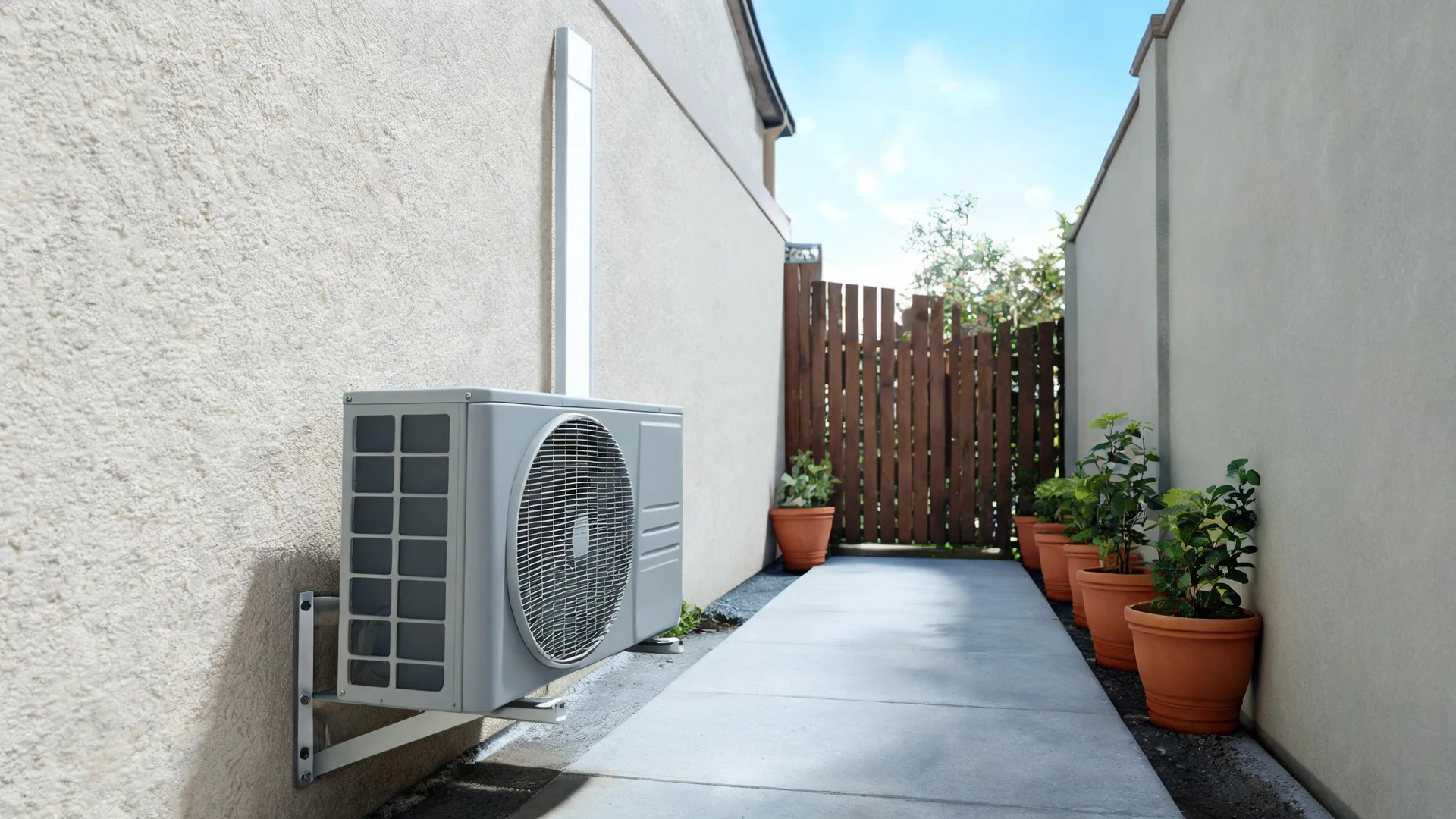
Most homes here run on propane
Propane heats 65.7% of occupied homes in Harding County, more than any other fuel. Electricity is a distant second at 13.3%. A propane furnace or boiler is what most homes around Roy already have.
Takes about a minute. No obligation.
Propane heats 65.7% of occupied homes in Harding County, more than any other fuel. Electricity is a distant second at 13.3%. A propane furnace or boiler is what most homes around Roy already have.
Swapping a heat pump in for a propane system is a different job than swapping it in for electric heat. A heat pump moves heat instead of burning fuel for it, so the question here is how it performs on the coldest days of winter and whether it needs backup heat to get through them.

NOAA nClimDiv, 1991–2020 normals
A heat pump sized too big will short cycle, kicking on and off before it ever pulls moisture out of the air.
Sizing a heat pump means measuring the house itself, the windows, the insulation, the layout, not just matching the number on the old system.



Half the houses in Harding County were built in 1960 or earlier. A house that age wasn't framed with a heat pump in mind. The ductwork or electrical it has now may have been added or patched over the years rather than built for the job. A heat pump moves air at a lower temperature than a propane furnace does, so it needs ducts sized to carry enough of it, and it needs a circuit sized for the unit itself. None of that shows up by looking at the old system. It shows up by looking at the house.
At 14.20 cents per kilowatt-hour, New Mexico electricity doesn't push you toward an oversized or premium unit to make the math work. A standard size and efficiency fits this job. What matters more is getting it sized to the house.
Find a contractorA contractor who comes to measure should want to see the ductwork and the electrical panel, not just the old furnace. If the panel can't take the new circuit, that's an upgrade to plan for before install day, not after. If the ducts were patched in over the years, that's where to ask whether they'll carry what the heat pump needs. A house built in 1960 or earlier can run a heat pump fine. It just has to be looked at first.
The efficiency rating on a heat pump's label tells you how well it converts electricity into heat and cooling under test conditions. It doesn't tell you how the unit will perform on the coldest night of winter, and it doesn't account for a house with ducts too small to carry the air it moves. Units with the same rating can perform very differently once they're installed in different houses.
A heat pump with a higher rating costs more upfront, and it only earns that back through lower electric bills over the years it runs. Where electricity is cheap, a premium unit can take a long time to make up that extra cost, if it ever does. The rating is worth comparing across units, but it's not the thing to chase past what the house and the electric rate actually call for.
If the old system is a propane furnace, the contractor disconnects the gas line and caps it. The furnace itself gets hauled out along with the plenum it connected to, if that plenum doesn't suit the new unit's airflow. A propane tank on the property, if there is one, is between the homeowner and the propane supplier to deal with once it's no longer feeding anything. If there's an old central air condenser sitting outside, that gets removed too. A heat pump does both jobs through one outdoor unit, so there's no reason to keep a separate AC condenser taking up space on the pad. Whatever ductwork stays gets reused, as long as it was sized to carry what the heat pump needs.
Install day starts outside, with the outdoor unit set on a pad or bracket and the line set run to connect it to the indoor coil. Inside, that coil usually goes in above the furnace or air handler, tied into the ductwork already there. The electrical work is its own piece, a dedicated circuit run to the outdoor unit and a disconnect box mounted next to it, separate from whatever breaker ran the old system. Once everything's connected, the lines get pulled down to vacuum to clear out air and moisture before refrigerant ever goes in. Only after that does the contractor charge the system and run it through both modes, checking the temperature split coming off the indoor coil to confirm it's moving the right amount of heat. A thermostat built for a heat pump goes in last, since a standard thermostat won't manage the backup heat the way this system needs.