


View from under a wood-beamed patio roof across a gravel yard toward a stucco house wall and a concrete block boundary wall, with a large gnarled tree beyond.

Furnace Repair in Roy, NM

Tell us about the job

Takes about a minute. No obligation.

RepairFurnace or heatingHarding County, NM
Step 1 of 2

What ZIP code is the job in?

Furnaces in Roy run about seven months straight, October through April, with overnight lows averaging 21°F in the dead of winter. That's a long stretch of steady use, but it's not unusual, and it doesn't call for anything special. The furnace just needs to work when it's asked to. Most problems that show up are the common ones. An igniter failing. A flame sensor coated with residue. A blower motor on its way out. A tech who knows what to check will find the actual cause fast, and fixing the right thing the first time is what keeps it running the next seven months.

7 months
October through April, your furnace is on duty
21°F
the average winter night it heats against
8 winter storms
in ten years, the nights a failure hurts most
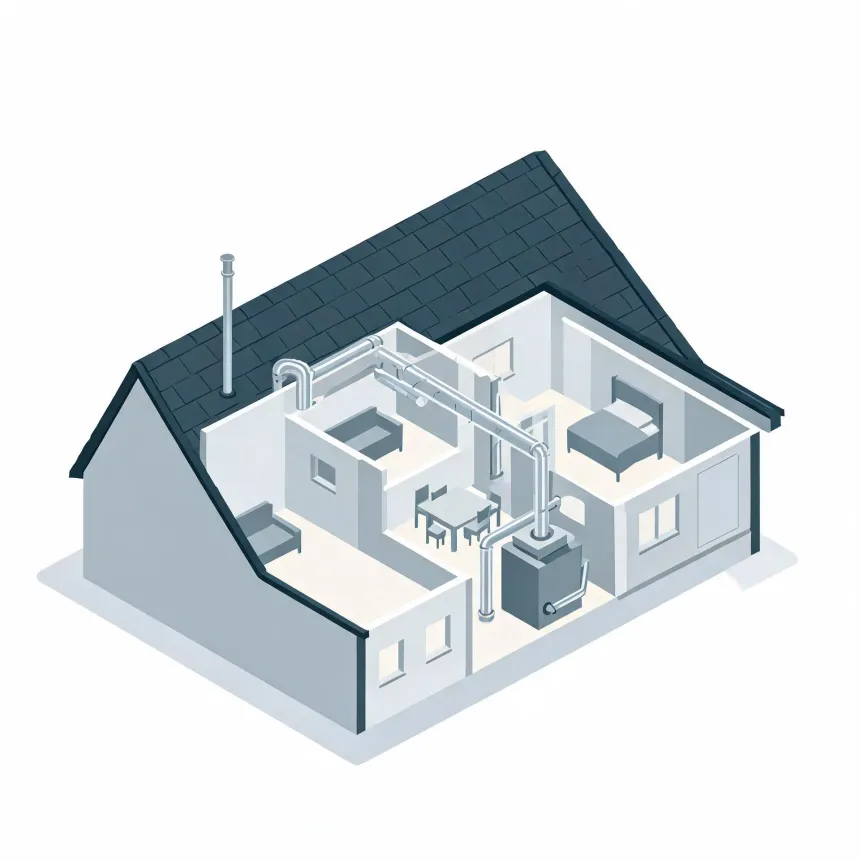
Isometric cutaway illustration of a single-story house with a dark shingled roof, showing interior rooms with furniture and a ducted furnace unit connected to metal ductwork and a roof flue.
Your furnace works hardest from November through March.

NOAA nClimDiv, 1991–2020 normals

Furnaces in Harding County start the season in October.

A furnace that struggled last April has had since September to get worse.

Roy doesn't push a furnace any harder than winter anywhere else does

Heat runs October through April
Winter nights average 21°F
Climate zone 5B

Half the homes in Harding County were built in 1960 or earlier. If your furnace came with a house that age, it's had a long run already. Furnaces don't last forever. A unit that old failing isn't a surprise, it's closer to the normal order of things. That doesn't mean skip the repair. It means it's worth asking the tech doing the work how much life is left in it before you're back here again.

Know what you're paying to fix

Ask before the repair starts, not after. A straight answer on what's left in the furnace is worth more than a surprise next winter.

Find a contractor
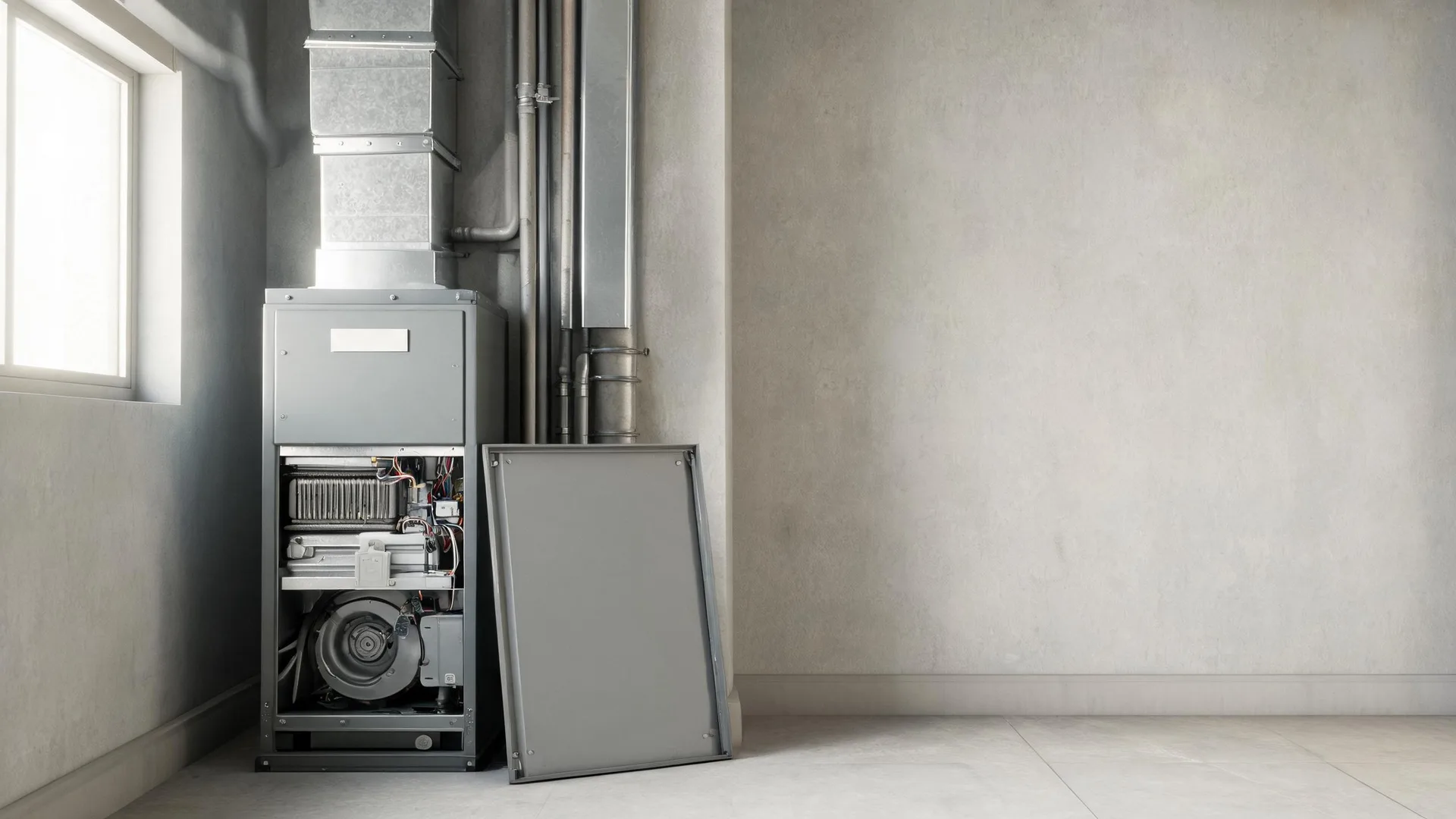
A gray high-efficiency gas furnace installed in an unfinished basement, surrounded by gas lines, a condensate drain, and sheet-metal ductwork.

The furnace usually warns you before it fails

A furnace usually tells you something's wrong before it quits outright. It starts cycling on and off faster than it used to, never quite satisfying the thermostat. Or it runs long stretches that end in a cold house anyway. Listen for a boom at startup, that's gas building up before the igniter catches, instead of a clean whoosh. A burner flame that's yellow or flickering instead of steady blue means it's not burning right. Air coming out the vents lukewarm instead of hot usually points to the blower or a cracked heat exchanger. Any of these is worth a call before the furnace stops working altogether, not after.

A cracked heat exchanger gets worse under heat

Metal expands every time the burner fires and contracts when it shuts off. A hairline crack opens a little wider with each cycle. Keep running it and the crack grows until it's leaking exhaust into the air the blower pushes through the house.

A failing igniter doesn't fail gently

Once an igniter starts going, it usually gets weaker fast. First it skips a cycle here and there. Then the furnace tries to light, fails, and locks out on safety. Waiting doesn't give it a chance to recover. It gives it more chances to fail at the worst moment.

A gray forced-air furnace with sheet-metal ductwork stands in an unfinished basement with exposed wooden joists, concrete walls, and a hanging incandescent bulb.

A new furnace would cut about $190 a year off heating for a typical Harding County home.

  • A new high-efficiency furnace$840 a year
  • An older furnace$1,030 a year

Estimates for a typical Harding County home, compared with an older unit built to the previous federal minimum, from EIA household energy data, New Mexico fuel prices and NOAA climate normals. Your home will differ.

Repair makes sense when one part has failed and the heat exchanger is sound.

Replacement makes sense when the heat exchanger is cracked or the furnace keeps needing parts.

A repair makes sense when the problem is one part acting up and the rest of the furnace is sound. An igniter, a flame sensor, a blower motor, these fail on their own without taking the rest of the system down with them. Replace the one part and the furnace runs like it did before. A cracked heat exchanger is different. That's not a part wearing out, that's the main component the whole furnace is built around, and once it's split there's no patching it. Age matters too, but not by itself. A furnace that keeps needing repairs, one after another, after it just got fixed, is telling you the last fix wasn't the last thing wrong with it. At some point you're paying again and again to keep an old furnace limping instead of paying once for one that won't need this.