
A low-profile adobe house with glowing windows and landscape lighting, surrounded by desert rocks, shrubs, and a saguaro cactus at dusk.

Furnace Installation in Roy, NM

Tell us about the job

Takes about a minute. No obligation.

New system or replacementFurnace or heatingHarding County, NM
Step 1 of 2

What ZIP code is the job in?

Most homes in Harding County run on bottled, tank or LP gas, 65.7% of them. Only 13.3% heat with electricity. If your house already has a propane tank and a line run to it, a new furnace built for LP gas is the straightforward swap. Switching to electric heat means new wiring and possibly a bigger electrical panel, work a lot of homes out here were never set up for. Staying with gas keeps the install simpler and matches what most of your neighbors are already running.

7 months
October through April, your furnace is on duty
21°F
the average winter night it heats against
80% AFUE
the federal minimum any new unit must meet
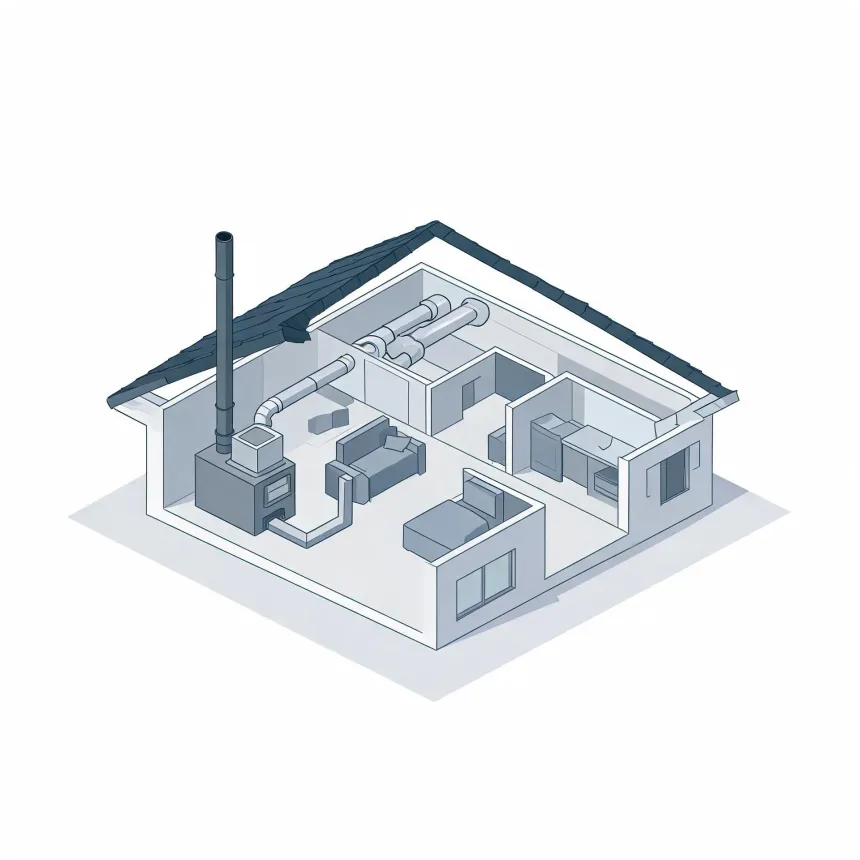
Isometric line illustration of a cutaway single-story house showing interior rooms with furniture, a furnace unit with a tall flue pipe, and connected ductwork running under the pitched roof.
Your furnace works hardest from November through March.

NOAA nClimDiv, 1991–2020 normals

Propane here runs $27.30 per million Btu.

A correctly sized standard furnace keeps that cost down better than an oversized one ever could.

Half the homes here were built by 1960, and a furnace has to fit the one you've got

Half the homes here were built by 1960
Heat runs October through April
Winter nights average 21°F
Get it done before OctoberHeat runs seven months here, October through April. September is the month to have it in.

Furnace here runs about seven months a year, October through April, and overnight lows average 21°F in December and January. That's a normal cold-climate load, nothing that calls for an oversized unit or a special efficiency tier. A furnace sized to your house, not sized up for insurance against the cold, is what keeps it running efficiently through those seven months. Sizing comes from a load calculation on your house, not a guess based on the weather alone.

A new furnace here has to meet zone 5B's efficiency standard

Harding County sits in climate zone 5B, where heating does most of the work. Any furnace going in now has to hit 80.0 percent AFUE, the current federal minimum. That rule tightens in 2028, when new furnaces will need to reach 95.0 percent. Installing now still means choosing a system that meets today's standard and runs well within it.

Find a contractor
A gray residential gas furnace installed in an unfinished basement, surrounded by ductwork, a metal flue pipe, and a gas supply line.

What to ask before you decide

The AFUE number on the sticker doesn't tell you how long the furnace sits in the box before it fits your house. Ask what the installer's load calculation showed, not just the square footage of the place. A unit sized from a room-by-room calculation will cycle longer and steadier than one picked off a rule of thumb. Ask about the blower motor too. A variable-speed blower holds a steadier temperature and runs quieter than a single-speed one, though it costs more up front. Ask what the warranty covers on the heat exchanger specifically, since that's the part that's expensive to replace if it cracks. And ask how the vent pipe and gas line will get run, because that work differs from house to house and changes what the install actually involves.

AFUE tells you what the furnace keeps, not what it burns

AFUE is the share of fuel the furnace turns into heat for the house. The rest goes out the flue. The number comes from a lab test, not from your house on a cold night, so the rating tells you about the burner, not about how the house will actually feel.

The rating doesn't do the sizing for you

A high-efficiency furnace that's too big for the house still short-cycles, heating the room fast and shutting off before the house evens out. The AFUE sticker describes the burner, not the fit. Efficiency only pays off once the load calculation gets the size right.

An unfinished concrete basement containing a metal HVAC air handler, exposed wooden ceiling joists with sheet-metal ducts, a hanging bare bulb, copper pipes, and stacked cardboard boxes.

A high-efficiency propane furnace would save about $160 a year to run in Harding County compared with a propane furnace.

  • A high-efficiency propane furnace$840 a year
  • A propane furnace$1,000 a year

Estimates for a typical Harding County home, from EIA household energy data, New Mexico fuel prices and NOAA climate normals. Your home will differ.

Installation day starts with the old furnace coming out, and that alone can take a few hours if the vent pipe or gas line has to be disconnected and modified rather than reused. The crew sets the new unit, then runs the gas line, the vent, and the ductwork connection to it, sealing each joint as they go since a loose seam there leaks heated air into the attic or the basement instead of the house. The gas line gets pressure tested before anything is lit, and the vent pipe gets checked for the right slope so exhaust actually clears the house instead of backing up. Once it's hooked up, the furnace gets fired and run through a full cycle while the tech checks the flame, the temperature rise across the heat exchanger, and the blower speed against what the unit calls for. A combustion analyzer gets used to confirm the furnace is burning clean before the crew leaves. None of that shows up on the sticker, but it's what decides whether the furnace runs the way the AFUE number says it should.