




What the cold here does to a heat pump
Winter is the long season here, not the short one. Heat runs October through May, eight months, against two months of cooling in July and August. A furnace only earns its keep in those eight months. A heat pump works both sides of the year, and in a county where cooling is a short errand and heating is most of the calendar, that trade still has to be judged mainly on how it heats.
The average overnight low across December, January and February is 18°F. That is below the 40°F mark where a standard heat pump starts putting out less heat than its rating, and below the 35°F mark where it often leans on backup heat. Almost every cold night here falls below both marks. Of the roughly 245 nights heat runs, about 185 drop to freezing or below. That is most of the heating season running in the range where a standard heat pump is working harder for less heat.
The hard freezes, the nights at 0°F or below, number about 8 a year. That is a small slice. The real story is the ordinary cold night in the teens and twenties, repeated for months, not the rare deep freeze. A standard heat pump loses capacity well before temperatures get anywhere near 0°F.
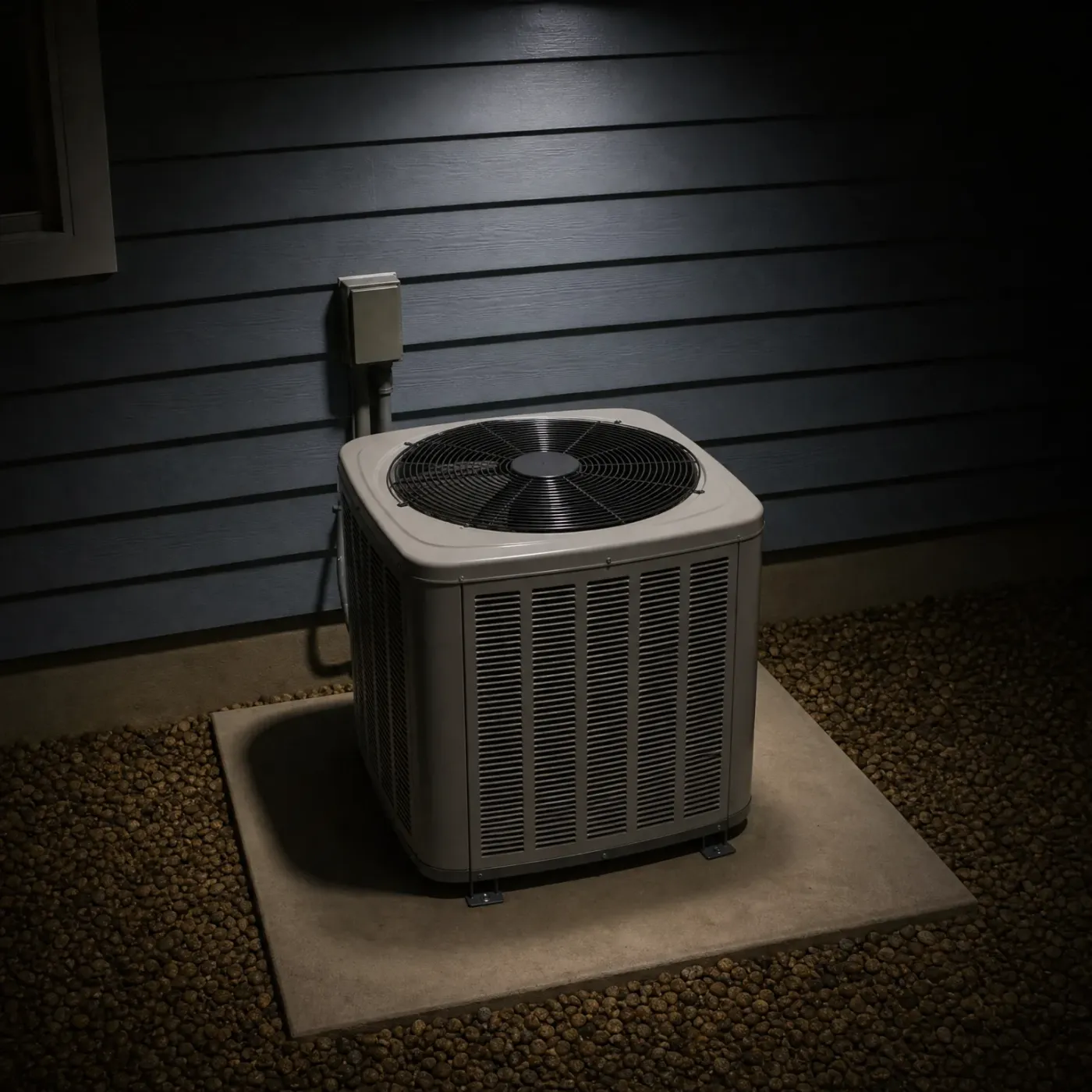
This is where ENERGY STAR's Cold Climate rating matters. To carry that label, a heat pump has to prove, under third-party testing, that it still makes at least 1.75 units of heat for every unit of electricity at 5°F, and holds onto at least 70 percent of its 47°F capacity at that same temperature. A standard heat pump carries no such proof. If a heat pump is going into a house here, that rating is what separates one that was built for this cold from one that was not.