Adobe-style desert homes with warm exterior lighting, saguaro cacti, and desert landscaping along a curved street at dusk, with mountains in the background.

Furnace Installation in Gallup, NM

Tell us about the job

Takes about a minute. No obligation.

New system or replacementFurnace or heatingMcKinley County, NM
Step 1 of 2

What ZIP code is the job in?

80 percent is the floor here

Gallup sits in climate zone 5B, where heating carries the bigger share of the work a furnace does all year. Any non-weatherized gas furnace installed has to reach at least 80.0 percent AFUE, the minimum that has applied since November 2015.

That floor is changing

Furnaces built from December 2028 on will need to hit 95.0 percent AFUE. A furnace going in now still only has to meet the current minimum, so it's worth asking a contractor where the model under consideration actually lands.

8 months
October through May, your furnace is on duty
18°F
the average winter night it heats against
80% AFUE
the federal minimum any new unit must meet
Isometric cutaway illustration of a single-story house showing interior rooms with a dark furnace unit, connected ductwork, a vertical flue pipe through the roof, and simple furniture, on a white background.
Your furnace works hardest from November through March.

NOAA nClimDiv, 1991–2020 normals

Heat goes on in October here and runs until May.

Get the new furnace in by September and it's working before the first cold night, not after it.

Eight months of heat, nights near 18, and winter storms on top of that

Heat runs October through May
Winter nights average 18°F
44 winter storms from 2015 to 2024
A standard furnace fits most of this countyHalf the homes here were built in 1985 or earlier. A quarter are mobile homes.

A furnace sized for an easier climate will run short cycles and still fall behind once nights settle in near 18 below zero. Get the load calculated for this house, not guessed from square footage or copied off the old unit's label. A contractor who sizes it right will also say plainly if a smaller furnace can handle a Gallup winter or if it will be running flat out from October to May. Ask about the AFUE rating, the warranty on the heat exchanger, and whether the ductwork can move what the new furnace puts out. A furnace that's undersized or mismatched to the house shows it every one of those eight months, storms included.

Meet the standard here

A new system here has to meet this region's minimum efficiency, which limits what can go in.

Find a contractor
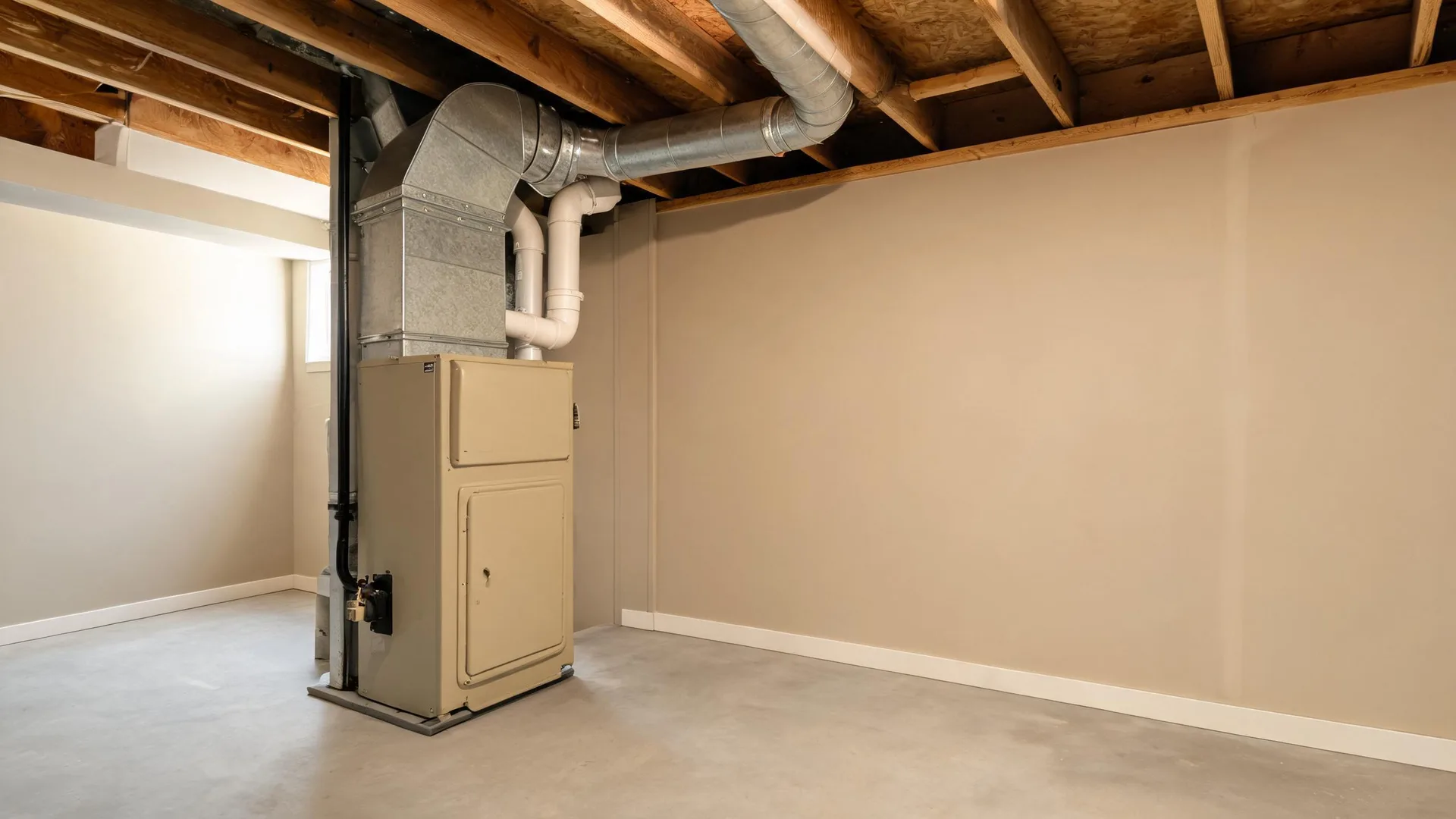
A gray high-efficiency gas furnace installed in an unfinished basement, surrounded by gas lines, a condensate drain, and sheet-metal ductwork.

What's under the price tag

Installation cost comes down to how much work the job takes, not just the furnace sitting in the box. A straight swap, same spot, same vents, same ductwork, goes fast. Moving the unit, resizing ducts, or changing the vent pipe because the new furnace is higher efficiency all add labor and materials. The furnace itself varies too. A higher AFUE model costs more upfront. A variable-speed blower costs more than a single-speed one. Ductwork condition matters as much as the furnace sitting next to it. If the existing ducts are undersized or leaking, a contractor may need to seal or modify them before the new furnace can actually deliver what its rating promises. Ask what the heat exchanger warranty covers and for how long before comparing quotes, since a shorter warranty on a cheaper unit can end up costing more down the road.

The old furnace gets disconnected and hauled off

A contractor will shut off the gas line, disconnect the vent pipe, and pull the old furnace out of its spot. Whatever's left of its value is scrap metal, nothing more. If it's got a cracked heat exchanger or a history of carbon monoxide trouble, that's exactly why it's coming out, not a reason to keep it around as a backup.

The old vent pipe may not work for the new furnace

A furnace with a higher AFUE rating pulls more heat out of the exhaust, which means that exhaust comes out cooler than what the old furnace put out. Cooler exhaust can't vent the same way through the same pipe. If the new furnace is a higher efficiency model than the one it's replacing, expect the venting to change too, not just the box in the corner.

Comparing quotes gets harder when each contractor proposes a different furnace, so it helps to ask the same questions of all of them. Start with the AFUE rating and what stage of heat it runs, since that affects how steady the heat feels and how often the burner cycles on and off. Ask what blower motor comes with it. A single-speed blower runs at one speed whenever it's on, while a variable-speed one ramps up and down and tends to run quieter. Ask how they arrived at the size they're proposing, and whether that came from an actual load calculation on the house or from matching the old unit's output. Ask what the warranty covers on the heat exchanger specifically, not just the furnace as a whole, and whether it requires annual service to stay valid. Get all of this in writing before comparing the numbers at the bottom of the page.

Installation day starts with the gas shut off and the old furnace disconnected before anything new comes in. The contractor sets the new unit, connects the gas line, and runs the vent pipe, which may follow a different path than before if the venting changed. Ductwork gets connected to the furnace's supply and return, and any transitions get sealed so air isn't leaking out before it reaches a room. Once it's hooked up, the furnace gets fired and run through a full cycle, checking the flame, the temperature rise across the heat exchanger, and the gas pressure against what the manufacturer specifies. The contractor should also check static pressure in the ductwork, since a furnace can be installed correctly and still underperform if the ducts can't move the air it's pushing out. Before leaving, a contractor walks through the thermostat settings and points out anything on the new furnace that works differently than the old one.