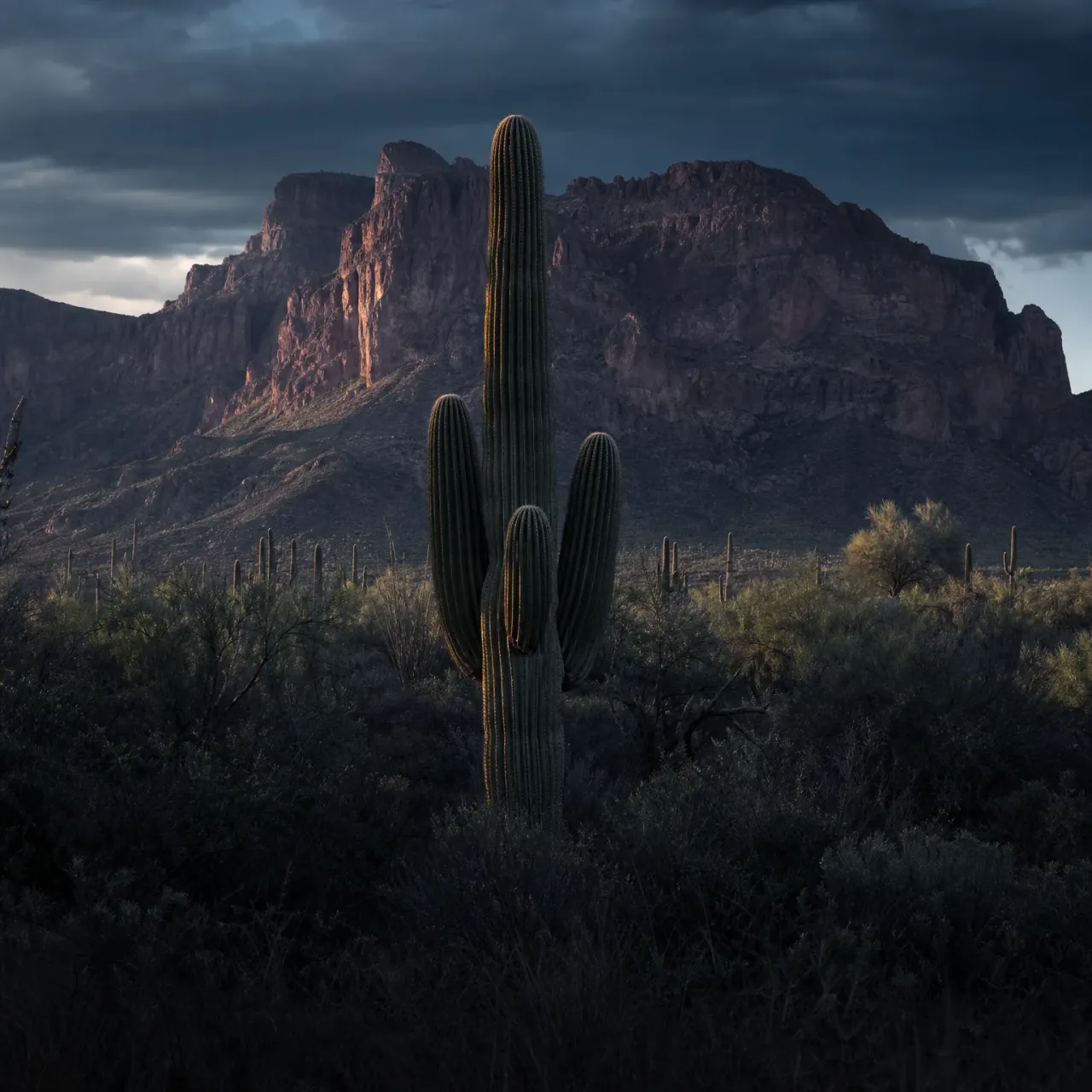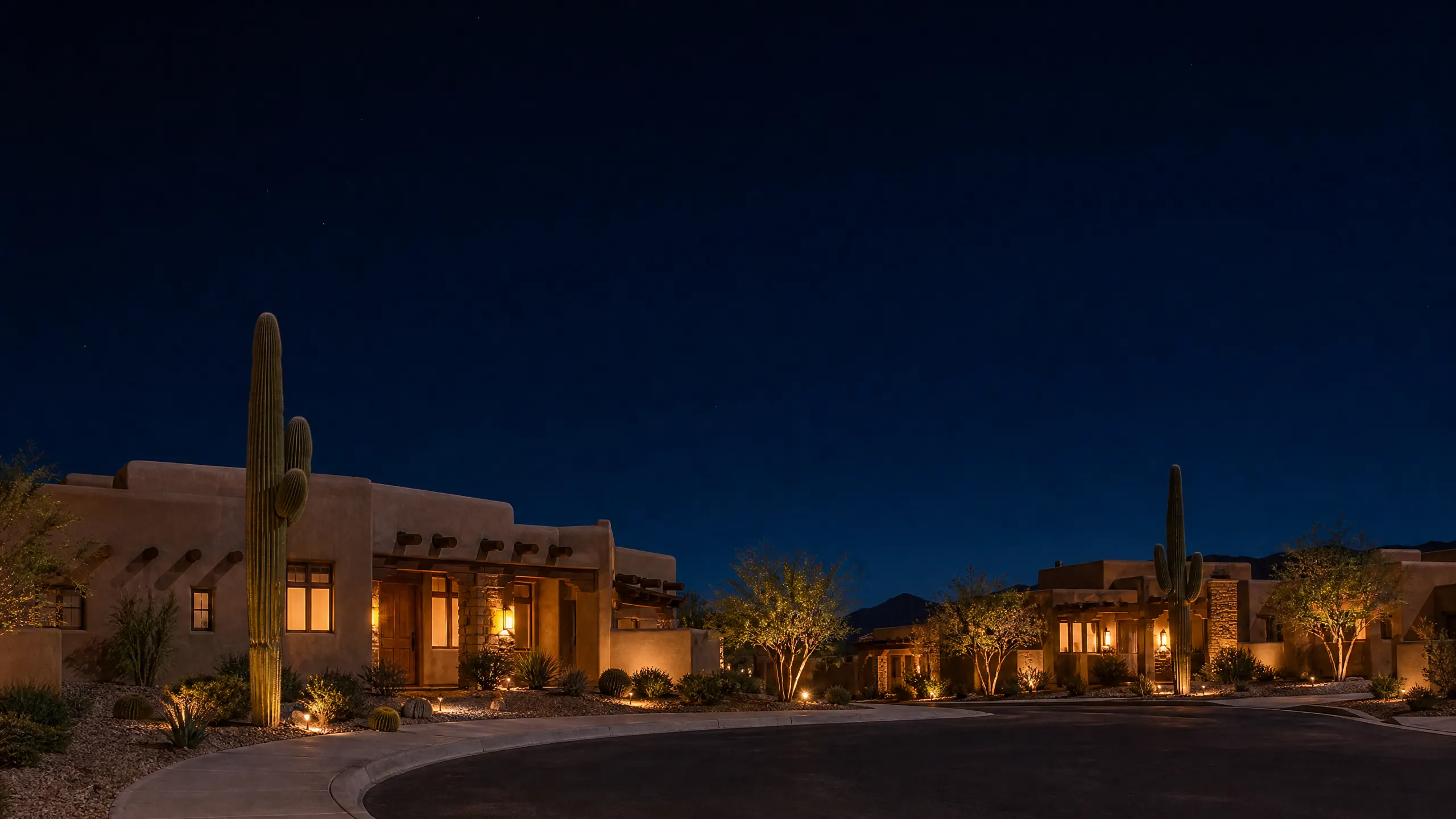
Two illuminated adobe-style desert homes at night, surrounded by saguaro cacti and low desert shrubs along a curved driveway.

Furnace Repair in Gallup, NM

Tell us about the job

Takes about a minute. No obligation.

RepairFurnace or heatingMcKinley County, NM
Step 1 of 2

What ZIP code is the job in?

The tech checks before touching anything

A diagnostic starts with questions about what the furnace was doing before it quit, then moves to the thermostat, the filter, the flame or the igniter, and the flue. The tech wants to watch it fail or hear what it's doing, not just look at it sitting cold. Pulling a panel and testing parts with a meter comes after that, once there's a reason to suspect one part over another.
What the visit tells you

By the end, you should know which part failed, why it failed, and whether anything else is close behind it. A cracked heat exchanger or a worn blower motor changes the math on repair versus replacement, so that answer matters as much as the fix itself. A straight answer on both is worth more than a quick guess that gets the furnace running for now.

8 months
October through May, your furnace is on duty
18°F
the average winter night it heats against
44 winter storms
in ten years, the nights a failure hurts most
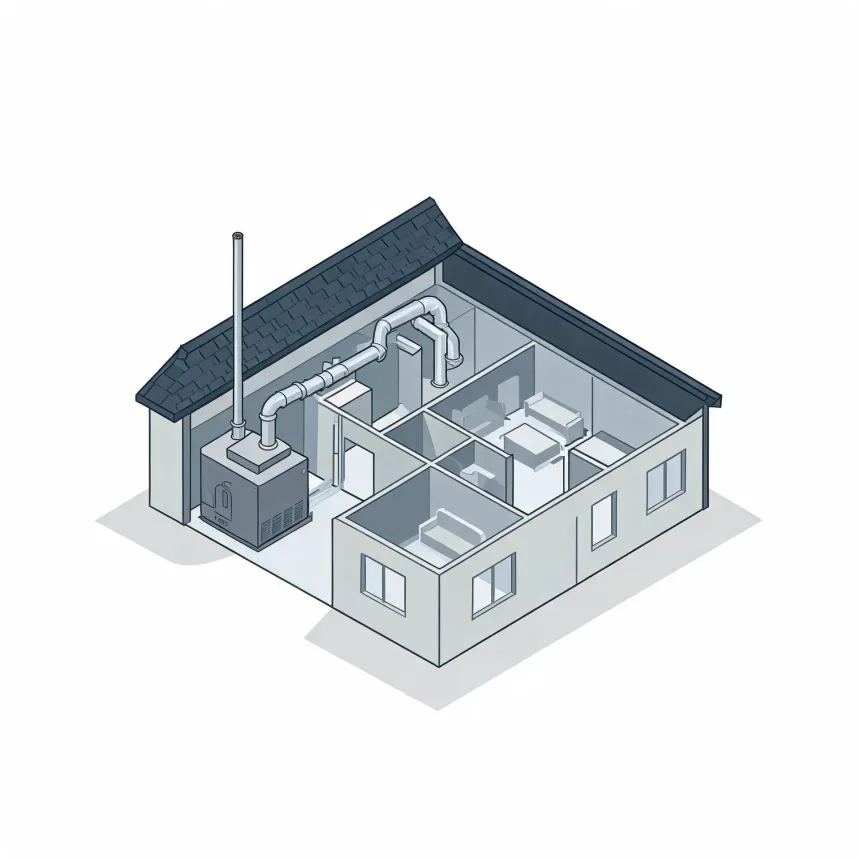
Isometric grayscale illustration of a cutaway single-story house showing interior rooms with furniture, plus an exterior furnace unit with a tall flue pipe and ducting running into the attic space.
Your furnace works hardest from November through March.

NOAA nClimDiv, 1991–2020 normals

Half the homes in McKinley County were built in 1985 or later, and a quarter of all homes here are mobile homes.

Neither one points to anything unusual going on inside your furnace, so the tech is likely looking at a common part worn out the common way.

October is when a weak furnace shows it

Heat runs October through May
Winter nights average 18°F
44 winter storms from 2015 to 2024

This is the second time the page makes this point, and the numbers back it up the same way from a different angle. Eighteen degrees is the average overnight low across December, January and February here, not the coldest it gets, the average. A furnace holding a house against that runs long cycles, not short ones, because it takes longer to satisfy the thermostat when the gap between inside and outside is that wide. Long cycles put more hours on the blower motor and more heat through the heat exchanger each time the furnace fires. Over eight months of that, the wear adds up in the same parts the tech already checks first. If something's worn down early here, it's not bad luck. It's the climate doing what it does to every furnace running this hard this long.

Get the usual fix

Nothing about this area is especially hard on it. It's most likely the usual problem with the usual fix.

Find a contractor
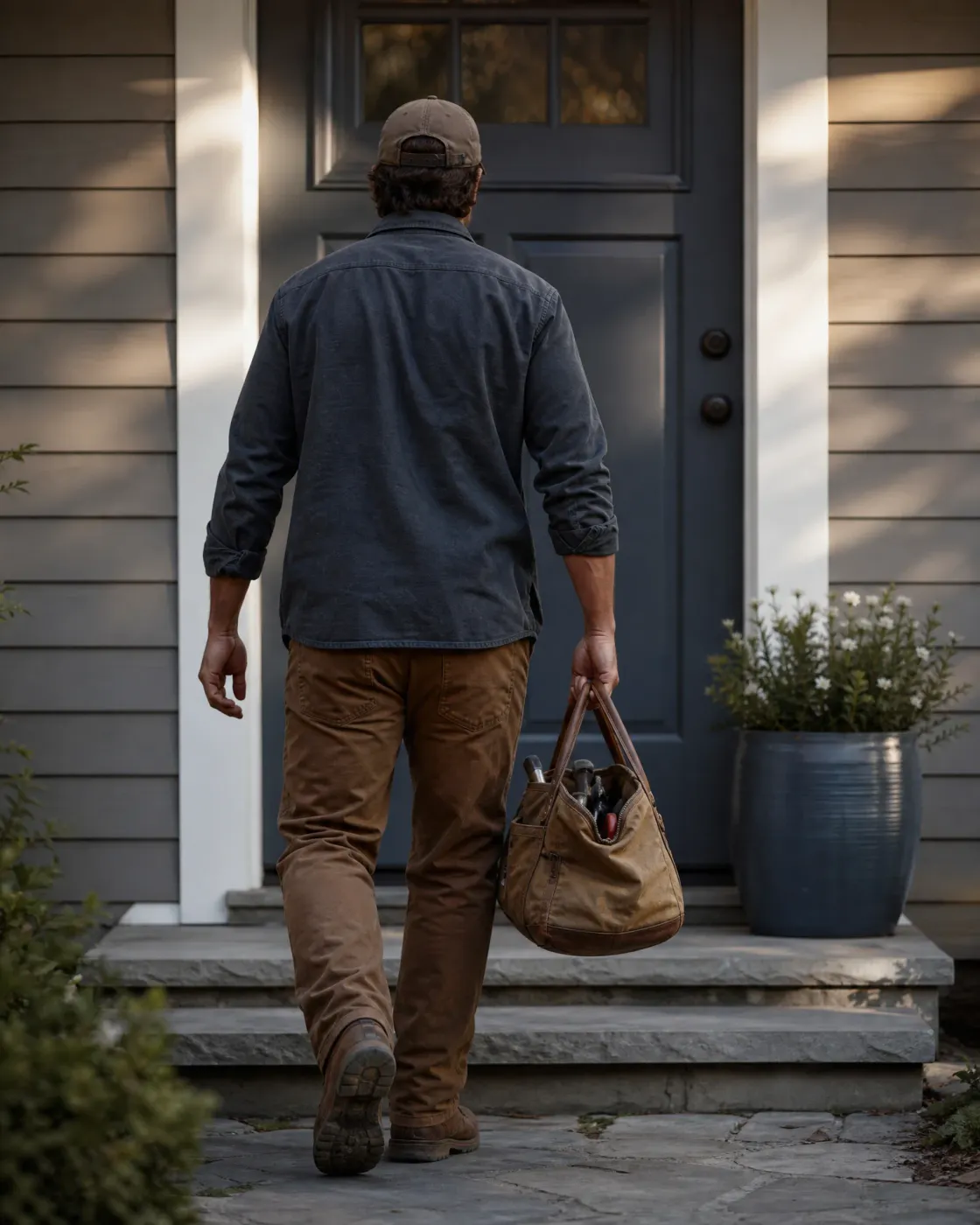
A man in a cap, dark shirt and brown work pants walks up stone steps toward a gray front door, carrying a canvas tool bag in his right hand, with a potted plant beside the porch.
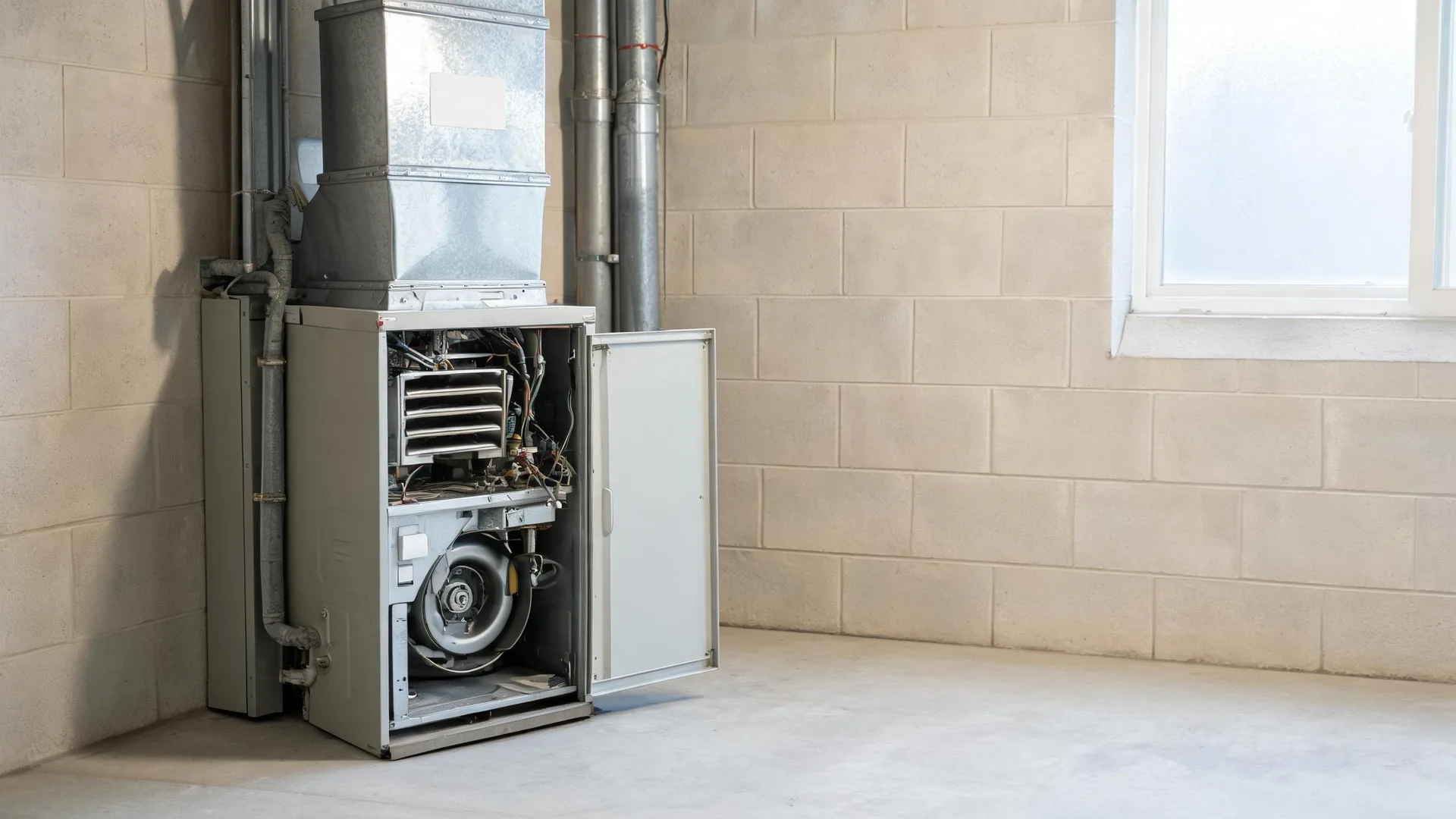
A gray residential gas furnace installed in an unfinished basement, surrounded by ductwork, a metal flue pipe, and a gas supply line.

What a struggling furnace sounds like before it quits

A furnace that's struggling doesn't usually just stop. It tells you first. Short cycling is one of the clearest signs. It fires up, runs a few minutes, shuts off, then starts again before the house has warmed. That's often a dirty flame sensor or a clogged filter choking airflow until the limit switch trips. A burner that should glow steady blue but instead shows yellow or flickers isn't burning clean, and that's worth a call sooner rather than later. Listen for a boom at startup instead of a soft whump. That means gas is building up before it lights, and the igniter is firing late. A blower that keeps running after the house is warm, or won't shut off at all, points to a bad limit switch or a relay stuck closed. None of these fix themselves. Most get worse the longer the furnace keeps cycling that way.

A small problem finds the next part

A dirty flame sensor makes the burner cut off before the house is satisfied, so the furnace restarts over and over to make up the heat it missed. All that extra cycling wears the igniter faster than normal use would. A clogged filter makes the blower pull against resistance it wasn't built for, and the motor runs hotter every single cycle. The part that failed first is rarely the only part paying for it.

Running it is a choice to spend something

A furnace with a cracked heat exchanger can still blow warm air, which is why people keep using it. But that crack doesn't stay the same size. Metal that flexes under heat with a weak spot in it flexes more at that spot each cycle. A blower motor with worn bearings still turns, loud and hot, until the day it seizes. Waiting to call doesn't buy time for free. It spends the part down further every time it runs.

Before anyone comes out, check the simple things that aren't actually furnace problems. Make sure the thermostat is set to heat and the setpoint is above room temperature, and swap the batteries if it uses them. Pull the filter and hold it up to a light. If you can't see through it, that's enough to choke the blower on its own, and it's an easy fix with no tools involved. Go to the breaker panel and confirm the furnace's breaker hasn't tripped. If the furnace sits on a switch that looks like a light switch near the unit, make sure nobody bumped it off. If the furnace uses a standing pilot, check whether it's lit. None of this requires opening a panel or touching anything electrical beyond a switch. If all of that checks out and the furnace still won't run, or it runs and does something strange, that's the point to stop checking and have someone look at it.

A repair makes sense when the part that failed is one part and the rest of the furnace is clean around it. A new igniter or flame sensor doesn't say anything about the blower motor or the heat exchanger. Those get judged on their own. Replacement starts to make sense when the part that failed is expensive to replace on its own, or when it's the second or third part to go in a short stretch. A furnace that's needed a few different repairs in close succession is usually telling you the whole thing is wearing out at once, not that it has bad luck with parts. Age matters less than what's actually failing. A heat exchanger crack ends the conversation regardless of how old the furnace is, because that part isn't safe to patch and isn't usually sold on its own. Everything else is a judgment call based on what else is likely to go next.