







Why your furnace ignitor keeps failing in New Mexico

Skip searching for a furnace pro and answer a few questions instead.

Describe it once

A furnace ignitor in New Mexico usually fails from age and from dust, not from cold. Most hot surface ignitors are rated for a few years of use and get brittle with each heating cycle until one more startup cracks them. Dry climates like this one pull fine dust through the return air, and it settles on the ignitor every time the furnace fires. That coating makes the ignitor work harder to reach temperature, and the extra heat it takes shortens its life further. If the furnace sits unused most of the summer and then runs hard once the weather turns, that first cold snap is often when a weakened ignitor finally gives out. A furnace that clicks or tries to light but won't catch is usually telling you the ignitor is on its way out or already gone. Replacing it is routine work, but it has to be the right part wired and seated correctly, or the new one fails just as fast as the old one did.

  1. The thermostat calls for heat and the inducer motor starts.

  2. The ignitor glows hot enough to light the burners.

  3. A cracked ignitor draws uneven power and runs too hot.

  4. That extra heat stresses the brittle coating until it snaps.

A woman in a knitted shawl sits in a living room with a fireplace, shelves, a sofa with cushions, and a lamp by a bright window, looking off to the side.
A woman with long brown wavy hair in a green shirt over a white top stands in a living room with built-in white shelves, a ceiling fan, a potted plant and a sliding glass door.
A woman with shoulder-length gray-streaked hair in a light gray knit sweater stands smiling and looking off to the side in a living room with a sofa, houseplant, framed picture, and sunlit sliding glass door.
A woman with shoulder-length curly gray hair wearing a gray knit sweater stands near a window with a sheer curtain, looking to the side, with a blurred interior room behind her.

Why dust shortens ignitor life here

A hot surface ignitor works by heating a brittle rod until it glows enough to light the burners. Dust that settles on that rod builds up heat unevenly and makes the coating crack sooner than it would otherwise. New Mexico's dry air moves a lot of fine dust through the return and into the furnace cabinet, and the burner compartment is one place it collects. A furnace that cycles on and off all winter is pulling that dust across the ignitor every time it starts. The ignitor itself can't be cleaned once it's coated. It either still works or it's done.

What a fast repeat failure tells you

An ignitor that lasts one or two winters and then cracks again is usually telling you something beyond its own age. A furnace pulling in more dust than normal, a cracked heat exchanger running hotter than it should, or a draft problem in the inducer can all shorten ignitor life well below what the part is rated for. A contractor who works on furnaces around New Mexico every winter will check for those causes before swapping the part again, because replacing the ignitor without finding why it failed just buys you another season before it happens again.

Winter nights average 23°F statewide

At 23°F, your furnace is cycling on and off most of the night to hold the house steady. Each cycle heats the ignitor from cold and lets it cool again, and that repeated swing is what finally cracks a brittle one.

NOAA nClimDiv 1991-2020 county normals weighted by homes

A beige residential gas furnace with white PVC vent pipes, copper and yellow gas lines, and adjacent sheet-metal ductwork stands on a concrete floor beside a plain white wall.

Replacing it yourself

You can buy a universal ignitor and swap it without much trouble if you can reach the burner compartment and match the part to your furnace. The risk is getting the wrong amperage or mounting bracket for your model, which either won't fit or will fail again within weeks. You also won't know if the ignitor was the only problem, or if a cracked heat exchanger or bad flame sensor caused it to overdraw power in the first place.

A gray high-efficiency furnace with white PVC vent pipes and metal ductwork stands on a concrete floor beside a plain off-white wall in a basement.

Having it diagnosed

A contractor who services furnaces in New Mexico every winter has likely seen this exact failure dozens of times and carries the common ignitor types on the truck. They can check the amp draw, the flame sensor, and the inducer motor in one visit to confirm the ignitor is the actual cause and not a symptom. That saves you from replacing the part twice and from guessing which of several possible causes is behind the cracks.

Is your furnace taking two or three tries to light

You turn the thermostat up and hear the inducer motor start, then stop, then start again before the burners finally catch. Some mornings it lights fine. Some mornings it clicks and clicks and the house stays cold until you reset it at the panel. You might smell a faint burst of gas right before it finally fires, or notice the burners light unevenly, one side catching a beat after the other. If nobody catches it, the ignitor eventually stops working altogether, usually on a night when you need the heat most, and the house has no backup once that happens. None of this means the furnace itself is going bad. It usually means one part is close to done.

A basement utility area with a gray furnace, sheet-metal ductwork, pipes, plastic-covered walls, a concrete floor, and a black shelving unit holding storage bins.

Furnace running clean

This is a furnace doing its job. The cabinet is solid, the ductwork is tight, and the burners light on the first try every time the thermostat calls. An ignitor in a system like this still wears with age, but it fails on its own schedule, not because something else is pushing it there.


A gray metal furnace with louvered vent panels stands on a concrete basement floor beside galvanized ductwork, gas and plastic pipes, and foil-faced insulation along the ceiling and wall.

Furnace under strain

Rust on the cabinet and years of dust through the burner compartment tell you this furnace has been working harder than it should. An ignitor in this kind of unit cracks sooner, because dust buildup and age gang up on the same brittle part. This is the furnace that calls a tech out twice in one winter.

A beige furnace with two access panels stands against a concrete basement wall, with galvanized sheet-metal ductwork, a white PVC pipe, flexible conduit and insulated ducting around it.
Before you get your furnace repair
A gray furnace with white PVC vent pipes stands beside sheet-metal ductwork in a basement with a smooth concrete floor, exposed wood framing, and plastic sheeting on the walls.
After you get your furnace repair

Skip calling around

Your request goes to one pro, not a list of companies.

You're not committing to anything by asking.

Calling around yourself

You pull up a list of furnace repair companies and start calling. You describe the clicking, the failed startups, the model number if you know it. Then you do it again with the next company, and the next, because you want a few quotes before you decide. Whoever picks up first gets the job, not necessarily whoever has actually swapped an ignitor on your furnace before. You're the one keeping track of who said what and when they can come out.

Getting matched to one contractor

You answer once and it goes to a local contractor who works on furnaces like yours all winter and knows an ignitor complaint when they hear it. No stack of calls to make, no retelling the story to three different companies, no quotes to line up side by side and compare. Just one licensed contractor who shows up already knowing roughly what they're looking at before they open the burner compartment.

A woman with her hair in a bun holds a sleeping young child against her chest, both wrapped in a textured beige knit blanket on a sofa in a dimly lit room with a lamp, framed picture, and bookshelf behind them.
A gray-haired woman in a cream knit sweater stands in a dimly lit kitchen at night, looking to her right, with a round loaf of bread in the foreground and a dark window and potted plant behind her.

Living with a bad ignitor

Mornings where the burners click and don't catch, a house that's slow to warm, and the worry of what happens if it quits on a night in the teens.

Start one form

One call to someone who knows this part

A local contractor who replaces these all winter looks at your furnace, matches the right ignitor, and gets the burners lighting on the first try again.

Start one form

Replacing the Ignitor Yourself or Calling It In

Replace it yourself

  • A universal ignitor costs less than a service call, and you can order one that matches your furnace's amperage and bracket style.
  • You still have to shut off gas and power correctly before pulling the burner compartment apart, and getting that wrong is dangerous.
  • If the new one fails in a month, you're troubleshooting alone with no one to tell you whether it was the part, the install, or something else in the furnace causing it.
  • Hot surface ignitors are brittle even new, and a slip of the fingers while seating one can crack it before it ever gets power.
  • You won't know if the real cause was dust buildup or a control board issue sending too much voltage, so the same failure can repeat.

Call a local contractor

  • Someone who services furnaces in this area all winter has likely replaced this exact part on this exact furnace model before.
  • They can check the amperage draw and the control board at the same time, so a bad ignitor that's a symptom of something else doesn't get missed.
  • You explain the clicking and the failed startups once, to one person, instead of repeating it to several companies while you compare quotes.
  • A local contractor already knows which ignitors hold up against dust here and which ones tend to fail early in this climate.
  • One visit gets you a diagnosis and the repair, instead of a guess you install yourself and then have to question later.
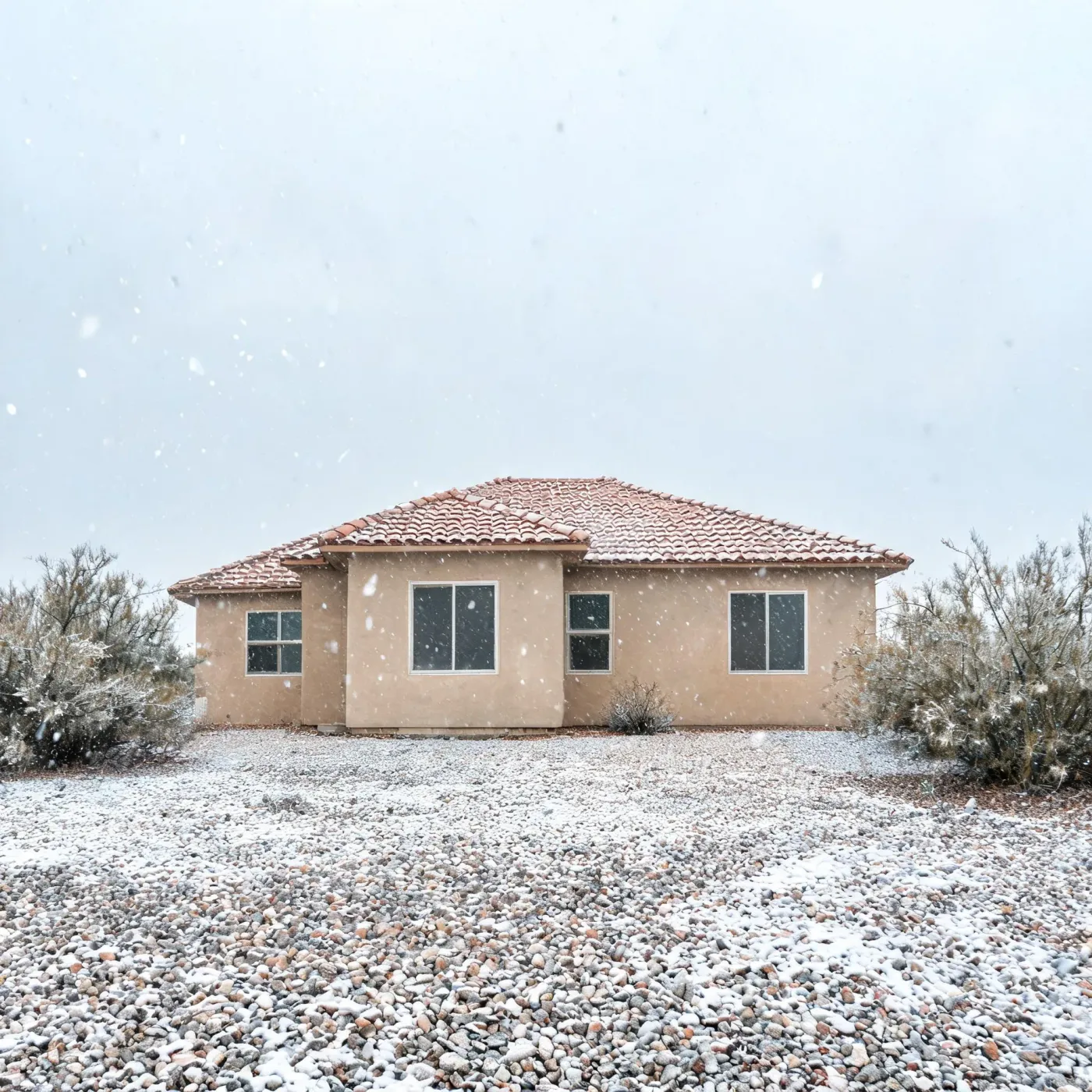
A single-story tan stucco house with a red tile hipped roof during falling snow, surrounded by light snow-dusted gravel ground and desert shrubs under a pale overcast sky.

Statewide, winter nights average 23°F, and your furnace has to make up that difference every time it cycles on. The colder the air coming back from the ductwork, the harder the ignitor has to work to get the burners lit, and the more times it heats up and cools down before morning. That repeated swing is what ages a hot surface ignitor faster than the calendar would suggest. If your house sits somewhere colder than the state average, those nights are rougher still, and a brittle ignitor is more likely to crack on one of them rather than during a mild stretch in October.

Source: NOAA climate normals

NOAA nClimDiv 1991-2020 county normals weighted by homes

A dark high-efficiency furnace on a concrete pad in a basement, connected to galvanized ductwork, white PVC vent pipes, and copper and black gas piping, with concrete walls and wood framing nearby.
Clean burn, clear vent, no dust crusted on the rod to crack it sooner.
A gas furnace with a louvered upper panel stands on a concrete pad in a basement, flanked by sheet-metal ductwork, white PVC and metal pipes, and insulated columns.
Corroded cabinet and a worn ignitor near the end of its years, failing the way old ones do.
Dimly lit interior hallway at night with a closed white paneled door at the end, a long runner rug on a wood floor, a stair railing at left, and a frost-covered window admitting blue light at right.

The house is quiet at 2 a.m. and the vents have gone silent. You wake up because the air feels different, not because of any noise. The hallway floor is cold under your feet, and frost has crept along the edges of the upstairs window, a thin white line catching the porch light outside. You stand there a second, listening for the inducer motor to kick on. Nothing. Somewhere behind you, your kid's door is cracked open. Outside, the January air sits in the 20s, the kind of New Mexico night where the cold doesn't let up until morning. You go find the thermostat, already knowing what you'll see when you check it.

A closed silver laptop and a ceramic mug of dark coffee sit on a wooden table in front of two chair backs, with a kitchen counter, tiled backsplash, wooden cutting boards, a vase of greenery and a potted plant by a window behind.

An ignitor that keeps failing is telling you something

A furnace ignitor that cracks once might be bad luck. One that keeps cracking is wearing out the way they do in this climate, from age, from dust, from the nightly swing between cold starts and full heat. The fix doesn't change. It gets replaced with a part that matches your furnace, and whoever does that work checks why the last one went so soon.

That's the part you don't have to sort out alone. A local contractor who works on furnaces all winter already knows which ignitors in New Mexico homes fail early and why, so you're not the one explaining the clicking and the failed startups over and over to company after company. One call, one person who's seen this before, and you're back to a furnace that lights the first time.

Interior corner of a room with a window and sheer curtain at left, a gray upholstered sofa with a cushion at right, and a round wooden table holding stacked books and a round vase with an olive branch.
A gas furnace with attached PVC and metal piping and sheet-metal ductwork stands on a concrete pad in a dim unfinished basement with concrete walls and exposed floor joists.

No phone calls to make

Only one pro gets your request, so you hear from one company.

RepairFurnace or heatingNew Mexico
Step 1 of 2

What ZIP code is the job in?