



View from beneath a covered patio of a single-story stucco house with a block wall, gravel ground cover, and two twisted-trunk trees under an overcast sky.

Heat Pump Repair in Raton, NM

Tell us about the job

Takes about a minute. No obligation.

RepairHeat PumpColfax County, NM
Step 1 of 2

What ZIP code is the job in?

Raton gets its share of rough weather. Winter storms have hit Colfax County 129 times over the past decade and damaging wind another 157 times. None of that wears out a heat pump any faster than normal. Nights here average 17°F through December, January and February, and a heat pump is built to run through cold like that. If yours has stopped keeping up, the cause is usually something ordinary. A failing defrost control. Low refrigerant. A worn contactor. Find the part that quit and replace it, and the unit goes back to doing what it was built to do.

9 months
September through May, your system heats
17°F
the average winter night it heats against
81°F
the average summer afternoon it cools against
Isometric grayscale illustration of a cutaway house showing interior rooms, ceiling ductwork connected to an indoor air handler, and an outdoor condenser unit beside the exterior wall.

Heat pumps in Colfax County start their season in September.

A breakdown in the first weeks of September usually means a part that was already failing before the cold hit it.

Nothing here wears out a heat pump faster129 winter storms in Colfax County between 2015 and 2024, and none of them are why yours quit.

Electricity in New Mexico ran 14.20 cents per kilowatthour in 2024. A heat pump leaning on backup heat strips, or cycling on and off because a part is failing, pulls more power than it should every single day it runs that way. That cost doesn't show up as one big number. It shows up a little at a time, on every bill, for as long as the problem sits there. A unit running on a bad capacitor or a low charge isn't just struggling to keep the house warm. It's spending more to do it badly.

Find the part that's driving your bill up

A heat pump that's cycling wrong or leaning on backup strips keeps pulling extra power every day it's left alone. Getting the actual part diagnosed and replaced stops that bill from adding up.

Find a contractor
A gray heat pump outdoor unit mounted on a concrete pad next to a residential house with lap siding and stone accents.

Left alone, one bad part takes others down with it

A heat pump that's struggling doesn't fail all at once. A contactor with pitted contacts keeps letting the compressor cycle rough, and every cycle pits it a little more. A compressor low on refrigerant keeps running to make up the difference, and it runs hotter than it was built to. A failing defrost control leaves frost building on the outdoor coil, and the system pushes harder to move air across a coil that's partly blocked. None of that resets overnight. Every hour spent compensating for a bad part wears down whatever else is still healthy, until the failure isn't the one part anymore.

A reversing valve stuck in one position

The reversing valve is what lets a heat pump switch between heating and cooling. When it sticks, the system can get stuck blowing cold air in heating mode, or it can run constantly trying to reach a setpoint it can't hit. A stuck valve usually means a new valve, not a cleaning or an adjustment.
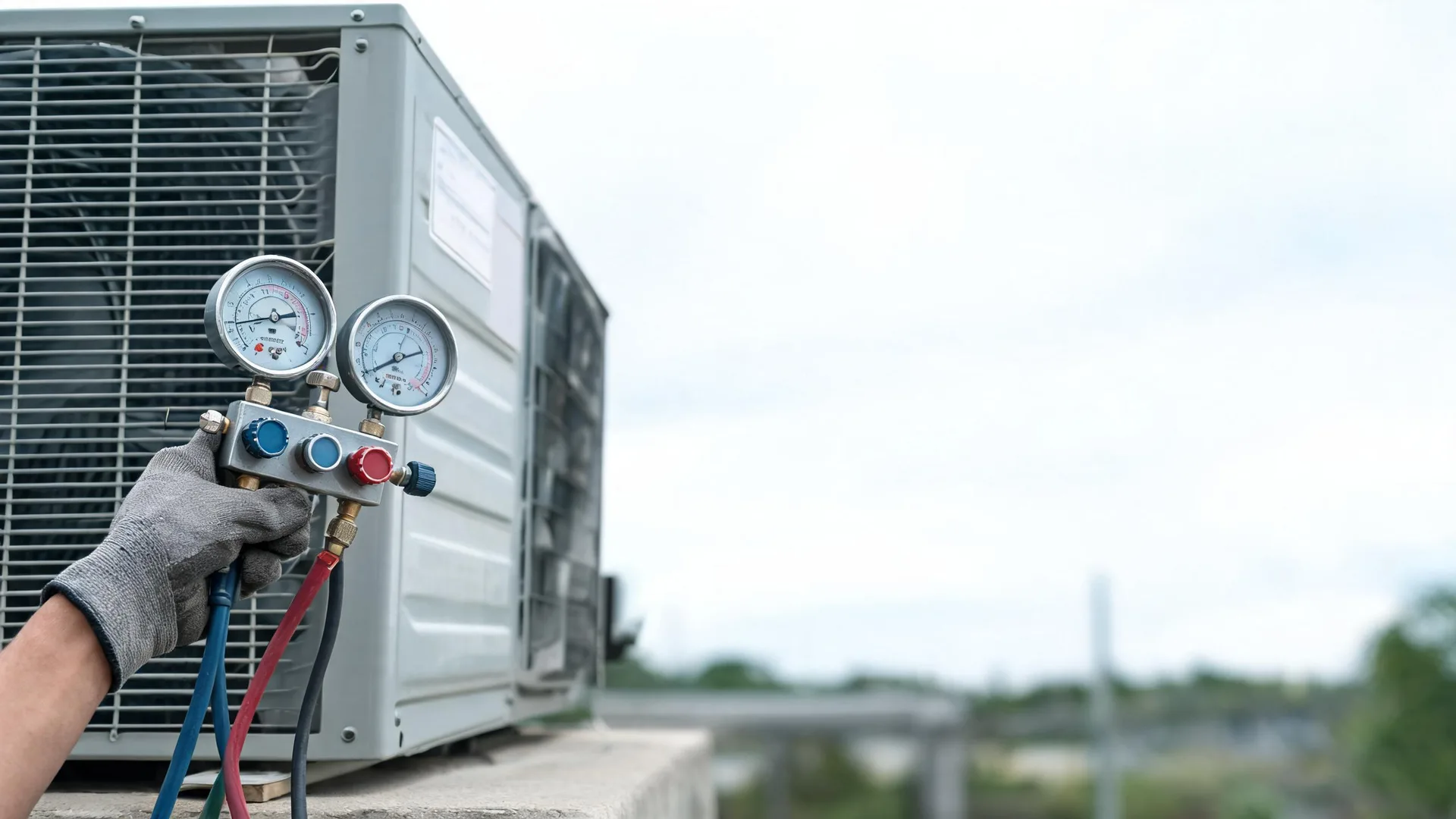
What a dirty outdoor coil does over time

The outdoor coil has to exchange heat with the outside air every time the system runs, in both heating and cooling mode. Dirt, leaves and grass clippings packed against the fins make the system work harder to move the same amount of heat. Left that way long enough, the compressor runs hotter than it should on every single cycle, and that shortens its life.

A few things are worth checking before anyone comes out. Look at the outdoor unit and clear away leaves, grass clippings or anything packed against the coil fins. Check your thermostat is set to heat and the setpoint is actually above room temperature, since a setting bumped by accident looks exactly like a breakdown. Look at the air filter and swap it if it's clogged, because restricted airflow makes a heat pump struggle even when every part on it is healthy. If you've got a breaker panel you can safely access, check that the breaker for the outdoor unit hasn't tripped. If the outdoor unit is caked in ice outside of a normal defrost cycle, or the system is blowing cold air when it should be blowing warm, that points to something a homeowner can't fix with a check, and it's time to get a tech out rather than keep testing it.

Not every failing part means a new system. A contactor, a capacitor, a defrost control board, these are small, inexpensive parts that fail on their own schedule and get swapped out on their own. The compressor is different. It's the one part that's expensive to replace and hard to justify replacing on its own, since putting a new compressor on an old system is often money spent propping up everything else that's the same age and wearing down alongside it. So the real question is less about what broke and more about what's left. A heat pump that's had one part fail is a heat pump that needs that part fixed. A heat pump where the compressor is going, on top of a system that's already needed a few other repairs, is one where a tech should be laying out both paths and what each one actually buys. Age by itself doesn't decide it. What decides it is whether the part that failed is cheap to replace and done, or whether it's the part that everything else depends on.