
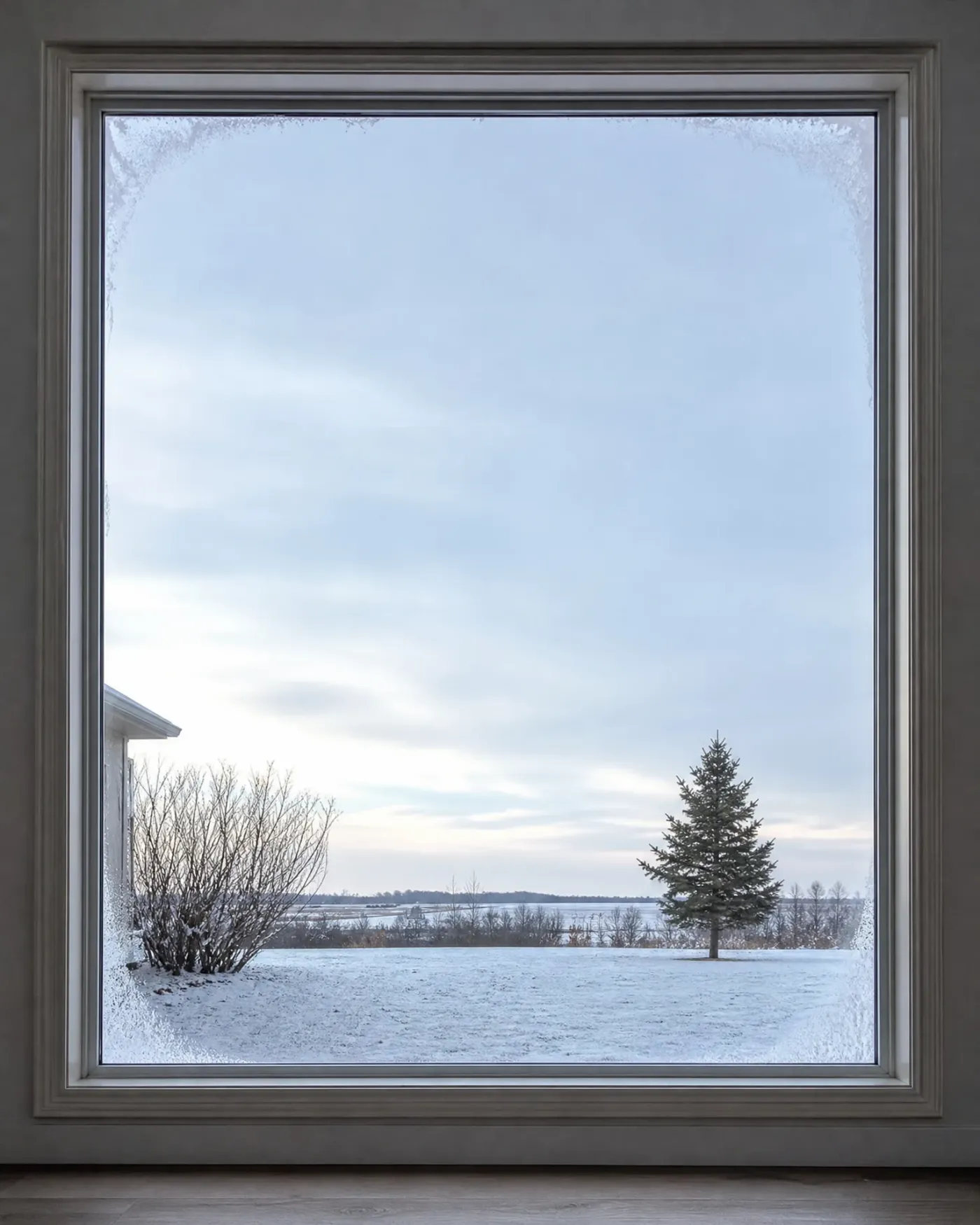
Normal winter frost
A light, even coat of frost on the coil is normal through a cold Farmington night. The unit runs its defrost cycle on its own, the frost melts off, and it goes back to heating your house without you doing anything.
A block of ice has built up on your outdoor unit and you're not sure if that's normal or if something's wrong. Heat pumps do pick up a thin layer of frost in cold weather, so it's easy to wonder where the line is between ordinary and a problem. With winters in Farmington getting cold enough to run the system hard for months, you want to know whether this is just how the unit handles the cold or a sign it needs a repair.
Your heat pump is built to frost up a little when it's cold outside, then melt that frost off on its own every hour or so. If the whole outdoor coil is covered in ice instead of a light coating, that defrost cycle has stopped doing its job. The usual causes are a stuck defrost control board, a failed reversing valve, a bad sensor, or a fan motor that's slowed down or quit. Once defrost stops working, ice keeps building with every heating cycle instead of clearing, and the coil can't pull heat from the outside air anymore. Through a Farmington winter, that means your system runs constantly without actually heating your home, and left alone long enough, the ice can damage the coil or the compressor.

A light, even coat of frost on the coil is normal through a cold Farmington night. The unit runs its defrost cycle on its own, the frost melts off, and it goes back to heating your house without you doing anything.

Thick ice that doesn't clear, or ice that builds back up within hours, means the defrost cycle isn't working or something else is wrong. Airflow is blocked, the coil can't do its job, and the unit needs a qualified technician before it strains the compressor.
Winter nights average 20°F
Overnight lows here average 20°F through December, January and February. That's cold enough to put real frost on the coil most nights, not just a light dusting.
Heat runs October through May
Heat runs October through May here, about eight months. Your heat pump is working through defrost cycles for most of the year, not just a few cold snaps.
Cooling runs June through August
Cooling only runs June through August here. The other eight months are all on the heat pump, so a defrost problem shows up again and again until it's fixed.
NOAA nClimDiv 1991-2020
Your heat pump checks its coil temperature on a timer or with a sensor. When frost builds past a certain point, the unit switches into cooling mode for a few minutes. That sends warm refrigerant through the outdoor coil and melts the frost off. You might hear the outdoor fan stop and see steam rise off the unit during this. Then it switches back to heating. This happens on its own, several times a night when it's cold, and you're not meant to notice it happening. A unit that can't complete that cycle is what ends up buried in ice.
A low refrigerant charge means the coil runs colder than it should, so frost forms faster than the defrost cycle can clear it. A failed defrost sensor or control board means the unit never gets the signal to start the cycle at all. A reversing valve that's stuck won't switch the system into defrost even when it's told to. A dirty coil holds frost differently than a clean one and throws off the sensor's reading. Any one of these turns a normal frosty night into a block of ice that doesn't go away on its own.




A heat pump that won't clear itself after a night in the 20s isn't going to fix itself by morning either. Something in the defrost cycle has stopped doing its job, the sensor, the reversing valve, the timer board, and that's not a guess you can make standing outside looking at ice. Farmington's winters put that system through its paces from October to May, and a unit that can't shed frost on its own is running on borrowed time until the coil ices solid and the compressor takes the strain. The contractor who gets this request works on heat pumps in San Juan County every winter and has seen what usually fails first in this kind of cold. Send the request and that becomes someone else's problem to sort out, not yours, while your house sits there without heat and the ice keeps building on a unit that needs a hand it isn't getting on its own.
A Farmington heat pump picking up frost on a cold night is doing exactly what it's built to do. The defrost cycle checks the coil, warms it with refrigerant, and clears the frost on its own, usually before you'd ever notice it happened. What's not normal is ice that's still there in the morning, thick enough to cover the coil or build up around the fan. That means the cycle started and didn't finish, or never started at all. With lows averaging 20°F through December, January, and February, the coil is working against real cold most nights, so when the defrost cycle fails, the ice has plenty of time to build. The part behind it could be the sensor that reads coil temperature, the reversing valve that switches the system into defrost, or the timer board that tells the cycle when to run. Each one fails differently, and there's no way to tell which from the outside. Left alone, a frozen coil makes the compressor work harder than it's meant to, and if the unit can't pull enough heat through the ice, your house stops getting warm air. A technician who services heat pumps in San Juan County through the winter has likely seen this same failure on this same equipment before and knows where to look first. Getting the right part diagnosed and replaced is what gets the defrost cycle, and your heat, running again.


A heat pump that stays iced over needs a hand from someone who works on these year round. Send the request and a licensed contractor local to Farmington gets it, not a call center dispatching whoever's free. One contractor means one call back, not five companies competing for your business. Someone who knows these winters has seen this exact problem on this exact kind of unit before, usually more than once this season. Send it and let them sort out whether it's the sensor, the valve, or the board.
The pro who gets in touch is licensed in New Mexico and works in San Juan County.
There's no charge for the request.