

Heat pump not heating in Rio Rancho, NM

A Sandoval County pro who repairs heat pumps gets your request.

Get matched

Why is my heat pump not heating in Rio Rancho?

Your heat pump is running but the air coming out feels cool, or it's not keeping up at all, right when Sandoval County is getting cold. You want to know whether this is something minor or a sign the system is struggling to get through winter.

Most likely the outdoor unit is frozen, low on refrigerant, or the system has switched to backup heat that isn't working

A heat pump moves heat from the outside air into your home, and that process depends on refrigerant and a working outdoor coil. If the coil ices over, if the charge is low, or if the reversing valve is stuck in cooling mode, the air at your vents turns cool even while the system runs. In hard winters like Sandoval County gets, many heat pumps also lean on electric backup heat strips to cover the coldest stretches. If that backup element has failed, the heat pump alone often can't keep the house warm once temperatures drop hard. Either way, it points to something a licensed technician needs to look at, not something to leave running as is.

  1. Thermostat calls for heat and signals the outdoor unit.

  2. Reversing valve shifts to pull heat from outside air.

  3. Outdoor coil loses efficiency as temperatures drop near freezing.

  4. Defrost cycle kicks in, pausing heat to clear frost.

Is the air coming out barely warm, or just cold?

Put your hand over the vent. Air that feels lukewarm, even cool, while the thermostat says it's running is the first sign something's off, especially once nights in Sandoval County drop toward freezing. You might hear the outdoor unit cycling on and off more than usual, or notice frost building up on it and staying there instead of clearing. Some homeowners hear a clicking or humming outside with no air moving inside at all. Left alone through a cold stretch, a heat pump that can't keep up will lean harder on backup heat, and your power bill will show it. If the house won't hold its temperature overnight, pipes and anything sensitive to cold are at risk too.

A gray outdoor condenser unit on a concrete pad beside a house with horizontal lap siding, a conduit and disconnect box on the wall, a shrub with white flowers at right and evergreen foliage at left.

Running the way it should

This is a heat pump pulling heat from the outside air without trouble. The fins are clean, the lines run straight to the house, and the disconnect box is ready if a technician needs to cut power. Nights near freezing aren't a problem for a unit kept up this way.


A gray outdoor air conditioning condenser unit on a concrete pad beside a house with light vinyl siding, with a gray electrical disconnect box and conduit on the wall to the right.

Struggling to keep up

Dirt and grime cake the fins on this one, and that buildup is enough to choke off airflow across the coil. A heat pump working this hard to pull heat through caked fins can lose ground fast once temperatures in Sandoval County drop toward freezing, and the air at your vents shows it.

Working Right or Falling Behind

Keeps running fine

  • The reversing valve switches cleanly between heat and defrost without hanging up in one mode.
  • Air from the vents stays warm to the touch even as outdoor temperatures drop toward freezing overnight.
  • Defrost cycles are short and infrequent, and the outdoor coil looks clear of heavy frost buildup afterward.
  • Backup electric strip heat only kicks in during the coldest stretches, not every time the system calls for heat.
  • The outdoor fan and compressor both start right away when the thermostat calls for heat, with no delay or hard start noise.

Struggling to heat

  • Air at the vents feels lukewarm or cool even though the thermostat shows the system is running.
  • The outdoor unit is caked in frost or ice that doesn't clear between defrost cycles.
  • The system short cycles, switching on and off in a few minutes instead of running a full heating cycle.
  • Backup strip heat runs constantly, which points to the heat pump itself no longer carrying the load.
  • The outdoor fan is iced over or not spinning at all, so the unit can't pull heat from the outside air.
  • Indoor temperatures keep falling behind the thermostat setting during the coldest overnight hours in Sandoval County.
A gray-haired bearded man in a dark knit sweater sits on a light gray sofa in a sunlit living room, looking to his left, with a framed artwork, a potted palm, and a curtained glass door behind him.
A middle-aged man in a dark green sweater sits on a light grey sofa looking toward a sunlit window, with a wooden shelving unit, lamp and potted plants in the background.
A man in a dark green sweater sits on a light grey sofa in a sunlit living room, looking to his left, with a shelving unit, houseplants, framed art and a large window behind him.
A gray-haired bearded man in a dark green sweater sits on a light gray sofa in a sunlit living room with a potted plant, framed picture, and dark shelving in the background.

A pro who works on heat pumps

A licensed pro who works in Sandoval County gets your request.

There's no charge for the request.

Below 32 degrees, a heat pump has to pull heat from outdoor air that is already close to freezing. The colder that air gets, the harder the system works to pull the same amount of heat out of it.

That is why backup electric strip heat exists on most systems, to carry the load when the outdoor coil alone can't keep up on the coldest Sandoval County nights. If it isn't kicking in when it should, the house falls behind fast.

How cold does it actually get, and how long does your heat pump have to deal with it?

  • Winter nights average 19°F

    Overnight lows average 19°F through December, January and February here. That's well below freezing, the point where a heat pump has to lean hardest on backup heat to keep up.

  • Heat runs October through May

    Heat runs October through May in Sandoval County. That's eight months where your heat pump has to work, not just a few cold snaps here and there.

  • Cooling runs June through August

    Cooling only runs June through August here. A heat pump earns its keep mostly as a heater in this county, so a heating problem is the one that matters most.

NOAA nClimDiv 1991-2020

A heat pump that's lost its grip on heating shows up fastest in the rooms farthest from the air handler. You'll feel it first in a back bedroom or a room over the garage, cool enough that you start closing the vent or piling on a blanket instead of calling anyone. Meanwhile the thermostat still says it's running, so the system looks fine on paper while the house tells you otherwise. Left alone through a Sandoval County night in the teens, the backup strip heat ends up carrying more of the load than it should, and that's the expensive way to stay warm. If the outdoor unit is icing over and not clearing itself in defrost, that strain only grows, and a unit working that hard for that long is more likely to trip a breaker or wear out a part before spring. None of that means the whole system is failing. It usually means one part of it, the reversing valve, the defrost control, a low charge, isn't doing its job, and the rest of the system is just trying to cover for it.

A beige outdoor air conditioning condenser unit on a concrete pad beside a house with horizontal vinyl siding, with refrigerant lines and a disconnect box on the wall, surrounded by dark mulch and a green shrub at left.
Clean lines from the disconnect box straight down to the unit, no slack or strain on the conduit.
An outdoor air conditioner condenser unit on a concrete pad beside a house with beige horizontal siding, with conduit running from an electrical box on the wall.
A disconnect box feeding a unit that's stopped keeping up, same cold nights it's supposed to handle.

What's Actually Failing Inside

  • A failed defrost control board can leave the system stuck in defrost mode, running the reversing valve backward and blowing cold air.
  • A stuck or miswired reversing valve forces the system into cooling mode even though the thermostat calls for heat.
  • Low refrigerant charge drops the outdoor coil's temperature further, making frost build faster than the defrost cycle can clear it.
  • A failed outdoor fan motor stops airflow across the coil, so the coil ices over and heat transfer stops almost completely.
  • Backup strip heat elements can burn out one at a time, so the system keeps running but puts out less heat each time one fails.
  • A bad thermostat sensor can tell the system it's warmer than it is, so it never calls on backup heat when it should.

Most of these problems trace back to two parts: the reversing valve and the defrost control board. The reversing valve is what lets the same unit heat your house in January and cool it in July, by switching which direction refrigerant flows. When it sticks, the thermostat can call for heat all it wants, the system still runs in cooling mode. The defrost board watches the outdoor coil and triggers a defrost cycle when frost builds up, which is normal and expected once nights drop near freezing. If that board fails, the unit can get stuck in defrost, pulling heat out of the house instead of putting it in.

Refrigerant charge and airflow matter just as much. A unit low on refrigerant runs its outdoor coil colder than it should, so frost builds faster than the defrost cycle can keep up with, and the coil ices over. A dead outdoor fan motor does the same thing a different way, since without airflow across the coil there's nothing to pull heat from in the first place.

Backup strip heat is supposed to catch the slack on the coldest nights, but the elements burn out one at a time, so you lose capacity gradually rather than all at once. And if the thermostat's sensor is reading the room wrong, it may never signal for that backup heat even when the house has gone cold around it.

An outdoor air conditioner condenser unit on a concrete pad beside a house with horizontal vinyl siding, with refrigerant lines and an electrical disconnect box on the wall and dry leaves on the ground.
Before you get your heat pump repair
An outdoor condenser unit on a concrete pad beside a gray lap-sided house, with an electrical disconnect box and conduit on the wall and shrubs with mulch to the right.
After you get your heat pump repair
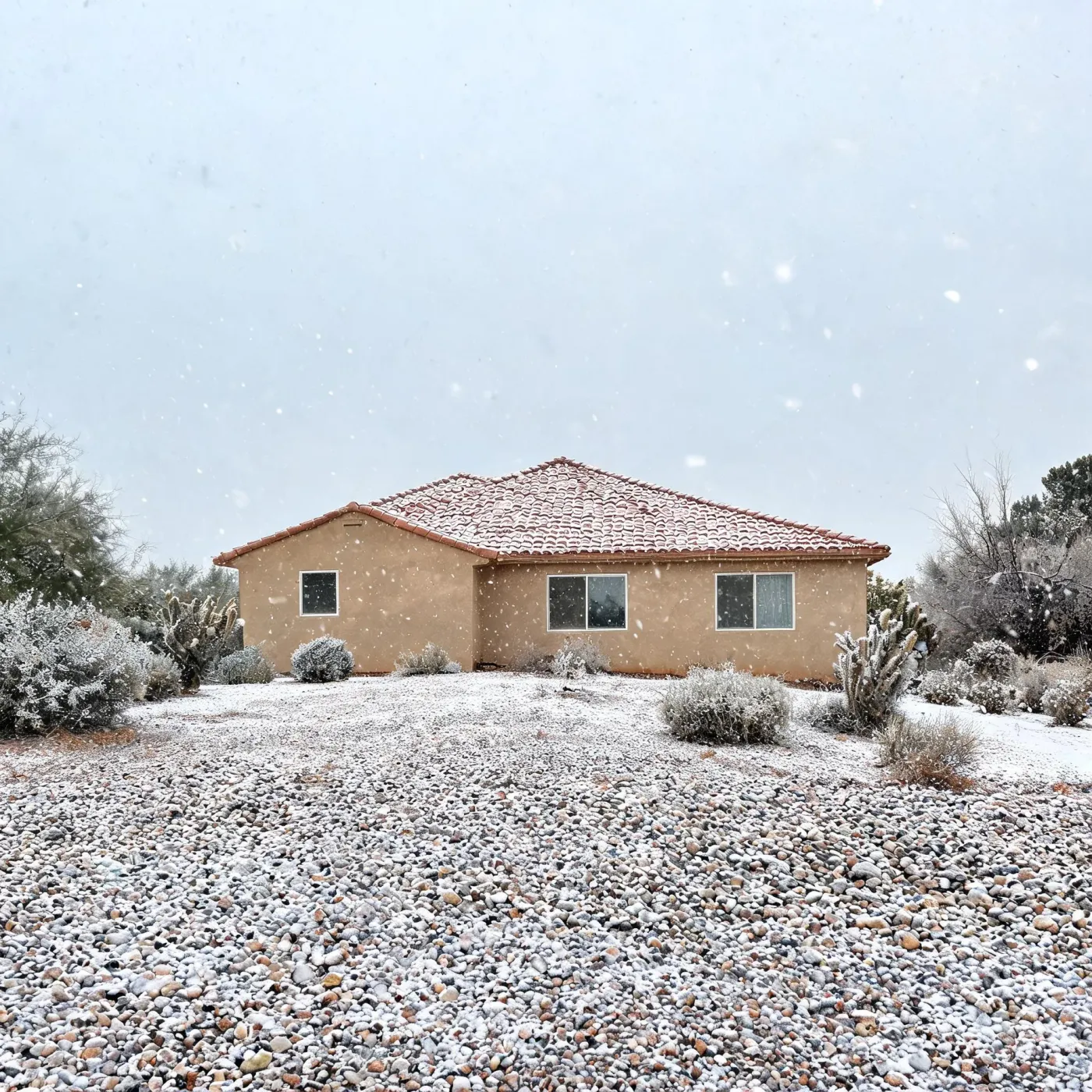
A single-story tan stucco house with a red tile roof during falling snow, surrounded by light snow-dusted gravel, shrubs, and cholla cactus.

Sandoval County's overnight low averages 19°F through December, January and February, according to NOAA. That's not just cold, it's cold enough that the outdoor unit spends a good part of the night in defrost, pulling heat from air that has almost none left to give. A heat pump that was keeping up fine at 40 degrees can fall behind once nights settle into the teens, and that's usually when homeowners notice the air at the vents turning lukewarm. If your system is leaning on backup heat for hours at a stretch instead of minutes, these are the nights that show it.

NOAA nClimDiv 1991-2020

A woman with shoulder-length graying brown hair in a cream knit cardigan sits in a dark armchair indoors, looking off to the side with a slight smile, with a shelf, window and houseplant blurred behind her.
A woman with her hair in a bun sits wrapped in a beige knitted blanket on a couch, holding a sleeping child against her chest in a warmly lit room with a lamp and houseplant in the background.
A woman stands in the open doorway of a white stucco house holding the dark door, facing a man in a black cap and shirt seen from behind in the blurred foreground, with a potted flowering plant beside the entry.

A heat pump that's not heating has a reason, and it's fixable

A heat pump blowing cool air in the middle of a Sandoval County winter is not something to wait out. It's the reversing valve, the defrost board, the backup heat strips, or a refrigerant charge that's run low. None of those get better on their own once nights are sitting near 19°F.

Getting matched means a licensed contractor local to Rio Rancho looks at your system, not a call center reading from a script. Someone who services heat pumps through these winters knows which of these parts tends to go first and checks it without guessing. You'll hear from one contractor, not a handful competing for the job, so you can get straight to talking about your unit and what it needs.

A dark ceramic mug on a round wooden table beside a light grey sofa with a woven cushion and knit throw, with a window, potted plant, floor lamp and wooden cabinet blurred in the background.
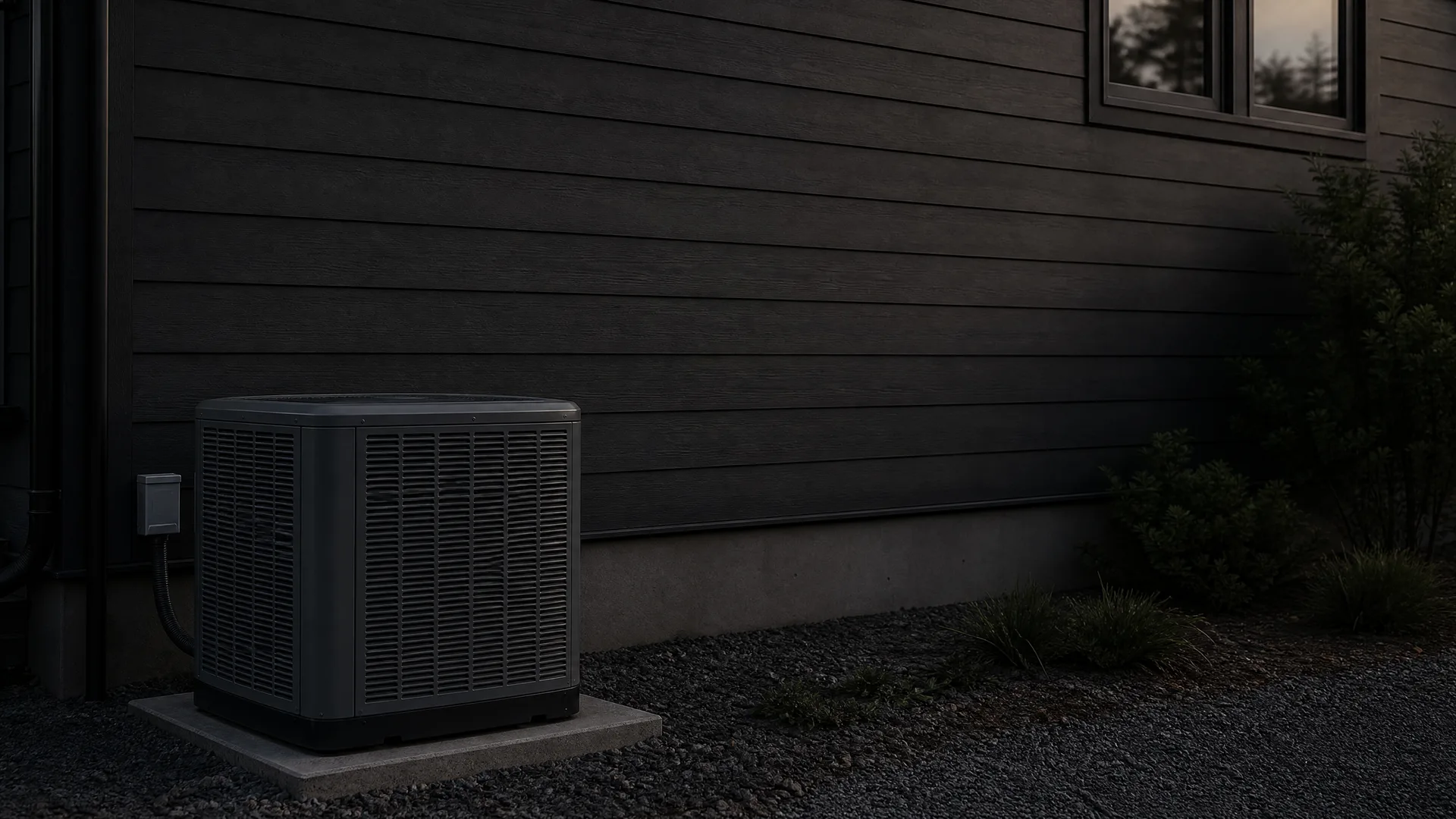
An outdoor condenser unit on a concrete pad beside a dark horizontal-lap-sided house, with gravel, shrubs and a small electrical disconnect box on the wall, in dim light.

Get your heat pump to the right pro

A licensed pro who repairs heat pumps in Sandoval County gets your request.

RepairHeat PumpSandoval County, NM
Step 1 of 2

What ZIP code is the job in?