





Three adobe-style desert homes with warm landscape lighting, surrounded by saguaro cacti and desert vegetation under a deep blue dusk sky.

Heat Pump Repair in Las Vegas, NM

Tell us about the job

Takes about a minute. No obligation.

RepairHeat PumpSan Miguel County, NM
Step 1 of 2

What ZIP code is the job in?

Winter nights here average 22°F, and that is when a heat pump works hardest and problems tend to show up. If yours is blowing cool air or struggling to keep up, it is usually something ordinary. A low refrigerant charge. A failing defrost control. A reversing valve stuck in one position. San Miguel County gets its share of wind and the occasional hail, but none of that shortens a heat pump's life beyond what the same unit would see anywhere else. So a repair call here isn't chasing some local quirk. A tech checks the usual parts in the usual order until they find the one that quit.

8 months
October through May, your system heats
3 months
June through August, it cools
22°F
the average winter night it heats against
87°F
the average summer afternoon it cools against
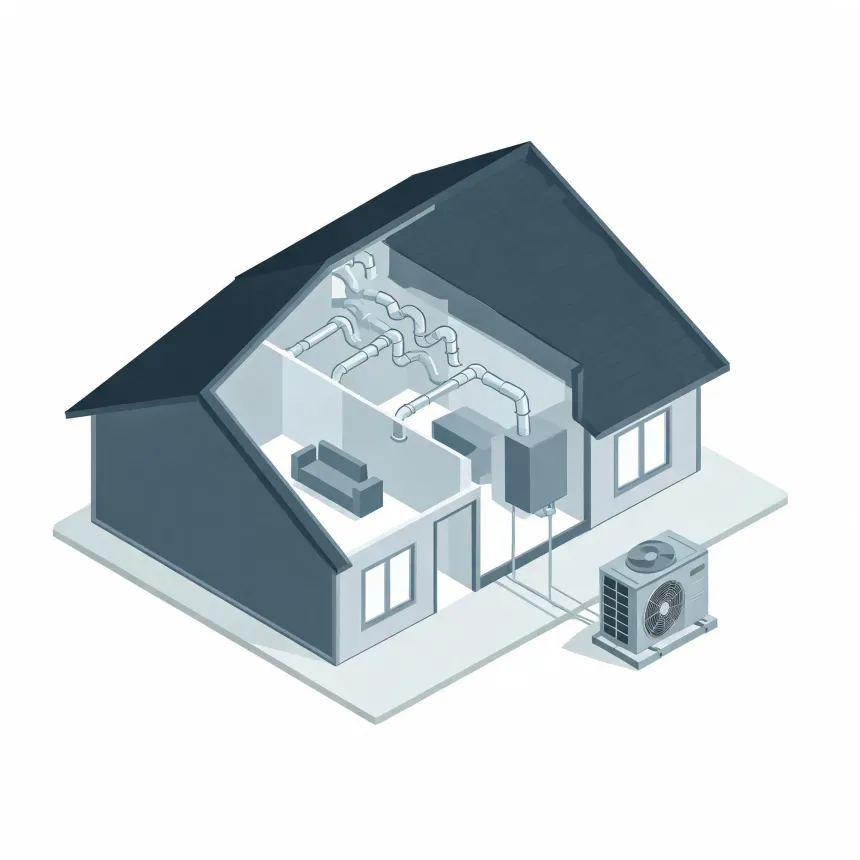
Isometric cutaway illustration of a house showing interior ductwork, an indoor air handler unit, and an outdoor condenser unit beside the building.
Your system heats October through May and cools June through August.

NOAA nClimDiv, 1991–2020 normals

Heat here runs October through May, eight months out of the year.

September is when a weak part gets found, right before the load hits it.

Half the homes here were built by 1979, old enough that the heat pump itself may be original

Half the homes here were built by 1979
222 damaging wind events from 2015 to 2024
89 hail events from 2015 to 2024

Electricity in New Mexico ran 14.20 cents per kilowatthour in 2024, and a heat pump that's low on charge or stuck in the wrong mode burns more of it for less heat. That shows up on the bill before anyone spots it any other way. It's still the same fix either way, a tech finds the part that quit and replaces it. Nothing about running a heat pump here costs more than it should, so a sudden jump in what you're paying is worth a call, not something to wait out.

Your heat pump most likely needs a known fix, not a mystery

San Miguel County sees its share of wind, hail and winter storms, same as a lot of places, and none of it wears out a heat pump any faster than normal use does. A system that's blowing cool air or short cycling has an ordinary cause behind it, and a tech can find it by checking the usual parts in order.

Find a contractor
A man in a gray shirt and tan pants carries a worn canvas tool bag up porch steps toward a dark blue paneled front door, with a potted shrub beside the entry.
A gray air-source heat pump mounted on a concrete pad next to a house with gray vinyl siding, surrounded by gravel and flanked by green shrubs and white hydrangea flowers.

The parts that switch the system are the parts that wear out

A heat pump works through every month its thermostat calls for heat or cool, so the parts that cycle most are the parts that wear first. The reversing valve shifts the system between modes, and when its coil weakens or the valve body sticks, the unit stops switching clean. Contactors and capacitors sit in that same spot, pushed every time the compressor or fan kicks on, and both wear down from plain repetition rather than from any one bad day. The defrost control is its own weak point in cold stretches, since it has to sense coil temperature and reverse the system briefly to melt off frost. When that sensor drifts or the board behind it fails, the coil ices over and stays iced. Refrigerant charge matters more here than in a plain air conditioner, because the same charge has to work in both directions, and a slow leak that would be minor in cooling can leave a heat pump struggling to pull any heat out of cold air at all. None of this is damage from a hard season. It is what running long hours, winter and summer both, does to the same handful of parts over time.

A small fault turns into a bigger repair

A reversing valve that sticks partway, or a defrost sensor reading wrong, does not fix itself by running more. The compressor keeps pushing against a system that is not switching clean, and that strain is what turns a valve replacement into a compressor replacement.
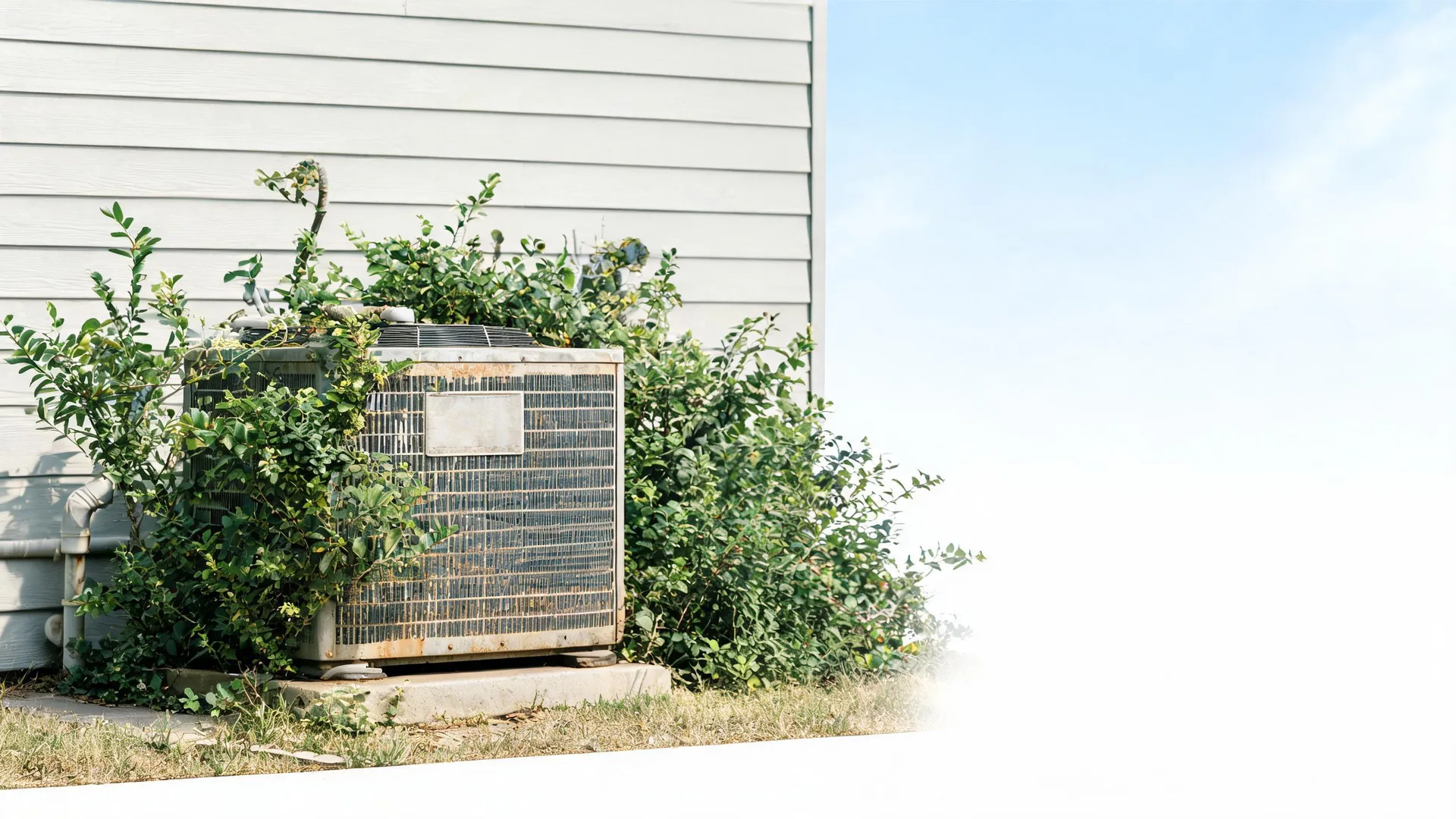
Ice is the clearest sign to stop and call

A coil that should defrost every so often and does not will keep icing over a little more each cycle. Left alone, the ice blocks airflow across the coil entirely, and the system can keep running in a mode that does nothing but load the compressor for no heat at all.

Most people notice a heat pump problem before they can name it. The air coming out feels cool when it should feel warm, or the system runs and runs without catching up to the thermostat. Short cycling is another one, the unit kicking on and off in quick bursts instead of holding a steady run. Ice on the outdoor unit is worth walking outside to check, since a little frost in cold weather is normal but a coil caked in ice is not. Listen for it too. A hum with no airflow, a clicking that repeats without the system starting, or a new rattle from the outdoor unit all point to a part that's failing rather than a system having a rough day. Any of these is worth a call before it runs long enough to take another part down with it.

A heat pump that needs a new reversing valve or defrost control is almost always worth fixing. Those are contained repairs, parts swapped out on their own without touching the rest of the system. A compressor failure sits in different territory. It's the most expensive part in the unit, and a tech will usually weigh its cost against the age and condition of everything else before recommending that road. The real question behind repair versus replacement isn't the one broken part, it's whether this is the first part to fail or the third one this year. A system that keeps needing attention is telling you something about everything else in it, even the parts that haven't quit yet.