April and October are when it breaks
A heat pump in Doña Ana County switches over in April for cooling and October for heat. Whatever was already weak in the system, a tired capacitor or a low charge, shows itself the first time it has to work hard.
Takes about a minute. No obligation.
A heat pump in Doña Ana County switches over in April for cooling and October for heat. Whatever was already weak in the system, a tired capacitor or a low charge, shows itself the first time it has to work hard.
If your heat pump is struggling right as the season turns, that timing itself is a clue. A tech checking it now should be looking at what the seasonal switch asked of it, not just what the thermostat says today.

NOAA nClimDiv, 1991–2020 normals
A heat pump that won't switch over is usually stuck in one mode because the reversing valve isn't getting the signal, or the thermostat is set wrong for the season.
Check the thermostat is set to heat or cool as needed and that the filter isn't choked with dust before you call anyone out.

Half the homes in Doña Ana County were built in 1991 or later. If your house falls on that side, your heat pump is probably not that old either. A reversing valve stuck in one position or a capacitor that's given out is a fixable problem on a system with plenty of years left in it, not a reason to start pricing a new unit. That's a different situation than an old compressor on its way out. A tech who knows how old your system is can tell you fast whether you're fixing a part or looking at something bigger.
Problems tend to show up in the first weeks of the season, when the load hits a part that was already weak.
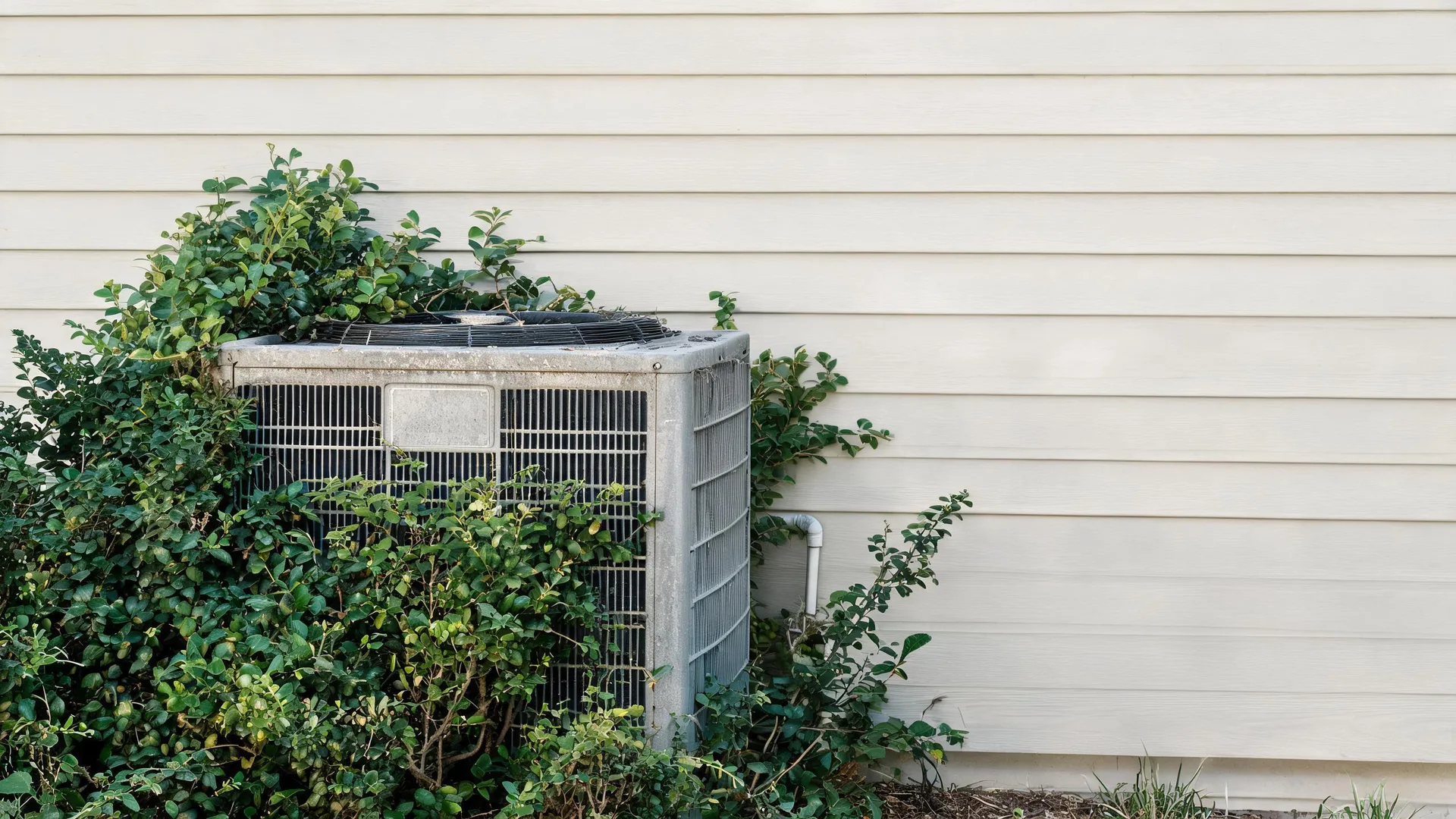
Find a contractorA heat pump runs the whole year, so everything in it wears a little at a time instead of all at once. The reversing valve is usually the first thing to go. It only moves when the system switches between heat and cool, and a valve that sits in one position for months can stick when it's finally asked to move again. The run capacitor weakens the same slow way. It loses its charge a bit at a time until one day it can't kick the compressor or the fan motor on. Low refrigerant is different. That's not wear, that's a leak somewhere in the line, and it gets worse on its own instead of waiting for a season change to show up. The outdoor coil takes the brunt of being outside year round, and when it's coated in dirt or grown over with growth, the whole system works harder to move heat across it. None of these failures care what the thermostat is set to. They happen because a part has been doing its job for years and finally stops.
A compressor that's low on charge or drawing hard against a bad capacitor is already working harder than it should to move heat. Keep running it like that and it builds up heat it can't shed, and that heat breaks down the oil that's supposed to protect it. A compressor that seizes doesn't get fixed, it gets replaced.
Low refrigerant or weak airflow lets the indoor coil drop below freezing, and ice starts building where it shouldn't. Once ice forms, it blocks the airflow further, which drops the temperature more, which grows more ice. Left running, a coil can ice solid and send liquid refrigerant back to the compressor, which is exactly what that compressor isn't built to handle.
Most calls start with the system running but not keeping up. Warm air blowing when it should be cool, or the reverse, with the heat pump running constantly and never satisfying the thermostat. Sometimes it short cycles, kicking on and off every few minutes instead of running a full cycle. A hissing or bubbling sound near the lines points to refrigerant escaping somewhere it shouldn't. Ice on the outdoor unit when it should be running clean, or a smell of burning dust the first time it kicks on, are both worth a call rather than a wait. None of these fix themselves, and most get worse the longer the system keeps running against them.
A diagnostic starts outside, not at the thermostat. A tech checks the pressures on the line set first. That number rules refrigerant in or out as the problem before anything else gets touched. From there it moves to the electrical side. The capacitor gets tested under load, not just looked at, since a capacitor can look fine and still be too weak to start the compressor. The reversing valve gets checked by listening to it shift when the system is told to switch modes. A valve that doesn't click over is easy to hear once you know what you're listening for. Airflow gets checked last, coil and filter both. Restricted air can mimic a refrigerant problem that isn't actually there. A good diagnosis rules things out in that order instead of guessing at the first part that comes to mind.