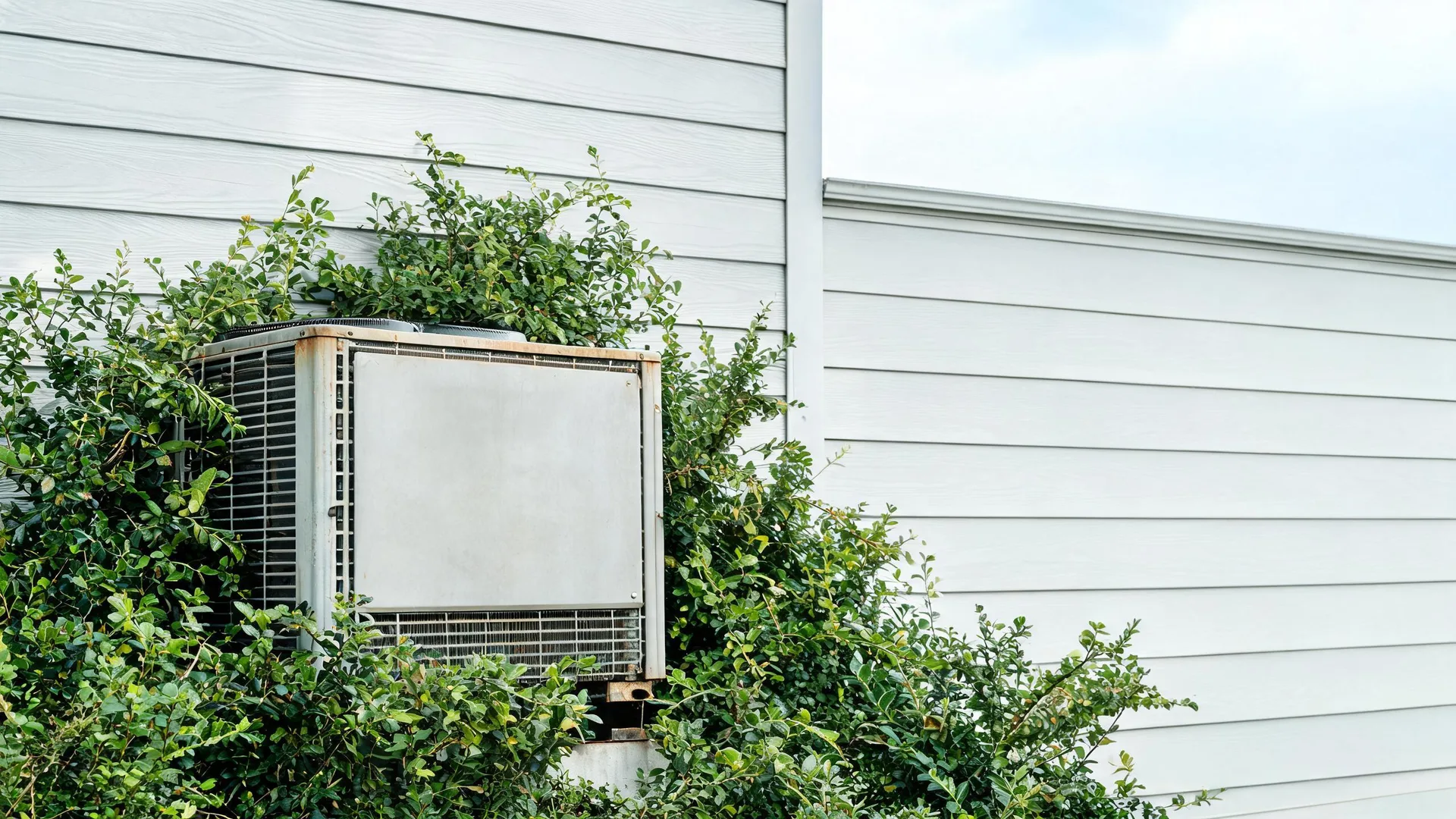
Cold, not harsh, on the equipment
Winters here average 20°F overnight through December, January and February. That's cold enough for a heat pump to work for its keep, but it's steady, dry cold, not the kind of swings that wear a system down fast.

Takes about a minute. No obligation.
Winters here average 20°F overnight through December, January and February. That's cold enough for a heat pump to work for its keep, but it's steady, dry cold, not the kind of swings that wear a system down fast.
If your heat pump is acting up, the cause is more likely a worn part or a system that's reached its age than a unit beaten down by a harsh climate. That's worth knowing before you decide whether to repair it or replace it.

NOAA nClimDiv, 1991–2020 normals
Heat here starts up in October, after it's sat idle since May.
A weak part that made it through summer often gives out the first cold week it has to carry a full load.




A heat pump that won't heat or cool is worth fixing more often than not, especially if the cabinet and ductwork are sound and the problem is one part. A failed capacitor, a bad contactor, a low charge from a slow leak, a reversing valve stuck in one position. All of those are repairs, not reasons to replace the system. What changes the math is the compressor. That's the part that actually moves refrigerant, and it's the most expensive thing in the unit. A compressor failure on a system that's gotten old usually means putting serious money into a machine that's still going to act its age everywhere else. A tech checking it out should be able to tell you which kind of problem you've got before you decide anything.
It has an easier job here than in most places, so your heat pump is often in decent shape. Repair is usually worth it.
Find a contractorA heat pump that's struggling doesn't fail cleanly. It fails a little at a time, and running it through that doesn't buy you anything. A system low on charge keeps pulling the same current while moving less heat. The compressor works harder for a smaller result, and that extra strain shortens what's left of its life. A failing capacitor makes the compressor start hard every cycle instead of smoothly. Each hard start is wear it doesn't recover from. Ice on the outdoor coil is worse. Once it builds, the unit loses its grip on the outside air and runs longer to do less. A defrost cycle that isn't working right lets that ice keep stacking up. None of these fix themselves by staying on. The part doesn't rest and recover. It keeps failing under the same load until it quits outright, usually at the worst possible time.
A heat pump in trouble rarely announces itself. It shows up as air coming out cooler than it should on a cold day, a unit that runs long stretches without ever catching up, or outdoor fan that's turning but not moving much air. Short cycling, where the unit kicks on and off every few minutes instead of running a full cycle, points to a different problem than a system that runs constantly and never satisfies the thermostat. Which one you're seeing narrows down what's actually wrong before anyone opens the cabinet.
A hard clunk when the system switches between heating and cooling usually means the reversing valve. A hissing or bubbling sound near the lines can mean a refrigerant leak. A burning smell on startup is worth shutting the system off for, not running through. None of these need a trained ear to notice. They just need someone to pay attention instead of waiting for the system to quit outright.
Before anyone comes out, a few things are worth a look. Check the thermostat first. Make sure it's set to heat and the setpoint is actually above room temperature, since a setting bumped by accident gets mistaken for a broken system all the time. Go outside and look at the unit. If the outdoor coil is caked in ice or buried in leaves, that alone can stop it from working right. Check the air filter too. A filter clogged with dust chokes off airflow and makes the whole system struggle. Walk around the house and see if any vents are closed or blocked by furniture. If the breaker for the unit has tripped, that's worth noting, but leave it alone if it trips again after you reset it. That's a sign of a real problem, not something to keep flipping back on.
A diagnostic call starts outside at the unit itself. A tech will check the outdoor coil for ice or dirt, look at the fan, and get a read on refrigerant pressures before touching anything inside. From there it's gauges and a multimeter more than guesswork. Static pressure readings show whether the system is breathing right. Amp draw on the compressor shows whether it's straining. A check of the reversing valve shows whether it's actually switching modes when told to, since a valve that sticks partway can look like several other problems at once. Most of this gets sorted before the panels go back on, and the tech should be able to tell you which part failed and why, not just that something did.