
View from under a shaded patio roof toward a single-story stucco house with a covered walkway, a concrete block retaining wall, a low spreading tree, and gravel ground cover.

Heat Pump Repair in Albuquerque, NM

Tell us about the job

Takes about a minute. No obligation.

RepairHeat PumpBernalillo County, NM
Step 1 of 2

What ZIP code is the job in?

Heat pumps here work both jobs, cooling from June through August and heating October through April. September and May are the months to pay attention to, since that's when the load changes and asks more of a part that's been coasting. A heat pump that ran fine on light duty can stall once it has to push harder, whether that's the first cool morning in October or the first hot stretch in June. If yours is short cycling, running without shutting off, or blowing air that isn't warm or cool enough, that weak part was probably already there. Getting it checked before the season sets in beats waiting for it to quit outright.

7 months
October through April, your system heats
3 months
June through August, it cools
23°F
the average winter night it heats against
88°F
the average summer afternoon it cools against
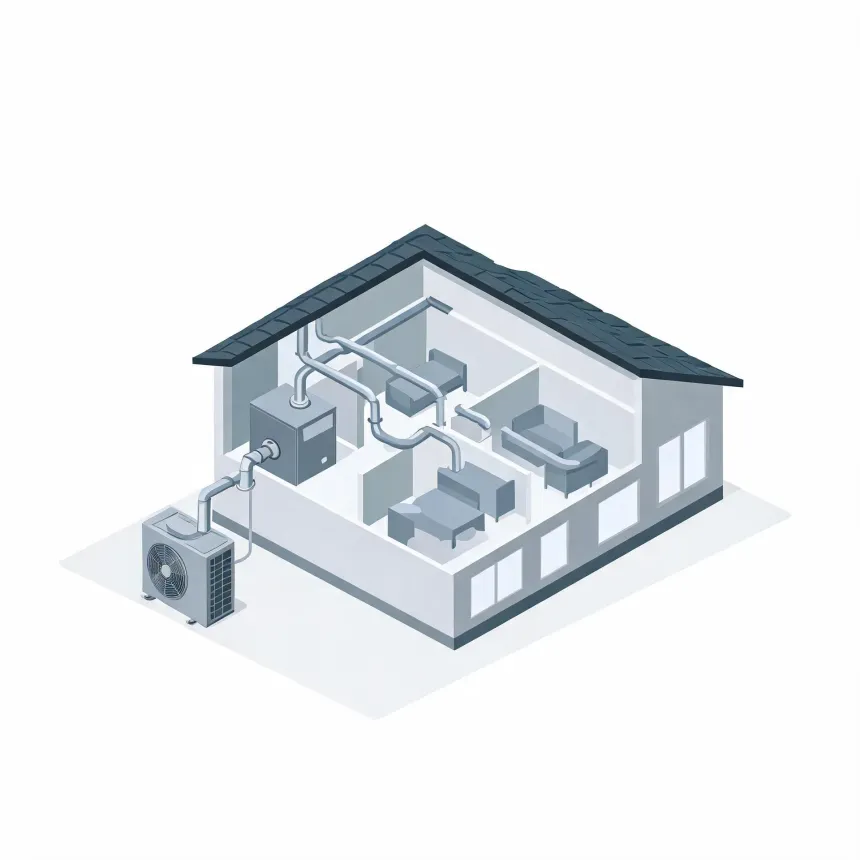
Isometric cutaway illustration of a single-story house showing an indoor air handler, branching ductwork through rooms with furniture, and an outdoor condenser unit connected by a line outside the wall.
Your system heats October through April and cools June through August.

NOAA nClimDiv, 1991–2020 normals

Bernalillo County sees winter storms, hail and damaging wind most years, same as a lot of places.

None of that is what's wearing on your heat pump. Look at the part that's been working hardest, not the weather outside.

Weather can still knock out power, and that's worth planning around separately. About 13% of New Mexico households lost power for a full day or more last year. A heat pump won't run through an outage like that, and when the power comes back, it should start up on its own without anyone needing to reset it. If yours doesn't, that's a separate problem from whatever brought you to this page, and worth mentioning when you call someone. But an outage isn't what's making your system short cycle or blow weak air. That points back to a part wearing out on its own schedule, not the grid.

Your heat pump's problem has a known cause and a known fix

Whatever's wearing on your heat pump, it's a part worn down by run time, not anything particular to Albuquerque. That's good news. It means the fix is a known one, not a guessing game. New Mexico electricity ran 14.20 cents per kilowatthour in 2024, so a unit running on a weak part is costing more than it should while it limps along. Worth having someone look at it before it quits for good.

Find a contractor
A gray heat pump condenser unit mounted on a concrete pad against the gray lap-siding exterior wall of a house.

Your home is likely newer than the problem

Half the homes in Bernalillo County were built in 1982 or later. If yours is one of them, and the heat pump came with the house, it's probably not old enough to be the real problem. Most of these systems have a working life well past what your home's had time to put on it. That points this toward a repair, not a replacement. A part worn down by run time gets fixed and the rest of the system goes on working.

A weak part makes the others work harder

A heat pump low on charge or losing compressor strength doesn't shut itself down. It keeps running to try to reach the temperature it's set to, and that extra runtime wears on the contactor, the fan motor and the bearings around it. A problem that started in one part spreads to the ones around it.
A compressor pushed too hard can fail outright

A compressor is built to cycle on and off, not run without stopping. When it can't reach the set temperature and keeps trying, it can overheat. A failed compressor is often the point where a technician stops talking about repair and starts talking about replacing the unit. Catching the weak part early is what keeps it a repair.

Before anyone comes out, there's a few things worth checking yourself. Look at the outdoor unit first. If the coil is covered in leaves, dirt or ice, airflow is choked off and the system has to work harder than it should. Check the air filter inside too, since a clogged one does the same thing from the other end. Walk around the house and see if the vents are open and not blocked by furniture or rugs. If you've got a programmable thermostat, make sure it's set to the mode you think it's in and the batteries aren't dying, since a thermostat with weak batteries can cause strange cycling that looks like a bigger problem than it is. None of this fixes a bad compressor or a refrigerant leak, but it rules out the simple stuff before you pay someone to find it for you.

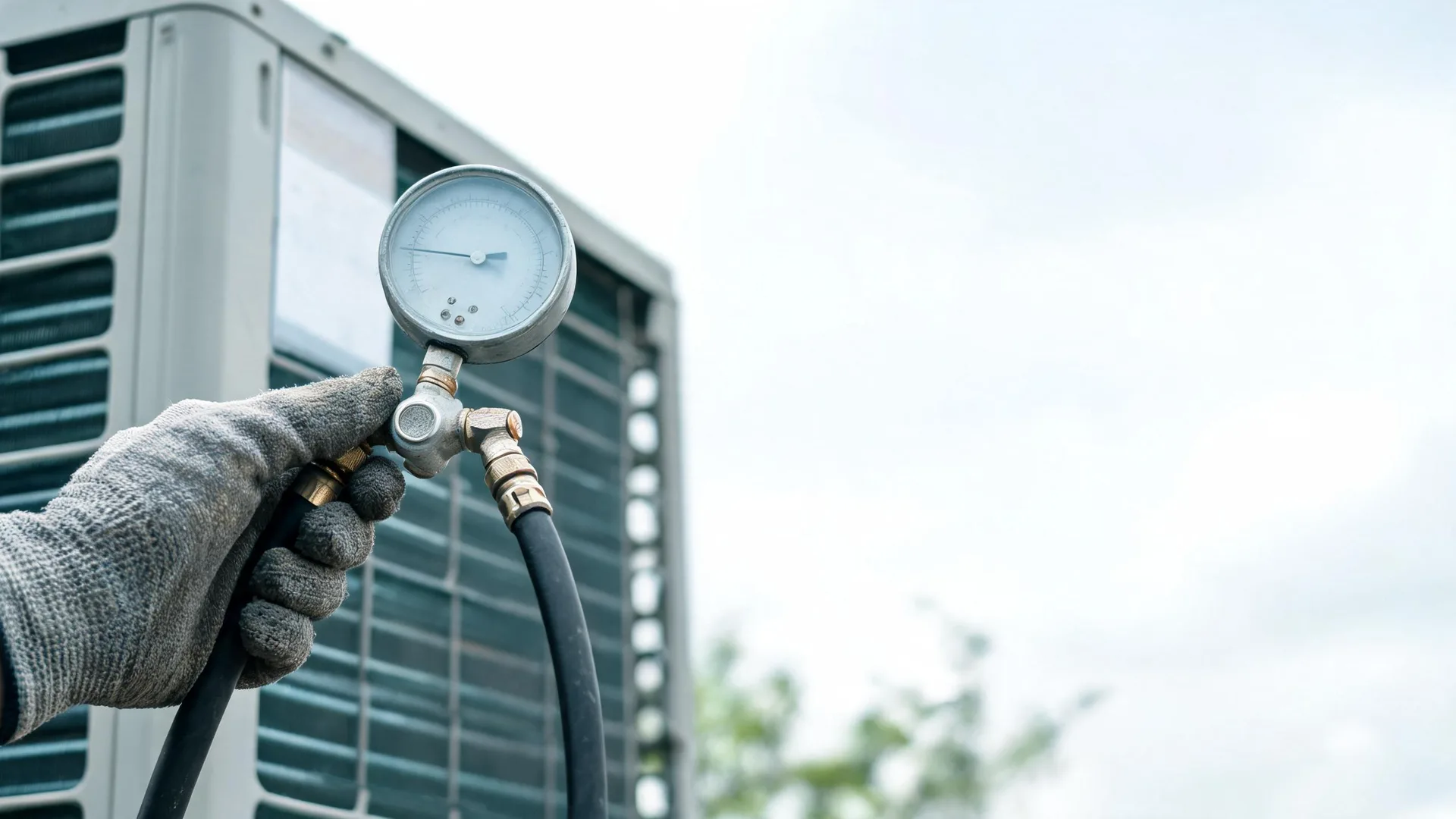
A diagnostic visit starts outside, at the unit itself. A technician checks refrigerant pressure on both sides of the system, since low charge shows up there before it shows up anywhere else. They'll pull the cover and look at the contactor and capacitor, the parts that wear from cycling on and off thousands of times. Inside, they check the air handler, the coil, and the blower motor, looking for ice, for weak airflow, for anything that doesn't match what the thermostat is asking the system to do. They'll also run the reversing valve, since that's the part that switches a heat pump between heating and cooling, and a stuck one explains a lot of complaints that otherwise look unrelated. Most of this is done with gauges and a multimeter, not guesswork. By the end, the problem usually has a name, and so does the part that's causing it.