Gas is the default here
Utility gas heats 42.9% of homes in Grant County, more than any other fuel. Electricity comes next at 26.4%, with propane heating another 16.2%. A furnace or boiler is what most homes here were built around.
Takes about a minute. No obligation.
Utility gas heats 42.9% of homes in Grant County, more than any other fuel. Electricity comes next at 26.4%, with propane heating another 16.2%. A furnace or boiler is what most homes here were built around.
Installing a heat pump here usually means replacing a gas furnace rather than another heat pump. That's a bigger change for the house, since a heat pump handles both heating and cooling and runs on electricity instead of gas. Whoever quotes the job should walk through how it fits your existing ductwork and electrical setup, not just swap one box for another.
NOAA nClimDiv, 1991–2020 normals
Half the homes in Grant County were built in 1978 or earlier.
A heat pump going into a house that old has to match wiring and ductwork that were sized for whatever heated the place before, so that is the first thing to check before the old furnace comes out.



New Mexico electricity ran 14.20 cents per kilowatthour in 2024, cheaper than most of the country. That changes what an upgrade is worth here. A high-efficiency heat pump still costs more to buy, and the savings on your power bill take longer to earn that back. So the model with the best rating on paper isn't automatically the right call. What matters more is whether the unit is sized right for your house and holds up against the weather it has to run in. Ask whoever quotes the job to size it to your house, not to the spec sheet.
Heat runs here from October through April, about seven months a year. September is the last quiet month before that starts. Putting a heat pump in now, while the old furnace is still working and there's no rush, means whoever installs it has time to check the ductwork and wiring properly instead of working around a breakdown in the cold.
Find a contractor
A heat pump here spends its winter holding 27°F overnight lows, not fighting deep cold. That's a light load. The wind and hail already made the point on this page. That's what the install has to stand up to, not the temperature. So pick the unit for how it's built and how it's mounted, not for the highest efficiency number on the sheet. A mid-range heat pump that's properly secured will outlast a top-tier one installed without the wind in mind.
A heat pump has to be sized from a room by room load calculation that accounts for window area, insulation and how the house is laid out, not from whatever number is stamped on the furnace being replaced. Furnaces were often oversized to begin with, so copying that number just carries the mistake into the new system.
An oversized heat pump blasts the house to temperature fast, shuts off, and leaves the air clammy because it never runs long enough to pull moisture out. An undersized one runs nearly nonstop and still can't hold the temperature on the hardest days. Either way the fix isn't a different thermostat setting, it's equipment that was never matched to the house.
If the old system is a gas furnace, it usually comes out rather than staying as backup. The furnace, the coil above it and the old line set get disconnected, and the ductwork gets tied into the new heat pump instead. The gas line itself doesn't just get capped and forgotten, it needs to be sealed off properly so there's no leak risk sitting behind a wall. If there's a gas water heater on the same line, that part stays live and just gets isolated from the furnace branch. The old outdoor condenser, if there was central air before, comes out too, since the heat pump's outdoor unit replaces it rather than sitting alongside it. None of this is optional cleanup work. Leaving a dead gas line or an abandoned flue in place is the kind of thing that fails an inspection later even if it causes no problem today.
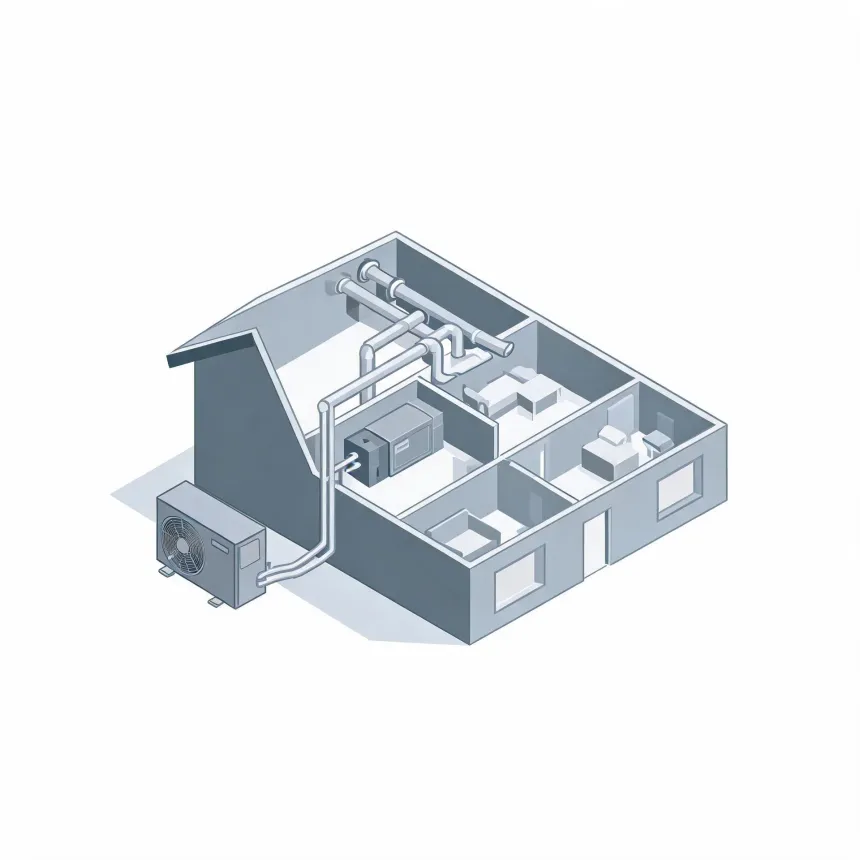
The crew shows up with the outdoor unit, the air handler or coil, and whatever ductwork and electrical gear the job calls for, so most of the day is spent on connections rather than waiting on parts. The old equipment comes out first. Then the line set gets run between the outdoor unit and the indoor coil, the refrigerant lines get connected, and the system gets evacuated to pull moisture and air out before refrigerant goes in. Electrical work usually means a new circuit or breaker sized for the heat pump, since it draws differently than whatever was there before. Once everything's connected, it gets charged, tested, and run through its paces, heating and cooling both, before anyone calls it done. A straightforward swap can wrap in a day. One that involves new ductwork, a panel upgrade, or rerouting lines because of how the house is laid out takes longer, and a contractor who's actually looked at the place beforehand should be able to tell you which one this is before the work starts, not after.