





View from under a wood-beamed patio roof across a gravel yard toward a stucco house wall and a concrete block boundary wall, with a large gnarled tree beyond.

Heat Pump Installation in Moriarty, NM

Tell us about the job

Takes about a minute. No obligation.

New system or replacementHeat PumpTorrance County, NM
Step 1 of 2

What ZIP code is the job in?

Gas heats more homes in Torrance County than anything else, 41.5 percent of them. Electricity is next at 15.6 percent, with propane close behind at 11.5 percent. That tells you most houses in Moriarty were built around a gas furnace, with ductwork already in place to move warm air. A heat pump uses that same ductwork, so the install can tie into what's already there instead of running new duct through the house. If your home is one of the gas-heated ones, the contractor sizing the job will want to know the furnace it's replacing or pairing with, since that shapes what the heat pump needs to do on the coldest days.

8 months
October through May, your system heats
3 months
June through August, it cools
21°F
the average winter night it heats against
86°F
the average summer afternoon it cools against
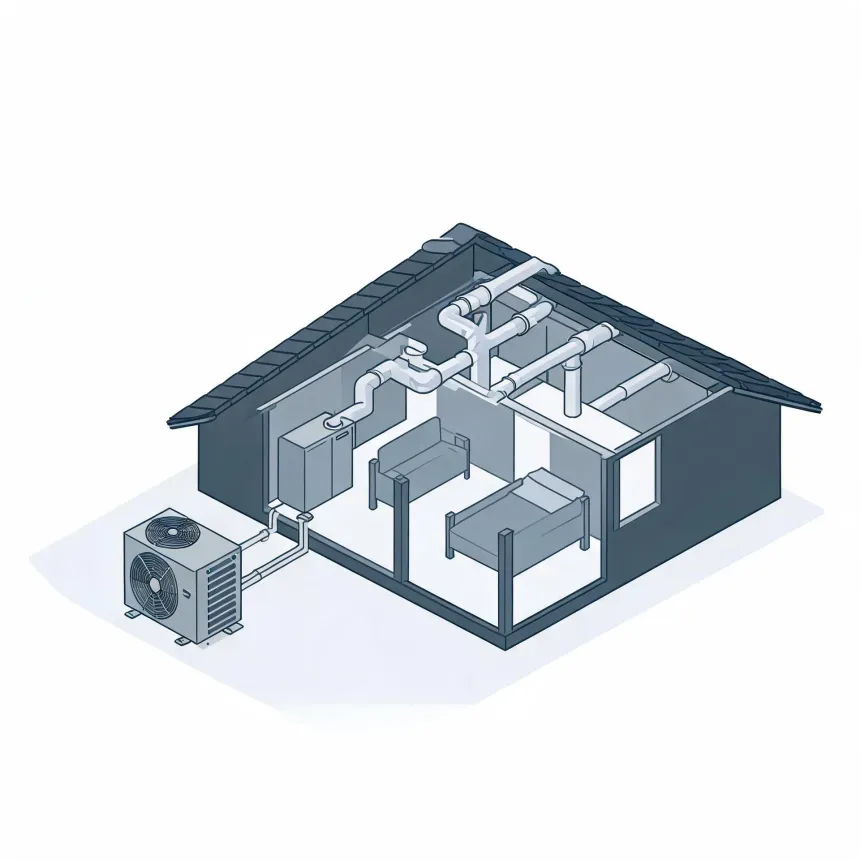
Isometric cutaway illustration of a house showing interior ductwork, an indoor air handler, and beds, with an outdoor condenser unit connected by lines outside the wall.
Your system heats October through May and cools June through August.

NOAA nClimDiv, 1991–2020 normals

Heat in Moriarty runs October through May, eight months of the year.

September is when a new heat pump should already be running, not when the install starts.

Nothing here calls for sizing up or paying more

Half the homes here were built by 1987
220 damaging wind events from 2015 to 2024
43 hail events from 2015 to 2024
A standard system fits this county fineWinters here average 21°F at night, well within what a standard heat pump handles.

A heat pump here can be sized the normal way, matched to the house, not pushed bigger for anything local. New Mexico electricity ran 14.20 cents per kilowatt-hour in 2024, and that's the number a contractor uses to size the unit and run the operating cost, not a reason to size up. Moriarty doesn't ask more of the equipment than the rating plate already covers. A standard efficiency unit, properly sized to the house, handles the winters here.

The minimum a new system has to meet, and the credit that comes with it

Torrance County sits in zone 5B, and any heat pump installed here has to hit 14.3 SEER2 and 7.5 HSPF2 at minimum. That's the federal floor as of 2023, not a local add-on. A unit meeting those numbers qualifies for the federal tax credit, too. The rules narrow what can go in. They don't ask the contractor to size up.

Find a contractor
A man in a dark gray t-shirt and tan work pants, seen from behind, carries a canvas tool bag up porch steps toward a dark front door, with a potted plant beside the porch.
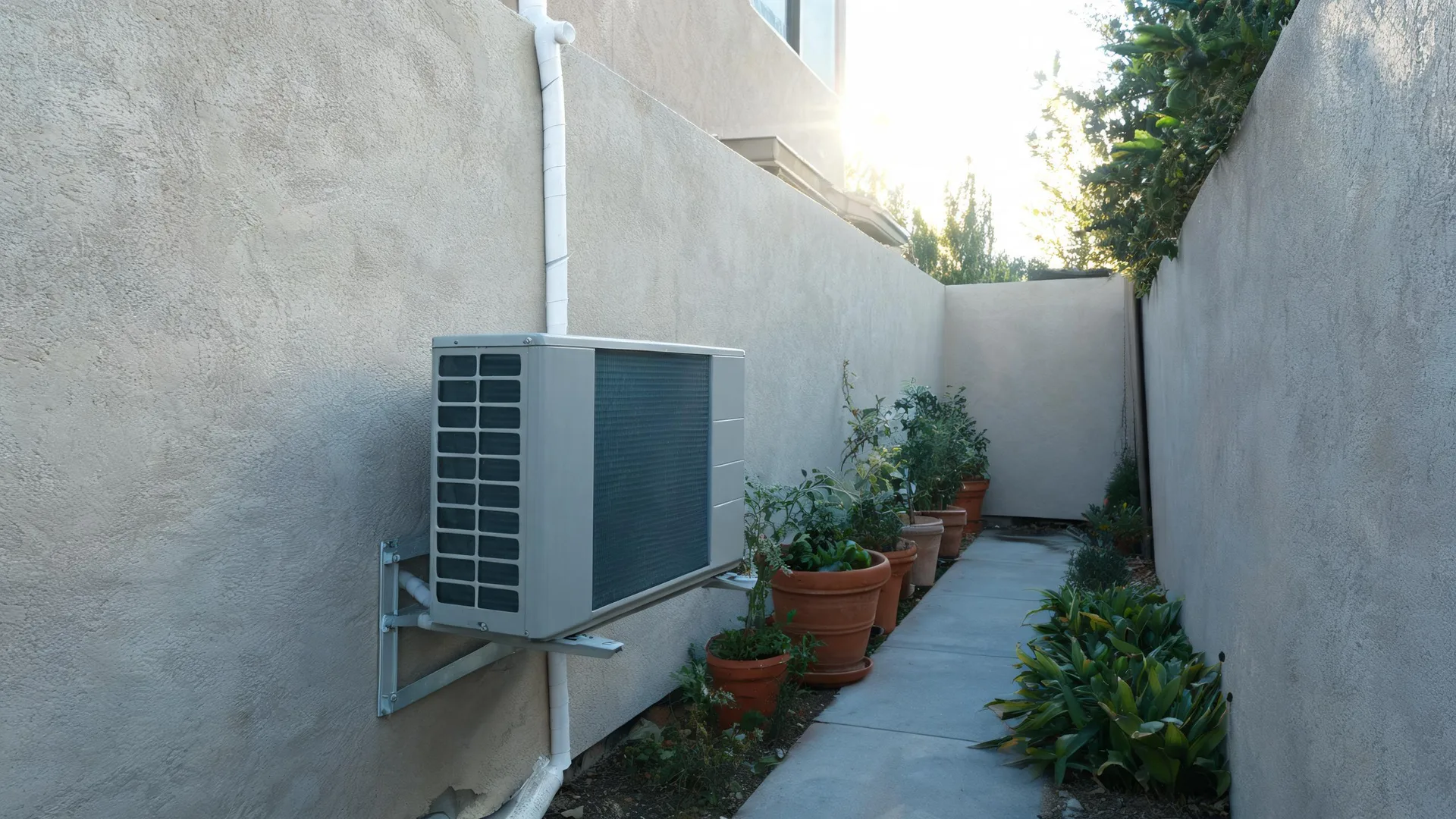
A gray outdoor HVAC unit mounted on a concrete pad beside a house with gray lap siding and a stone foundation.

It runs longer, and that's how it's supposed to work

A heat pump runs on for longer stretches than a furnace does, and that's by design, not a strain on it. A furnace fires hard, heats the air, and shuts off. A heat pump holds a steady temperature by cycling on for longer runs at lower output, which is how it stays efficient rather than a sign it's working harder than it should. When you compare units, ask whether the compressor modulates or just runs at one speed every time it kicks on. A modulating compressor matches its output to what the house needs at that moment, so it isn't pausing and restarting the way a furnace burner does. Ask about the outdoor coil too, since it sits outside through every season in a way a furnace's parts never do, and ask how the unit handles defrost. Every heat pump frosts over in cold weather and pauses to clear the coil before it goes back to heating. How that's managed is worth asking about by name, because it's part of what keeps the system comfortable on the coldest nights, not a flaw to size around.

The outdoor unit decides more than the furnace did

A heat pump's outdoor unit does the work a furnace's burner used to do, plus the job of an air conditioner's condenser. That's more rolled into one piece of equipment, and the size of the compressor inside it, along with how well it modulates, moves the cost more than almost anything else on the job. A single-stage compressor costs less than one that can run at partial output, but it also cycles on and off harder and wears differently over time.
What's already run to the house changes the labor

If the electrical panel has room for a new circuit and the right breaker, a contractor wires in and moves on. If the panel is full or undersized for the load a heat pump draws, that's a separate job before the heat pump goes in at all. The same goes for the line set running between the outdoor unit and the indoor coil. Reusing an existing line set keeps labor down. Running a new one, especially through finished walls, adds time that shows up in the bill.

The gas furnace usually stays in place. A heat pump handles most of the heating on its own, but on the coldest nights the furnace can still kick in and help, so there's no reason to pull it unless it's already near the end of its life. If it does come out, whoever's doing the work has to deal with the old flue or vent pipe, since that's no longer needed once nothing's burning gas to send exhaust outside. The old outdoor condenser, if there was central air before, comes out and gets recycled, since the refrigerant inside it has to be recovered properly rather than just vented. None of that is unusual work. It's the same teardown that happens anytime one kind of system gets swapped for another.

Install day starts outside. If there was an old condenser, it gets disconnected and the refrigerant recovered before the new unit goes in its place. The new outdoor unit gets set on a pad, leveled, and connected to the indoor coil through the line set, whether that line set is reused or newly run for the job. Electrical work comes next, a dedicated circuit sized to what the compressor draws, tied into the panel. Once it's wired and the lines are connected, the system gets pressure tested for leaks before any refrigerant goes in. A leak found after charging means recovering what was just put in and starting over. The last steps decide how the system runs for years afterward. It gets charged to the exact weight the manufacturer specifies, airflow across the indoor coil gets checked, and the thermostat gets set to control the heat pump and the furnace together if one's staying in place. A unit that's low on charge or short on airflow will still run. It just won't run the way it's rated to.