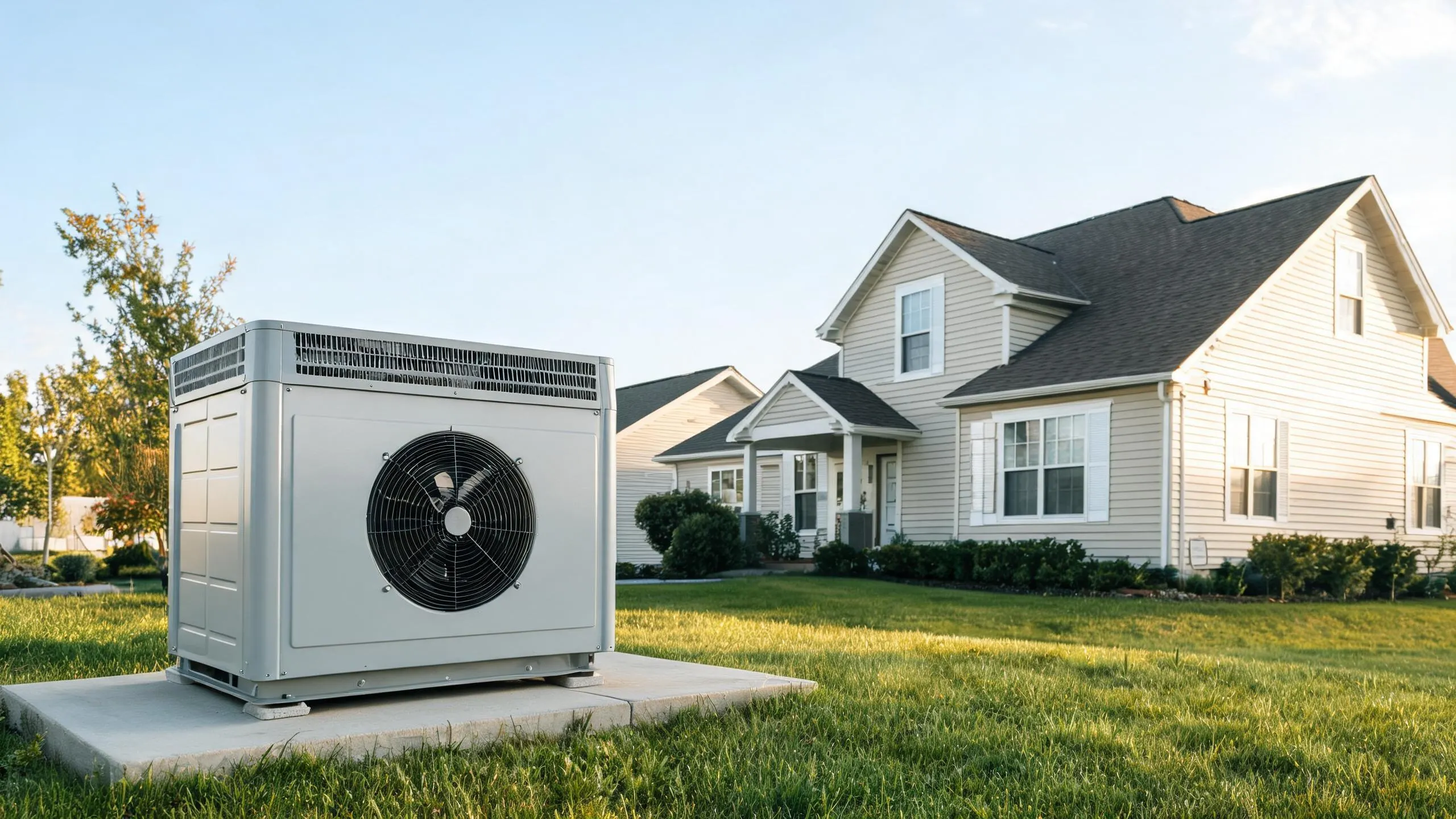
An outdoor heat pump unit mounted on a concrete pad in the front yard of a gray suburban house.

Heat Pump Installation in Lordsburg, NM

Tell us about the job

Takes about a minute. No obligation.

New system or replacementHeat PumpHidalgo County, NM
Step 1 of 2

What ZIP code is the job in?

October is the month to get this done

Heat runs here from November through April, six months straight. Getting a heat pump installed in October means it's in and working before that first cold night, instead of calling a contractor after the heat's already gone out.


The same system covers May through September

Cooling in Lordsburg starts in May and runs through September. A heat pump put in ahead of October is already there when that first warm week hits, no separate install needed for summer.

6 months
November through April, your system heats
5 months
May through September, it cools
29°F
the average winter night it heats against
93°F
the average summer afternoon it cools against
Isometric cutaway illustration of a single-story house showing interior ductwork, an indoor air handler, and an outdoor condenser unit connected by lines along the exterior wall.
Your system heats November through April and cools May through September.

NOAA nClimDiv, 1991–2020 normals

Electricity in New Mexico runs 14.20 cents per kilowatt-hour, cheaper than most states.

A high-efficiency heat pump costs more up front and takes longer to earn that back here, so picking one for reliability and fit matters more than chasing the highest efficiency number.

Half the homes here were built by 1976, and a heat pump has to fit the house that's already standing

Half the homes here were built by 1976
51 damaging wind events from 2015 to 2024
Winter nights average 29°F

Hidalgo County is zone 3B, warm and dry with a long stretch of cooling and a short mild winter. Any heat pump installed here new has to clear a federal minimum of 14.3 SEER2 for cooling and 7.5 HSPF2 for heating. Central air systems installed in the Southwest have their own mark to hit too, an EER2 rating that depends on how the unit is certified. Those numbers narrow what a contractor can actually install, before you ever start comparing brands. A system that clears them is built for this kind of climate, long summers and a short winter rather than the other way around. A qualifying heat pump may also open up a federal tax credit, worth asking about before you settle on a model.

Replace it before the season

Replace it before the season starts, so it happens on your schedule, not in a hurry.

Find a contractor
A man in a dark shirt and brown work pants, seen from behind, carries a worn canvas tool bag up porch steps toward a dark front door, with a potted shrub to the right.
A dark gray heat pump unit mounted on a concrete pad next to a house with gray siding and a stone veneer wall.

What fit means for the job itself

A contractor sizing a heat pump for a house on the older half of that line, built in 1976 or earlier, is working with whatever ductwork and electrical panel came with that house. That can mean the panel needs a look before anything gets installed, or that the ducts already in place limit which equipment actually fits. Worth asking the contractor to check both before they settle on a model.

Ask what size it's rated for, not just the brand

A heat pump sized too big cools the room fast and shuts off before it pulls the moisture out of the air, so the house feels clammy. One sized too small runs constantly and never quite catches up on the coldest or hottest days. Sizing comes from a load calculation done on the actual house, not a guess based on square footage alone. Ask to see that calculation before you agree to a model.

Ask what happens on the coldest night

A heat pump loses capacity as the temperature outside drops, and at some point it needs backup heat to keep up with the house. Ask what that backup is, how it switches on, and whether it's part of the price being quoted. Systems that look alike on paper can handle that cold snap very differently once the backup heat is figured in.

The rating on the label, SEER2 for cooling and HSPF2 for heating, tells you how much heat the system moves for the power it draws, nothing more. A higher rating means lower running costs over the life of the equipment, but it doesn't decide comfort on its own. Systems with the same rating can behave very differently depending on how well they're matched to the house and how the installer sets them up. A unit that's rated well but oversized for the space will shut off before it runs long enough to do its job right, rating or no rating. Treat the number as a way to compare equipment side by side, not as a promise about what shows up on the bill.

Installation day starts with the old equipment coming out, not the new one going in. The outdoor unit gets disconnected, the indoor coil comes out of the air handler or furnace, and the refrigerant lines get drained or replaced depending on their condition. Setting the new outdoor unit means leveling a pad outside and running new line sets if the old ones don't match the new equipment. Inside, the coil goes in, the electrical hookup gets tied into the panel, and the system gets charged with refrigerant to the exact weight the manufacturer specifies, not just topped off by feel. Once it's running, a tech checks airflow at the vents and lets the system cycle to confirm it's heating and cooling the way it's supposed to before calling the job done.