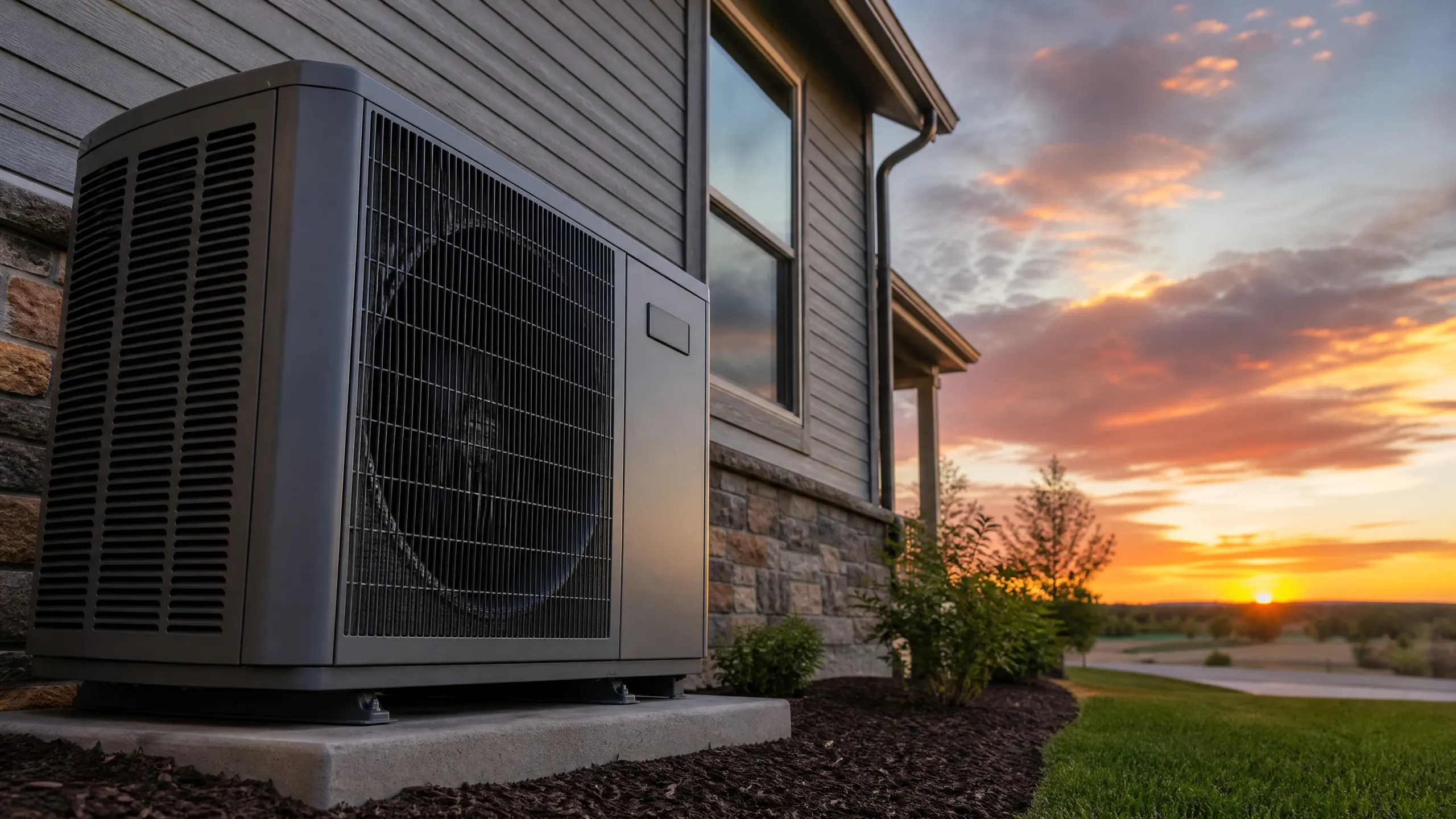






An outdoor air conditioning condenser unit mounted on a concrete pad next to a residential house at sunset.

Heat Pump Installation in Las Vegas, NM

Tell us about the job

Takes about a minute. No obligation.

New system or replacementHeat PumpSan Miguel County, NM
Step 1 of 2

What ZIP code is the job in?

Utility gas heats close to a third of the homes in San Miguel County, more than any other fuel. Bottled or LP gas heats another 18.6 percent, with electricity close behind at 18 percent. A gas furnace sitting next to central air is the setup most homes here already have, and a heat pump changes that picture. It handles both heating and cooling from one outdoor unit, running on electricity instead of gas. Whether that makes sense for your house depends on what you have now and how your ductwork is set up, which a contractor can walk through on-site.

8 months
October through May, your system heats
3 months
June through August, it cools
22°F
the average winter night it heats against
87°F
the average summer afternoon it cools against
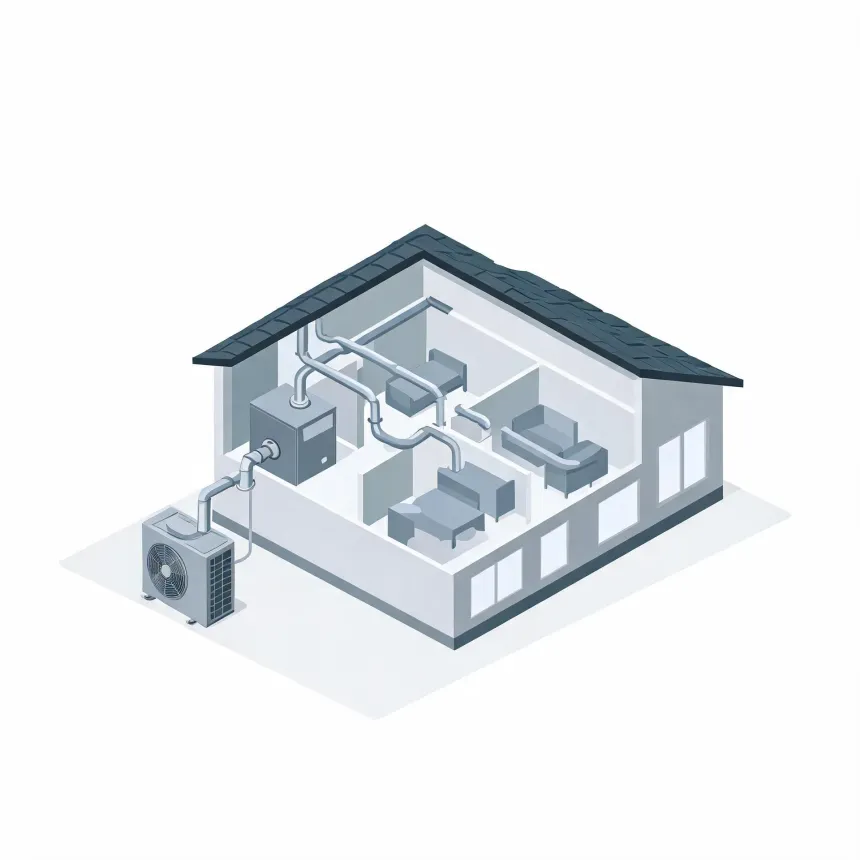
Isometric cutaway illustration of a single-story house showing an indoor air handler, branching ductwork through rooms with furniture, and an outdoor condenser unit connected by a line outside the wall.
Your system heats October through May and cools June through August.

NOAA nClimDiv, 1991–2020 normals

Winters here average 22°F overnight through December, January and February.

A standard heat pump sized for this county handles that range without stepping up to a bigger unit.

Half the homes here were built by 1979, and a new system has to work with the house that's already standing

Half the homes here were built by 1979
222 damaging wind events from 2015 to 2024
89 hail events from 2015 to 2024
Sized for what's already hereNew Mexico homes paid 14.20 cents per kilowatt-hour in 2024, and a standard heat pump is built around that kind of cost.

Heat runs here from October through May, about eight months of the year. September is the month before that starts, and that's the window worth using. Get a heat pump installed then and it's sized, set, and tested before the first cold night in October asks anything of it. Wait until the weather turns and you're choosing a system for a house that's already cold, which tends to mean whatever's on the truck rather than what actually fits your ductwork. June through August is the only stretch this unit spends cooling the house. The other eight months, it's heating. Installing it ahead of September, not ahead of summer, matches how it'll actually be used.

A standard heat pump fits this county. Getting it in before the cold is the job.

San Miguel County sees its share of severe weather. Wind, hail, the occasional winter storm shutting roads down. None of that changes what a heat pump needs to be here. A standard size and efficiency rating handles this county's winters and summers both. The work worth doing is getting it installed and tested before the cold sets in, not hunting for a bigger or costlier unit than the house needs.

Find a contractor
A man in a cap, dark T-shirt and tan work pants carries a canvas tool bag up wooden porch steps toward a gray front door, with a potted shrub beside the entry.
A dark gray heat pump unit mounted on a concrete pad next to a house with gray siding and a stone veneer wall.

Matching the system to the house

Half the homes here were built in 1979 or earlier. A heat pump going into one of those houses has to match the ductwork and electrical already there, not the other way around. If the place has had central air added at some point, that duct sizing and layout is what the new unit works with. A contractor checking the panel and the ducts on-site before install catches a mismatch before it becomes a problem instead of after.

What the rating actually measures

The efficiency rating on a heat pump's label is a seasonal average, not a promise for any one day. It reflects how much heat the unit moves per unit of electricity it uses, tested across typical conditions rather than the coldest night or the hottest afternoon. A higher rated unit tends to cost less to run than a lower rated one of the same size, but the rating alone won't tell you how it holds up when the temperature really drops. That's a separate spec, and it matters just as much.
Why higher isn't automatically better

A heat pump with a higher rating usually costs more to buy, and often has more going on inside, like a variable speed compressor, which can mean more to service later. If the house doesn't need that output, the extra cost doesn't buy much back in comfort. The rating worth paying for is the one matched to the house, figured from its size and layout, not the highest number on the shelf.

Sizing a heat pump starts with the house, not the catalog. A contractor works out a heat load, a calculation that weighs square footage, ceiling height, window area, insulation, and air leakage against the local climate. That number tells them how much heat the house loses on a cold day and how much it gains on a hot one. Too small and the unit runs flat out without reaching the temperature you set, struggling most on the days you need it least to. Too big and it short cycles, reaching the thermostat setting fast and shutting off before it finishes pulling moisture out of the air, so the house feels clammy even when the temperature looks right. Either way, the compressor wears faster because it's working outside the range it was built to run in. The ductwork factors in too. A unit sized right for the house but paired with ducts too small to move that much air will struggle just the same, so the calculation and the duct check go together, not one without the other.

Taking out the old system is part of the job, not an extra step tacked on. A furnace gets disconnected from the gas line and flue, and that line gets capped off properly rather than left for later. If the old setup included a separate air conditioner, that outdoor unit and its line set come out too, since a heat pump uses its own. Refrigerant in an old AC unit has to be recovered, not vented, which is why that part of the work falls to a licensed contractor rather than a general hauler. Whatever's left, the furnace cabinet, the old condenser, the line set, gets hauled off as part of the install rather than sitting in the yard waiting on a second trip. The spot where the old unit sat usually works for the new one too, since the electrical and the duct connections are already there.