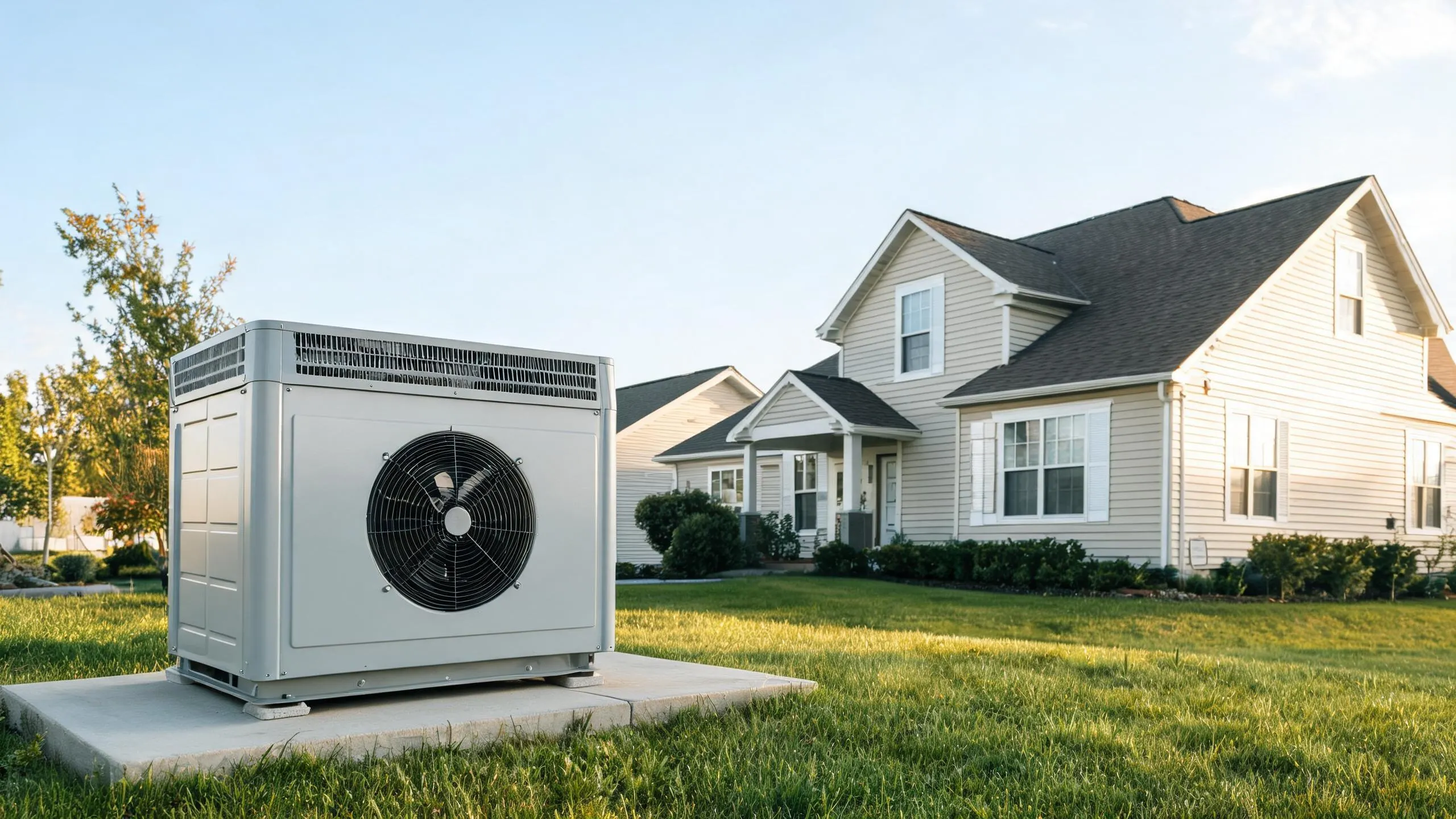





An outdoor heat pump unit mounted on a concrete pad in the front yard of a gray suburban house.

Heat Pump Installation in Farmington, NM

Tell us about the job

Takes about a minute. No obligation.

New system or replacementHeat PumpSan Juan County, NM
Step 1 of 2

What ZIP code is the job in?

Gas heats 63 percent of the homes in San Juan County, more than every other fuel combined. A heat pump works differently than the gas furnace most of your neighbors have. It moves heat instead of burning fuel, and it can run the air conditioning too, so one system covers both jobs. Whether it replaces your furnace outright or works alongside it is worth going over with a contractor, since that depends on what you have now.

8 months
October through May, your system heats
3 months
June through August, it cools
20°F
the average winter night it heats against
88°F
the average summer afternoon it cools against
Isometric cutaway illustration of a single-story house showing interior ductwork, an indoor air handler, and an outdoor condenser unit connected by lines along the exterior wall.
Your system heats October through May and cools June through August.

NOAA nClimDiv, 1991–2020 normals

A heat pump rated for mild weather can still struggle once the temperature really drops.

Ask any contractor how the system you're comparing performs in cold weather, not just how it performs on an average day.

A normal heat pump, sized normally, is what this county calls for

Half the homes here were built by 1986
42 damaging wind events from 2015 to 2024
8 hail events from 2015 to 2024

Farmington sits in climate zone 5B, where winters do more work than summers. Any heat pump installed here new has to meet 7.5 HSPF2 for heating and 14.3 SEER2 for cooling, the federal minimum since January 2023. Air conditioners installed on their own in this region have to clear 14.3 SEER2 too, with an EER2 on top of that, so a straight AC swap faces nearly the same bar. These numbers set the floor, not the ceiling. Some systems clear it by a little, some by a lot, and that's a real part of what you're comparing when you look at quotes.

A right-sized heat pump is the one to install

A standard heat pump sized for your house will do the job here. New Mexico runs 14.20 cents per kilowatt-hour, and a correctly sized system is what keeps that cost in line, not a bigger or pricier one. Get a load calculation done on your house and compare quotes from there.

Find a contractor
A man in a dark shirt and brown work pants, seen from behind, carries a worn canvas tool bag up porch steps toward a dark front door, with a potted shrub to the right.
A dark gray heat pump unit mounted on a concrete pad next to a house with gray siding and a stone veneer wall.

Get it installed before September, not during it

Heat here runs October through May, about eight months of the year. Cooling is the short season, June through August. A heat pump installed in September has no season to break in during, it's working its hardest job within weeks of going in. Put it in before September and the startup kinks get found while the weather still gives you room to deal with them.

The rating is a lab number, not a promise

HSPF2 and SEER2 come from a test done under set conditions, the same for every unit of that model. Your ducts, your home's insulation, and how the system gets installed all affect what it actually delivers. A unit with a strong rating can still underperform if the rest of the job wasn't done right.
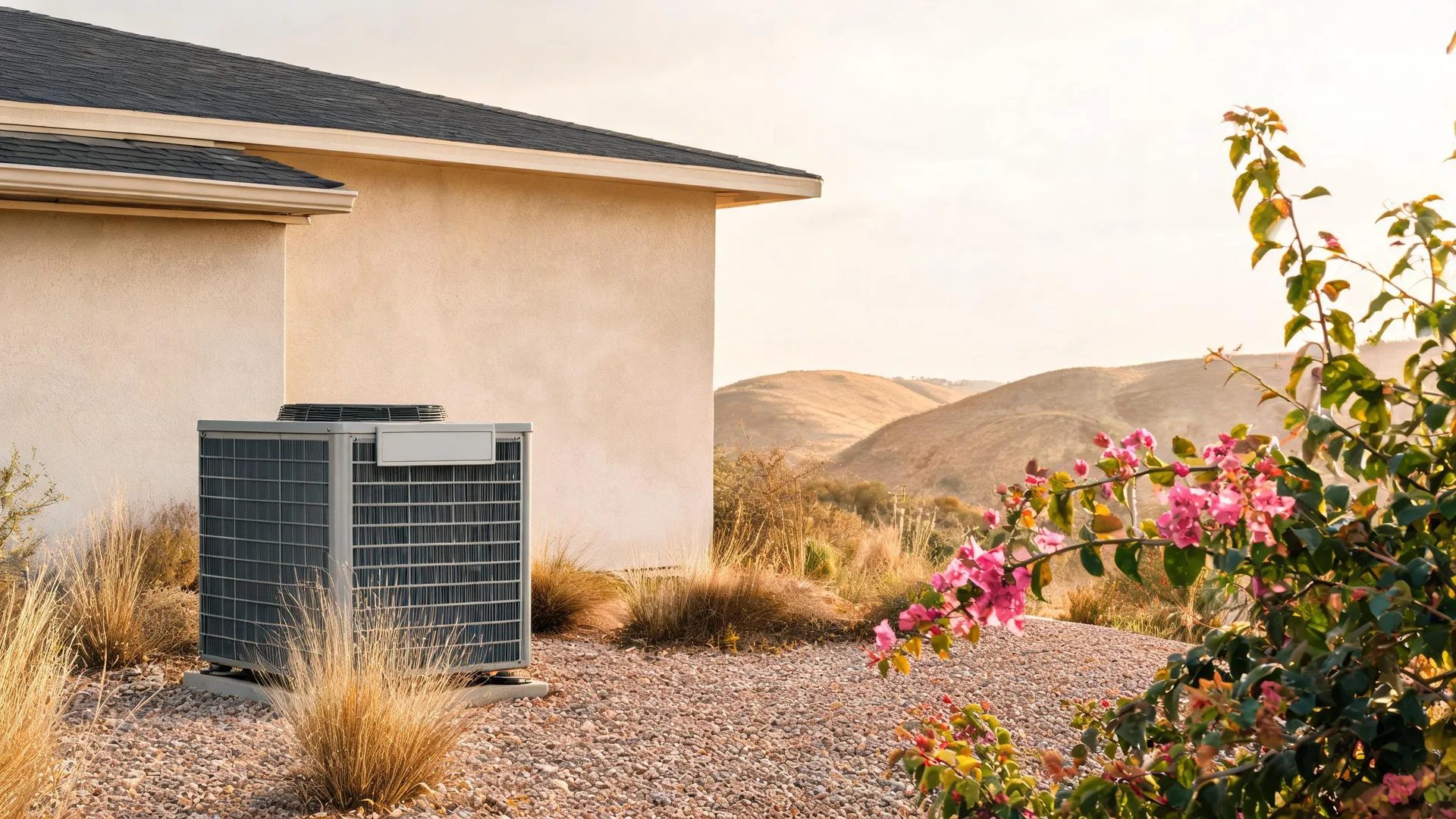
Compare the number against the rest of the quote

A higher rated system usually costs more up front and should cost less to run, but only if everything else about the install is done right. A low bid on a high efficiency unit is worth a second look. Ask what's driving the price difference between quotes at the same rating, not just which one carries the bigger number.

Sizing a heat pump means matching its output to the heat your house actually loses on the coldest day and gains on the hottest, not to the square footage on the listing. A contractor works this out with a load calculation, checking your windows, your insulation, how many walls face the weather, and where the sun hits. Too big and the system short cycles, running in quick bursts that cool or heat the air but never run long enough to settle the humidity or warm the place evenly. Too small and it runs constantly without ever catching up on the hardest days. A rule of thumb based on square footage alone skips all of this, and it's the most common way a system ends up the wrong size.

Installation starts with the outdoor unit and the indoor coil, and on a straight swap most of a day goes to disconnecting the old equipment, running new line set if the old one can't be reused, and setting the new pieces in place. If ductwork needs changes, that adds time, since the contractor has to get the airflow right for the new system rather than just hooking into what was there. The electrical side matters too. A heat pump often draws differently than the furnace or AC it replaces, so the breaker and wiring get checked against what the new unit needs, not assumed to carry over. Once everything's connected, the system gets charged with refrigerant and run to check that it heats and cools the way it should, though how thoroughly that can be tested on the spot depends on the weather that day. Walk through the thermostat settings and any backup heat setup before the contractor leaves. That part matters as much as the install itself, since a heat pump you don't know how to run won't perform the way it's supposed to.