



A low-profile adobe house with glowing windows and landscape lighting, surrounded by desert rocks, shrubs, and a saguaro cactus at dusk.

Heat Pump Installation in Deming, NM

Tell us about the job

Takes about a minute. No obligation.

New system or replacementHeat PumpLuna County, NM
Step 1 of 2

What ZIP code is the job in?

Deming sits in zone 3B, a warm, dry climate with a long summer and a short mild winter. Any split-system heat pump installed here now has to meet 14.3 SEER2 for cooling and 7.5 HSPF2 for heating. Those are federal minimums, not a target to aim for, so they set the floor on what a contractor can legally install. With summer running long here, that SEER2 number is the one that matters most for what you'll pay to run it.

6 months
November through April, your system heats
5 months
May through September, it cools
29°F
the average winter night it heats against
94°F
the average summer afternoon it cools against
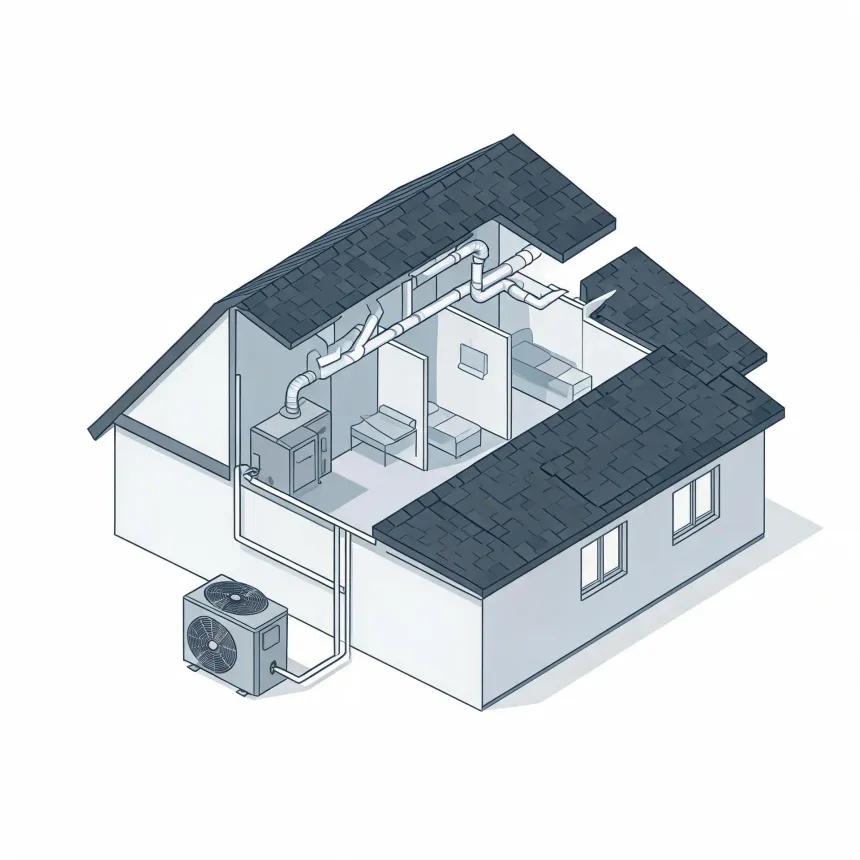
Isometric line illustration of a cutaway single-story house showing interior ductwork, an indoor air handler unit, and an outdoor condenser connected by refrigerant lines, with a dark shingled roof.
Your system heats November through April and cools May through September.

NOAA nClimDiv, 1991–2020 normals

Heat here starts in November.

Get the heat pump in before October ends and the first cold morning won't be a surprise.

Half the homes here were built by 1980, and a new heat pump has to work with the house it's going into

Half the homes here were built by 1980
Power costs 14.2 cents a kWh statewide
Climate zone 3B

Electricity in New Mexico ran 14.20 cents per kilowatthour in 2024, cheaper than most of the country. That changes the math on a heat pump. A higher SEER2 rating still lowers what you pay to run it, but with power this cheap, the extra you'd spend to get a unit above the federal minimum takes longer to earn back. That doesn't mean the rating stops mattering. It means how well the unit fits your house and how it holds up over the years are worth weighing just as heavily as the number on the sticker.

Pick the heat pump that fits your house, not just the sticker

With power this cheap in New Mexico, chasing a higher SEER2 number past the minimum won't save much. Put the weight on sizing and installation instead, matched to your house and ductwork, and a contractor who stands behind the work.

Find a contractor
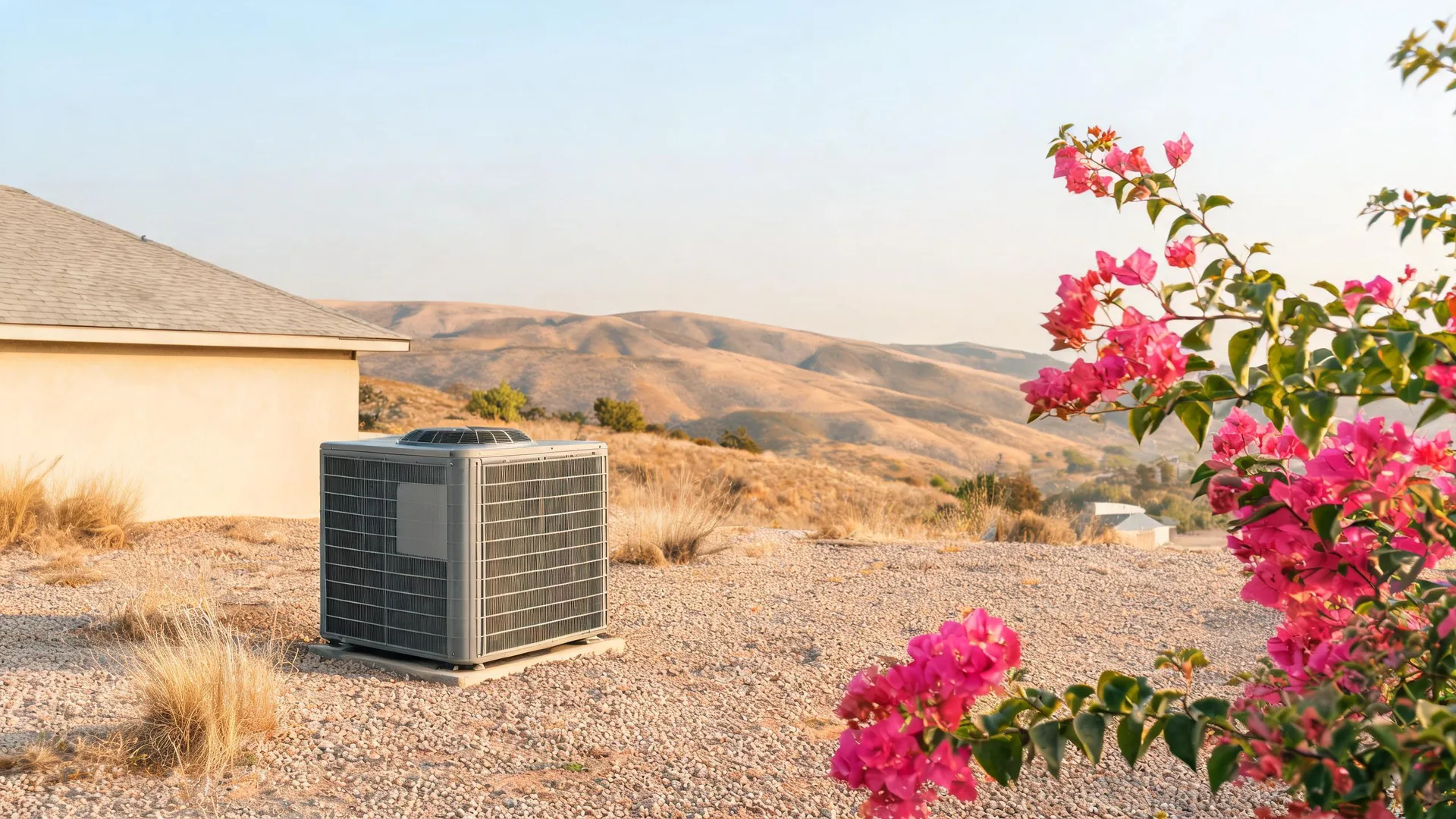
A white mini-split heat pump outdoor unit mounted on a concrete pad beside a gray-sided house, surrounded by gravel and green shrubs.

Size it to the house, not the square footage

If your house dates to 1980 or earlier, ask what the load calculation is based on, not just the square footage. An older house loses and gains heat differently than new construction, and the contractor sizing your heat pump needs to account for that rather than go off a chart. Get the room-by-room numbers in writing before you agree to a unit size.

Ask what happens below freezing

Every heat pump loses capacity as the outdoor temperature drops, and below a certain point it needs backup heat to keep up. Ask what that backup is, how it's controlled, and at what temperature it switches on. A unit that leans on backup heat too early will cost more to run than the SEER2 number suggests.
Ask who services the brand locally

A heat pump is only as good as the contractor who can get parts for it and knows how to work on it years from now. Ask which brands the contractor installs most and why, not just which one they're quoting today. A system with no local support becomes a slow repair every time something fails.

The old system doesn't just get hauled off. The refrigerant in it has to be recovered before anything gets disconnected, that's federal law, not a courtesy, and a licensed contractor has the equipment to do it. If it's a furnace paired with an old AC, the gas line and ductwork it used may or may not match what the heat pump needs, so expect some rework at the connections rather than a straight swap. The electrical side usually needs a look too, since a heat pump draws power differently than a furnace did and the breaker or disconnect sized for the old equipment may not be right for the new one. None of this is unusual, it's just part of pulling out one kind of system and putting in another.

Install day starts with the old system coming apart, not the new one going in. The outdoor unit and the indoor coil both have to come out before anything new goes in their place. Refrigerant lines get cut, and new line set usually gets run rather than reusing the old copper, since a heat pump needs it sized and sealed for how it operates. If the ductwork needs rework at the connections, that happens before the new air handler is set, not after. Once the unit's in place, it gets charged with refrigerant, the electrical gets tied in, and the contractor runs it through both heating and cooling before signing off. Walk the system with them before they leave. Ask them to show you the thermostat settings and where the filter sits, not just hand you a manual on the way out.