





Adobe-style desert homes with warm exterior lighting, saguaro cacti, and desert landscaping along a curved street at dusk, with mountains in the background.

Heat Pump Installation in Albuquerque, NM

Tell us about the job

Takes about a minute. No obligation.

New system or replacementHeat PumpBernalillo County, NM
Step 1 of 2

What ZIP code is the job in?

Gas heats 74.3% of homes in Bernalillo County, more than any other fuel. Most of those furnaces sit next to a separate central air conditioner. A heat pump installation here often means swapping that AC for a heat pump and deciding what to do with the furnace, not starting from nothing. Some homeowners keep the gas furnace as backup and let the heat pump handle most of the year, switching over only when it gets cold enough that gas makes more sense. Others replace the whole setup and heat with the heat pump alone. Either way, the ductwork and electrical already in place from the old AC usually give a contractor a head start on sizing the new system.

7 months
October through April, your system heats
3 months
June through August, it cools
23°F
the average winter night it heats against
88°F
the average summer afternoon it cools against
Isometric line illustration of a cutaway house showing interior rooms with furniture, ceiling ductwork connected to an indoor air handler, and an outdoor condenser unit linked by refrigerant lines.
Your system heats October through April and cools June through August.

NOAA nClimDiv, 1991–2020 normals

A heat pump sized right for your house doesn't need to be oversized to handle Albuquerque's climate.

Standard equipment keeps your electric bills in line at 14.20 cents per kilowatthour.

Wind and hail are what your system has to survive here, not the cold

302 severe weather events from 2015 to 2024
13% of homes statewide lost power a day or more in 2024
155 damaging wind events from 2015 to 2024

Heat here runs October through April, about seven months. June through August is the cooling side, three months. September is the month to get this done, right before heat season starts. Wait until the furnace or the old AC quits on a cold morning and you're choosing equipment under pressure, taking whatever a contractor can get installed fast. Scheduling it in September means the heat pump is in and tested before it has to carry the house.

Any heat pump installed here has to clear 14.3 SEER2 and 7.5 HSPF2

That's the federal floor for this zone, not a ceiling. A contractor can show you what clears it and what goes beyond it, and qualifying equipment comes with a federal tax credit. Worth sorting out while you have time to pick the right system instead of the fastest one.

Find a contractor
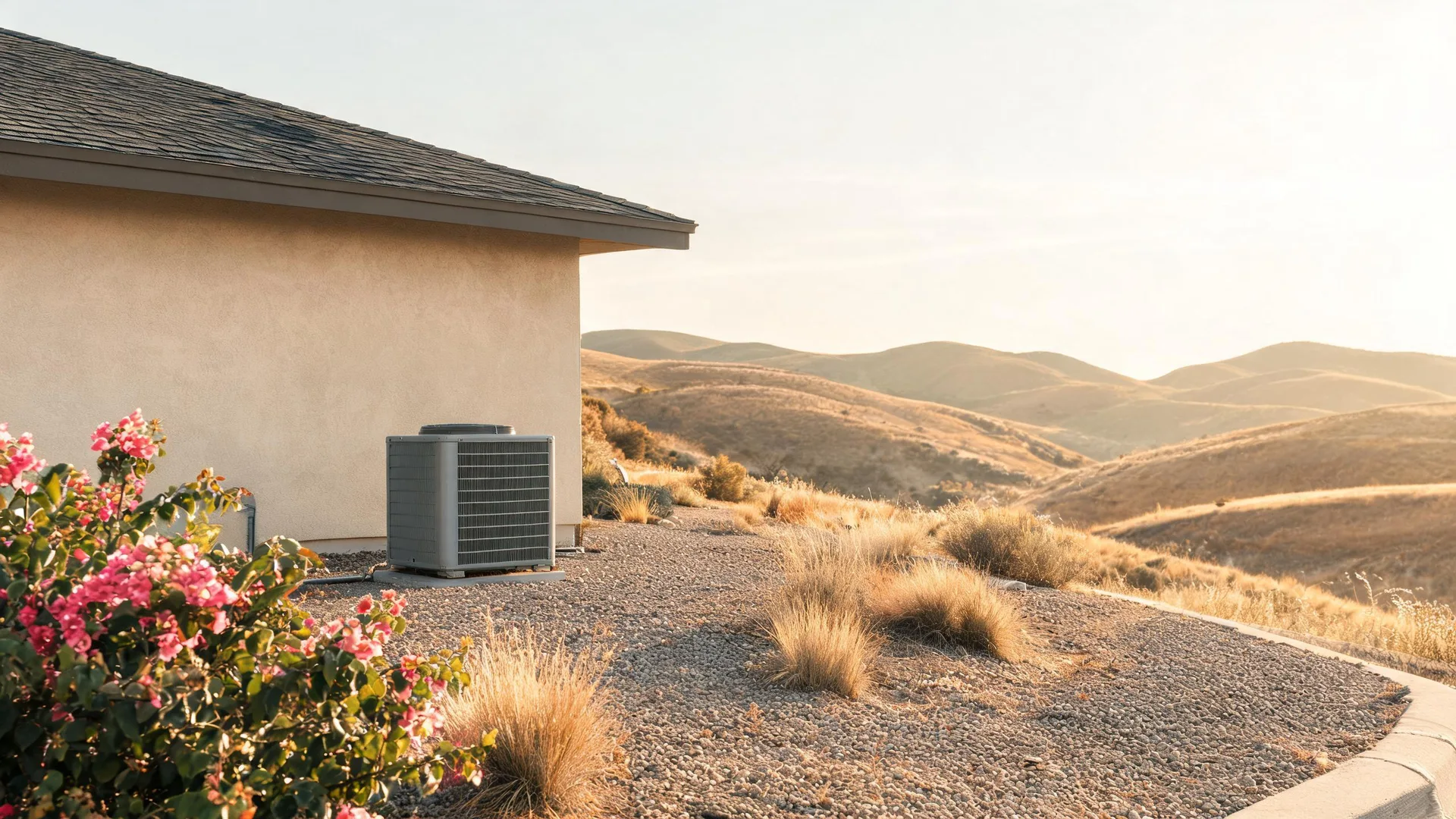
A dark gray heat pump unit mounted on a concrete pad next to a house with gray siding and a stone veneer wall.

The old unit only had to run one way

The old AC compressor only ever ran one direction, so it only ever wore down one way. A heat pump's reversing valve asks the compressor to work both sides, and that's fine, it's built for it, but it means the equipment coming out has usually been doing less work for longer than people expect. A unit that's quietly losing capacity still blows cold air. It just takes longer to get there and runs more often to do it. If the furnace is staying on as backup, the old thermostat usually isn't wired to talk to a second heat source, so that gets swapped along with the outdoor unit. Refrigerant lines sized for the old AC sometimes aren't rated for the pressures a heat pump runs, which is why a contractor checks them rather than assuming they carry over. None of this is about the old system failing. It's about it being built for one job, not the other.

What the house needs it to do

The size of the heat pump comes from a load calculation, not the square footage of the house. A contractor looks at insulation, window area, duct layout and how many rooms need to stay comfortable. Homes that look alike on paper can call for different equipment. Getting this step right is what decides whether the system matches the house or just guesses at it.
What's already there versus what's new

If the ductwork and electrical from the old system are sound and sized right, a contractor can connect to them instead of replacing them. Duct runs that are too small, leaky, or wired for a furnace that's going away add work the quote has to cover. Keeping the gas furnace as backup means wiring in extra controls, where going all-electric simplifies that part but may ask more of the panel.

SEER2 and HSPF2 tell you how much heat a system moves for the electricity it uses, one rated for cooling, one for heat. A higher number means the compressor gets more out of every unit of power, nothing about how big the system is or how fast it warms the house. Heat pumps with the same rating on the label can still land on different electric bills, because that number comes from a lab test run at set conditions, not from how the equipment behaves on a mild day running low and slow or on the coldest morning of the year. A heat pump spends most of its time running at partial load, well under full blast, so ask a contractor how the equipment performs there, not just what number is printed on the box. The rating is a fair way to compare one system against another. It isn't a promise of what your bill will look like once it's installed in your house.

Installation day starts outside with the old unit coming off its pad and the new one going on. A contractor runs new refrigerant lines if the old ones aren't rated for a heat pump, or reuses them if they check out. Those lines get pulled down to a vacuum and held there before any refrigerant goes in, because trapped air or moisture left in the line set will wreck the compressor over time. The electrical gets checked too. A heat pump often draws differently than the AC it replaced, so the disconnect box and breaker get sized to what the new equipment actually needs, not what the old one needed. Once it's wired and charged, the contractor runs the system in both directions, cooling and heat, and checks airflow at the vents before calling it done. A system that gets switched on and left without that last check is the one that stops working on the first cold morning.