



Three adobe-style desert homes with warm landscape lighting, surrounded by saguaro cacti and desert vegetation under a deep blue dusk sky.

Furnace Repair in Socorro, NM

Tell us about the job

Takes about a minute. No obligation.

RepairFurnace or heatingSocorro County, NM
Step 1 of 2

What ZIP code is the job in?

Furnaces here run October through April, about seven months straight. September is when it's worth having yours looked at, before the first cold night asks it to fire up after sitting idle. A weak igniter or a dirty flame sensor often makes it through summer without showing itself, then fails the first week it's actually needed. That's not bad luck, it's just the part that was already borderline finally getting tested. If your furnace is acting up now, that's likely the same thing catching up with it late.

7 months
October through April, your furnace is on duty
23°F
the average winter night it heats against
50 winter storms
in ten years, the nights a failure hurts most
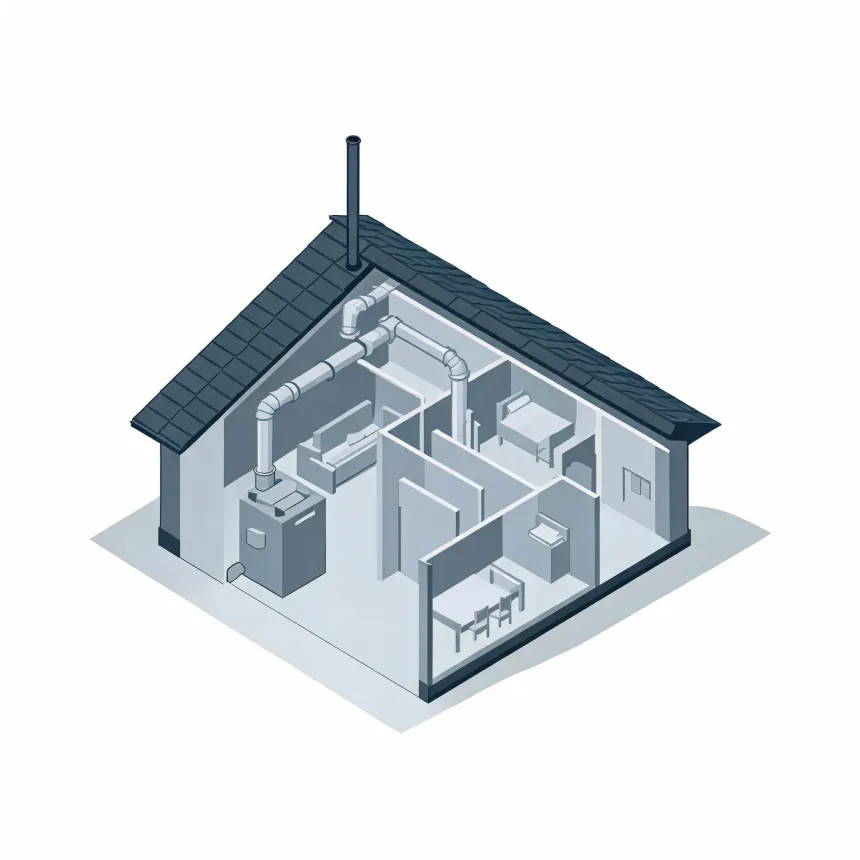
Isometric cutaway illustration of a small single-story house showing interior rooms with furniture, a furnace unit with attached ductwork running to a roof flue, and a dark shingled roof.
Your furnace works hardest from November through March.

NOAA nClimDiv, 1991–2020 normals

Winter nights in Socorro average 23°F, and the furnace runs from October through April to keep up.

A furnace that age and workload can still turn up a weak igniter or a cracked heat exchanger, but the fix is usually a straightforward one.

Half the furnaces here are as old as a house built by 1980

Half the homes here were built by 1980
Heat runs October through April
Winter nights average 23°F

Get it looked at early

Problems tend to show up in the first weeks of the season, when the load hits a part that was already weak.

Find a contractor
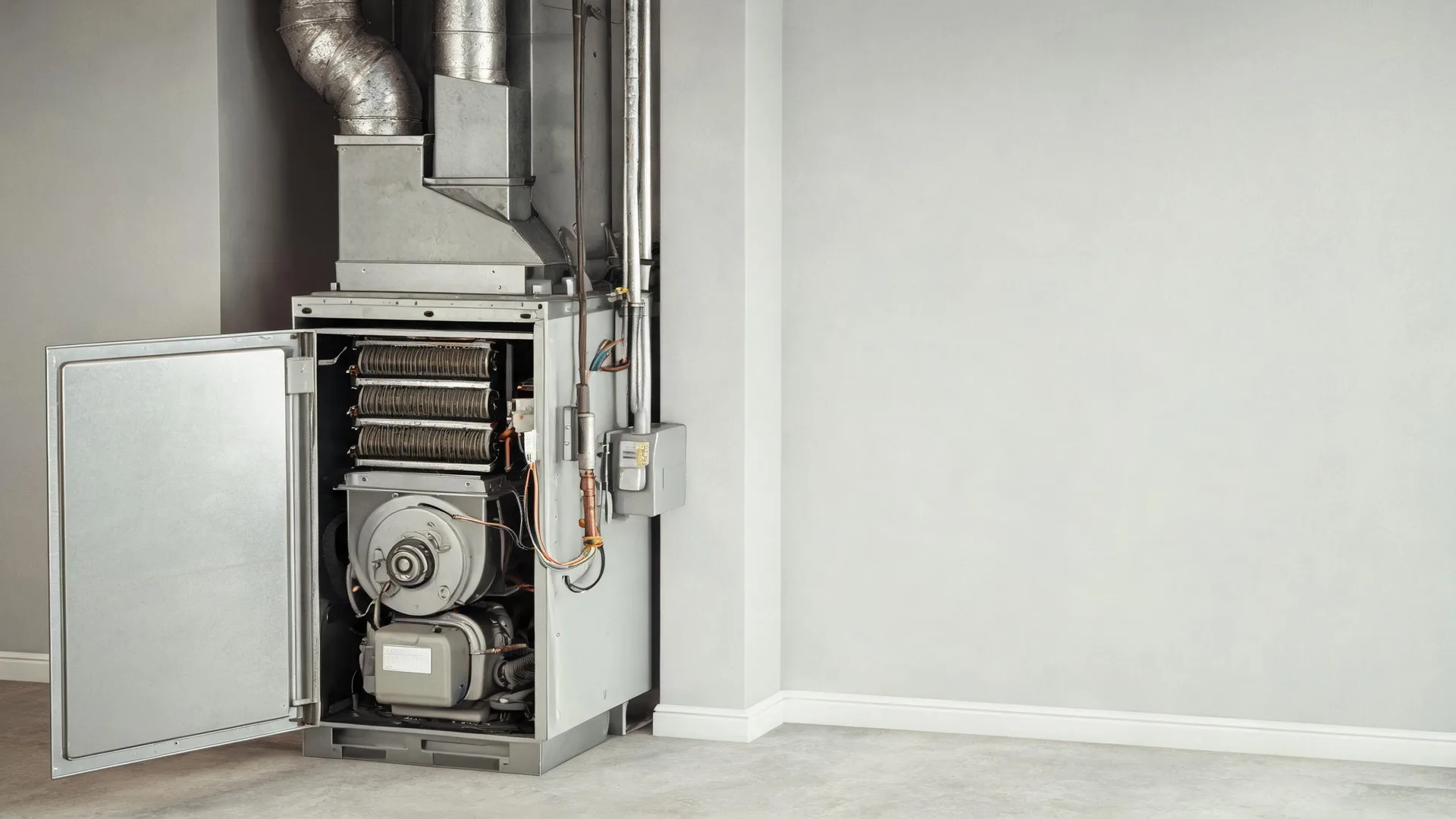
A gray high-efficiency gas furnace installed in an unfinished basement, surrounded by gas lines, a condensate drain, and sheet-metal ductwork.

A problem that waits for the next cycle to get worse

A cracked heat exchanger stays quiet when the furnace idles. Under a full burn cycle it flexes with the heat, and that's when it leaks exhaust into the air stream. Letting it run doesn't give it a chance to settle, it just keeps working that crack open wider. Same with a blower motor that's starting to go. Bad bearings get hotter and louder each cycle, not better, until the motor seizes or the belt side of the assembly gives out. A furnace that's limping along is usually telling you which part is losing the fight. Keep running it on a bad igniter and you're asking a part that already struggles to light the burners to do it again, every cycle, until it doesn't.

What you can check yourself

Look at the thermostat first. Make sure it's set to heat and the set point is above room temperature, and swap the batteries if it uses them. Check the air filter next, holding it up to a light. If you can't see light through it, air isn't getting through either, and that alone can make a furnace short-cycle or quit. Walk the house for closed vents or furniture blocking a return, and check the breaker box for a tripped switch before you assume the worst.

What's worth a look, not a fix

If the pilot or igniter won't catch, or you smell gas, don't keep trying. Shut off the gas valve at the furnace and get a contractor out. Same if you see soot around the burner compartment or notice a yellow flame instead of blue, that's a sign of incomplete combustion and it needs a professional, not a reset. Flipping the breaker or relighting a pilot over and over just delays telling someone the part that's actually failing.

An unfinished basement interior featuring a large metal furnace unit, exposed ceiling joists, concrete walls, and scattered boxes and cables on the floor.

A new furnace would cut about $60 a year off heating for a typical Socorro County home.

  • A new high-efficiency furnace$270 a year
  • An older furnace$330 a year

Estimates for a typical Socorro County home, compared with an older unit built to the previous federal minimum, from EIA household energy data, New Mexico fuel prices and NOAA climate normals. Your home will differ.

Repair makes sense when one part has failed and the heat exchanger is sound.

Replacement makes sense when the heat exchanger is cracked or the furnace keeps needing parts.

Age by itself doesn't mean replace it. A furnace that's been serviced right along can run for a long time on its original parts, and a lot of what fails, an igniter, a flame sensor, a blower capacitor, is a quick swap that doesn't say anything about the rest of the unit. What matters more is the heat exchanger. That part isn't meant to be repaired, so a crack there is usually the end of that furnace, not a step along the way. The other thing worth weighing is how many separate repairs it's asked for lately. One fix is just a fix. A furnace that keeps finding a new way to fail is using the repairs to tell you it's done, and at some point a tech will say so plainly instead of patching the next part.