View from beneath a dark overhanging structure across a gravel yard toward a concrete block wall, a gnarled tree, and a single-story stucco house under a pale sky.

Furnace Repair in Ruidoso, NM

Tell us about the job

Takes about a minute. No obligation.

RepairFurnace or heatingLincoln County, NM
Step 1 of 2

What ZIP code is the job in?

Seven months of regular use

Furnaces in Ruidoso run from October through April, with overnight lows averaging 24°F in December and January. That's a normal winter for any furnace to handle. It's steady use, not the kind of strain that causes unusual breakdowns.
What that means for a repair call

A furnace that's been running since October is more likely to show a worn igniter, a dirty flame sensor or a failing inducer motor than anything tied to a storm passing through. Snow and ice outside don't reach the furnace itself. The cold just means the house needs it working, so finding the part at fault and fixing it matters more than the weather driving the call.

7 months
October through April, your furnace is on duty
24°F
the average winter night it heats against
62%
of homes here heat with gas, so most furnaces here burn gas
30 winter storms
in ten years, the nights a failure hurts most
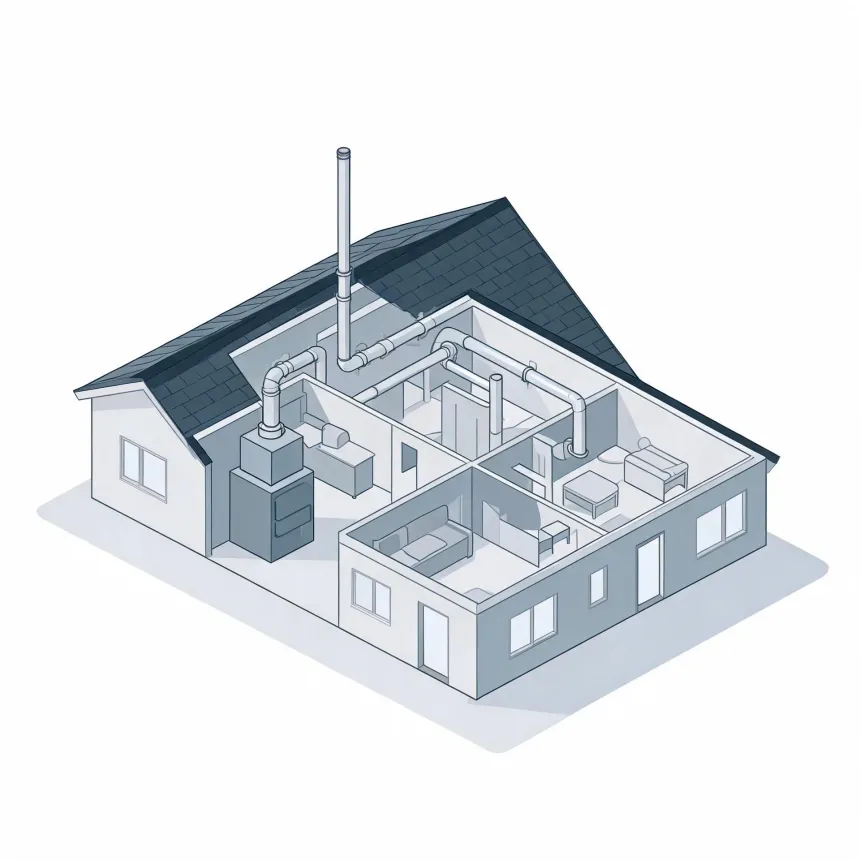
Isometric cutaway illustration of a single-story house showing interior rooms with furniture, a furnace unit connected to ductwork and a tall flue pipe extending through the roof.
Your furnace works hardest from November through March.

NOAA nClimDiv, 1991–2020 normals

A cracked heat exchanger gets worse every hour the furnace keeps firing.

Shut it down and get it looked at instead of waiting to see if it holds.

September is the month to catch it before October asks more of it

Heat runs October through April
Winter nights average 24°F
30 winter storms from 2015 to 2024

Get the usual fix

Nothing about this area is especially hard on it. It's most likely the usual problem with the usual fix.

Find a contractor
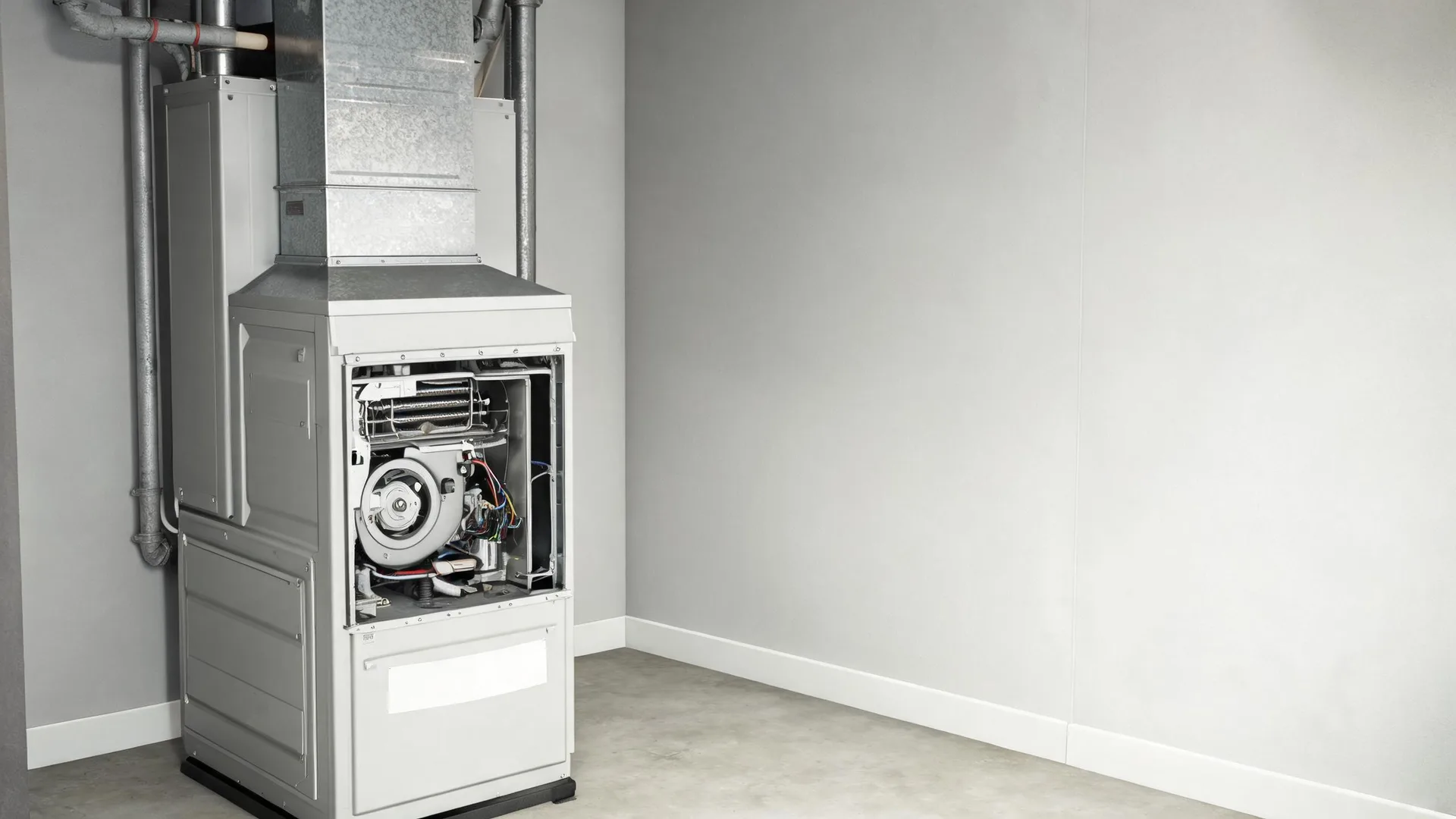
A gray high-efficiency gas furnace installed in an unfinished basement, surrounded by gas lines, a condensate drain, and sheet-metal ductwork.

What a failing furnace sounds and feels like before it quits

A furnace that's struggling usually tells you before it quits outright. It short cycles, running for a few minutes and shutting off before the house warms up, because a flame sensor coated in residue can't confirm the flame is lit. It blows air that's barely warm, which often points to a clogged filter choking airflow across the heat exchanger. You hear a rumble or a bang at startup, which means gas is building before it catches instead of lighting clean. The pilot or igniter struggles to stay lit. The blower runs constantly or won't shut off. Any of these is worth a call. None of them fix themselves, and a furnace that's limping along now is one bad part away from not starting at all.

Most failures are a handful of parts wearing out

The igniter weakens after enough cycles and stops glowing hot enough to catch the gas. The flame sensor builds up a film from normal combustion until it can't tell the flame is there. The inducer motor's bearings wear down from running every cycle, all season. These parts fail from use, not from anything unusual happening around the house.

Airflow problems cause more trouble than they get credit for

A filter clogged with dust forces the blower to work harder and can starve the heat exchanger of the air it needs to move heat away. That alone can trip a limit switch and shut the furnace down as a safety measure. It looks like the furnace is failing when the real problem is just upstream of it, something that gets missed if the tech only looks at the burner and controls.

An unfinished concrete basement containing a gas furnace with sheet-metal ductwork, utility shelving, and exposed overhead joists.

A new furnace would cut about $60 a year off heating for a typical Lincoln County home.

  • A new high-efficiency furnace$260 a year
  • An older furnace$320 a year

Estimates for a typical Lincoln County home, compared with an older unit built to the previous federal minimum, from EIA household energy data, New Mexico fuel prices and NOAA climate normals. Your home will differ.

Repair makes sense when one part has failed and the heat exchanger is sound.

Replacement makes sense when the heat exchanger is cracked or the furnace keeps needing parts.

A diagnostic visit starts before any panel comes off. The tech asks what the furnace has been doing, when it started, and whether any sound or smell showed up first. That history points to where to look. Then comes watching it run through a full cycle, ignition, blower start, and shutdown, timed against what's normal for that furnace. A combustion analyzer checks the flame itself, because a flame can look fine and still be burning wrong. Voltage and resistance readings on the igniter and flame sensor catch a part that's failing but hasn't quit yet. Pulling the filter and checking static pressure across the blower rules out airflow as the hidden cause before any part gets blamed. The goal is finding the one thing actually at fault, not replacing parts until something works.