




Adobe-style desert homes lit by warm exterior lights at dusk, surrounded by saguaro cacti and native desert plants.

Furnace Repair in Raton, NM

Tell us about the job

Takes about a minute. No obligation.

RepairFurnace or heatingColfax County, NM
Step 1 of 2

What ZIP code is the job in?

Furnaces in Raton run from September through May. That's most of the year, not just a few cold snaps. Overnight lows average 17°F in December and January, so the furnace is holding a big temperature difference most nights, not just taking the edge off. That kind of stretch wears on an igniter or a blower motor faster than it would somewhere with a shorter winter. The county has also been hit by winter storms, heavy snow, ice, blizzards, repeatedly over the past decade, and a furnace already working hard gets pushed harder when one comes through. If yours is acting up now, there's usually a reason tied to that load, and it's worth having someone find the actual cause rather than just getting it running again.

9 months
September through May, your furnace is on duty
17°F
the average winter night it heats against
59%
of homes here heat with gas, so most furnaces here burn gas
129 winter storms
in ten years, the nights a failure hurts most
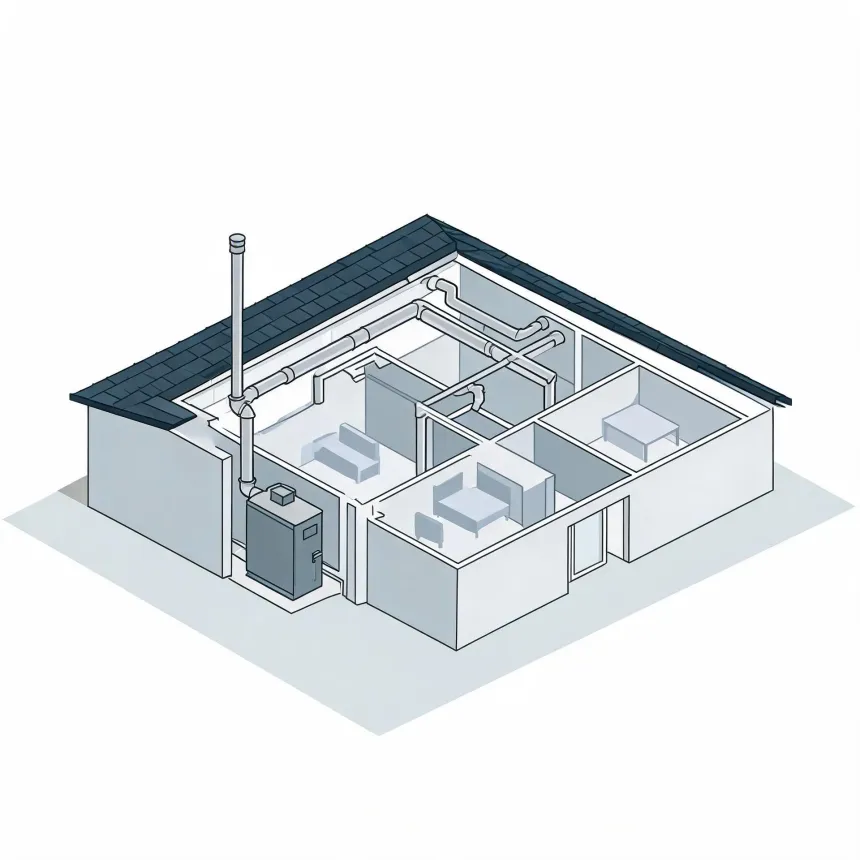
Isometric line illustration of a cutaway single-story house showing interior rooms with furniture, ceiling ductwork, and an exterior furnace unit with a tall flue pipe.
Your furnace works hardest from November through April.

NOAA nClimDiv, 1991–2020 normals

A cracked heat exchanger gets worse every hour the furnace keeps firing.

Shut it down and get it looked at before it runs again.

Half these furnaces are older, and that's about the only thing working against them

Half the homes here were built by 1977
Heat runs September through May
Winter nights average 17°F
Raton winters don't let a furnace coastWinter storms have hit Colfax County 129 times between 2015 and 2024

A furnace that's been cycling on and off for nine months straight doesn't fail all at once. The igniter glows thousands of times each winter, the blower motor bearings wear down a little more every run, and the strain shows up first as a short cycle, a delayed start, or a blower that won't shut off. Someone who looks at the furnace without knowing that history is just guessing. A tech who checks the actual part under strain, not just the symptom you noticed, is the one who fixes it once instead of sending you into the next cold snap wondering if it'll hold.

Get it diagnosed properly

Your furnace works hard here, and that's usually what's behind the problem. Have it diagnosed properly so the fix lasts.

Find a contractor
A man in a gray t-shirt, tan work pants and brown boots, seen from behind, climbs steps toward a dark front door while carrying a canvas tool bag holding a tape measure and screwdrivers, with a potted flowering shrub beside the entry.
A gray high-efficiency gas furnace installed in an unfinished basement, surrounded by gas lines, a condensate drain, and sheet-metal ductwork.

These don't fail out of nowhere

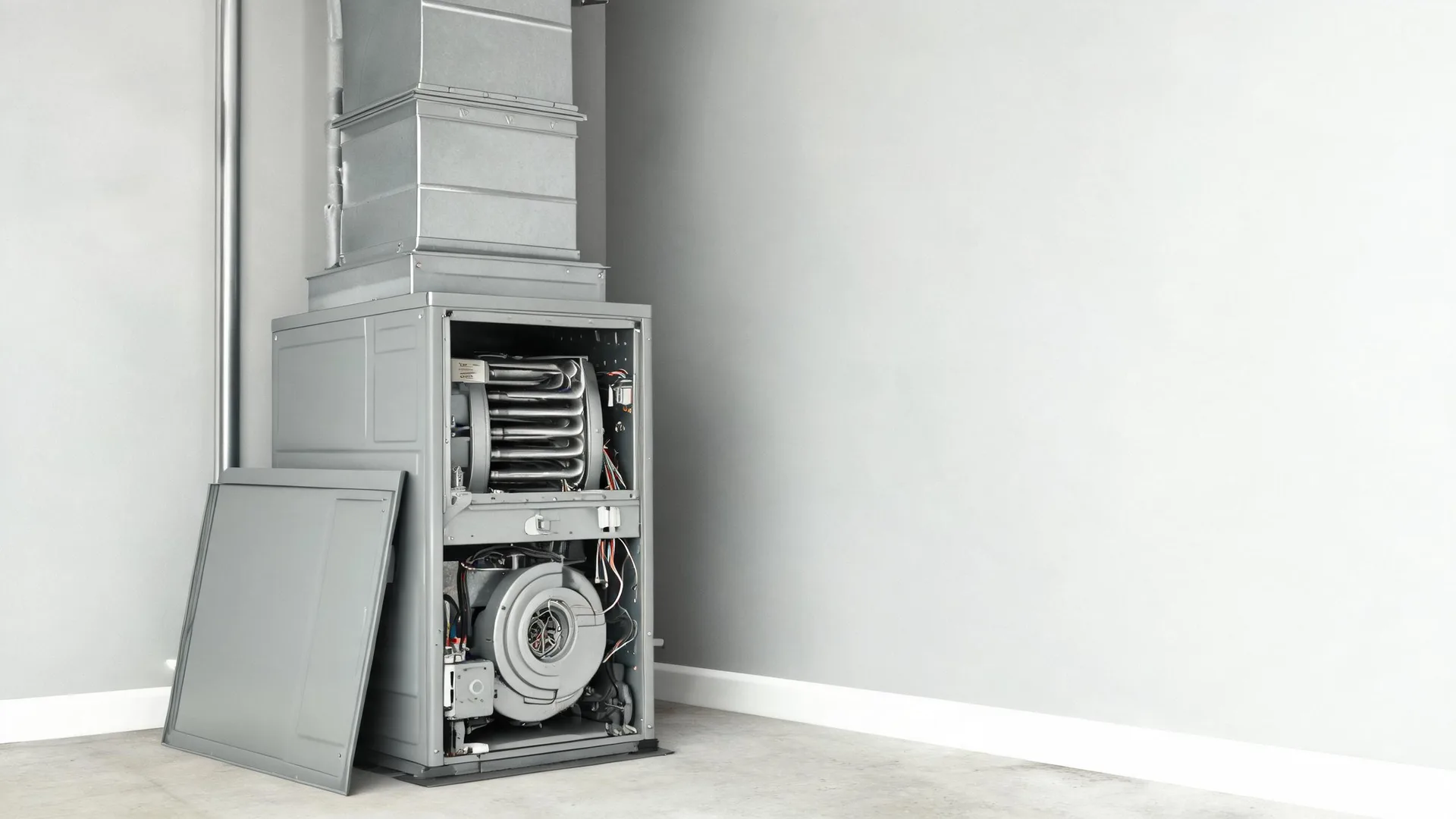
A furnace fails in a handful of ways, and most trace back to a part that's cycled on and off more times than anyone counts. The igniter usually goes first. It's a thin strip that heats up to light the gas, and that strip gets more brittle every time it glows, until it cracks and won't light anything. The flame sensor fails a different way. It picks up a coating of oxidation off the flame itself, and once that coating builds up the sensor can't tell the furnace a flame is there, so the system shuts the gas off a few seconds after startup. The blower motor wears on its bearings. A worn bearing shows up first as a louder motor, then a hot motor, then one that trips its own safety switch and stops. None of these are rare failures. They're wear parts doing what wear parts do under heavy use, and the furnace usually signals which one it is before it quits for good.

Check the simple stuff first

Make sure the thermostat is set to heat and the setting is above room temperature, and check that it has power or fresh batteries. Check the furnace switch, the one that looks like a light switch on or near the unit, and make sure it's on. Check the breaker it runs on. Check that the filter isn't packed with dust, since a blocked filter can starve the system of airflow and cause it to shut itself off.

What tells you it's not a simple fix

If the thermostat and power are fine and the furnace still won't light, short cycles, or blows cold air, the problem is inside the unit and not something to chase further on your own. A furnace that smells like gas, trips a carbon monoxide alarm, or shows soot around the burner needs to be shut off and left alone until someone licensed looks at it.

An empty unfinished basement containing a forced-air furnace with overhead ductwork, exposed ceiling joists, and a single hanging light bulb.

A new furnace would cut about $90 a year off heating for a typical Colfax County home.

  • A new high-efficiency furnace$380 a year
  • An older furnace$470 a year

Estimates for a typical Colfax County home, compared with an older unit built to the previous federal minimum, from EIA household energy data, New Mexico fuel prices and NOAA climate normals. Your home will differ.

Repair makes sense when one part has failed and the heat exchanger is sound.

Replacement makes sense when the heat exchanger is cracked or the furnace keeps needing parts.

Age matters more than any single symptom. A newer furnace is usually worth repairing almost no matter what broke, since the cabinet, the heat exchanger and the rest of the parts still have life in them. An older one changes the question. If the heat exchanger is cracked, that is not a repair, that is a replacement, because the exchanger is the furnace. Short of that, weigh what is failing against what else is likely to fail soon after. A blower motor replaced on an old furnace can run fine for years, or it can be the first of several repairs over the next couple winters, and there is no way to know which until the next part goes. A tech who has opened the cabinet and seen the rust, the cracked wires, the condition of the burners, can tell you which situation you are in. Guessing from the symptom alone cannot.