


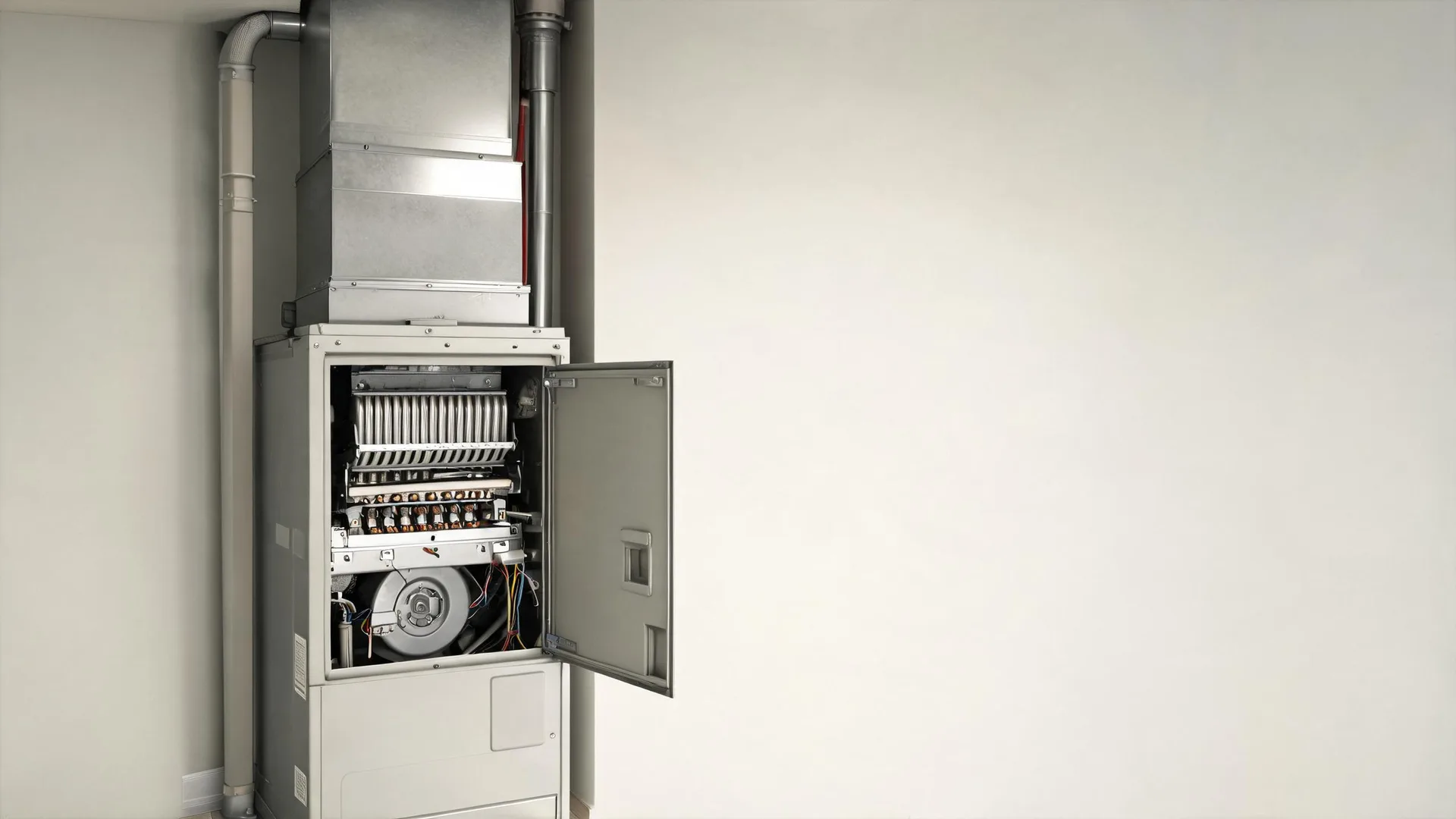
A gas furnace and sheet-metal air handler unit installed in an unfinished concrete basement.

Furnace Repair in Las Cruces, NM

Tell us about the job

Takes about a minute. No obligation.

RepairFurnace or heatingDoña Ana County, NM
Step 1 of 2

What ZIP code is the job in?

Your furnace only has to carry the house from November through April here. That's six months of real work, not year round. Overnight lows average 30 degrees in December and January, which is cold enough to run a furnace but nowhere near what homes in colder states ask of theirs. A furnace that isn't straining every winter tends to hold up well through the years it does run. So if yours is acting up now, age or a worn part is the more likely cause, not a system that's been pushed too hard. That usually means a repair is worth making rather than a sign the whole unit is done.

6 months
November through April, your furnace is on duty
30°F
the average winter night it heats against
61%
of homes here heat with gas, so most furnaces here burn gas
5 winter storms
in ten years, the nights a failure hurts most
Isometric line illustration of a cutaway building interior showing a furnace unit with a flue pipe and ductwork running along the ceiling, plus adjacent rooms with simplified furniture.
Your furnace works hardest from November through March.

NOAA nClimDiv, 1991–2020 normals

Half the homes in Doña Ana County were built in 1991 or later.

A furnace that came with a newer house still has years left in it, and that's worth knowing before you decide anything.

November is when a weak part finally gets tested

Heat runs November through April
Winter nights average 30°F
Climate zone 3B
A furnace that gets a break most yearsNovember through April, then it rests.

If your furnace came with the house and the house is newer, that's a good reason to get it looked at rather than replaced. A repair tech can tell you fast whether what's wrong is a minor part or something that points to real age. It's worth asking when you call what year the furnace is, not just the house. A system can be swapped out partway through a home's life, so the two ages don't always match. Still, if the house is recent, there's a decent chance the furnace is too.

It's usually worth repairing

It has an easier job here than in most places, so your furnace is often in decent shape. Repair is usually worth it.

Find a contractor
A gas furnace with attached ductwork, gas piping, and condensate lines installed in a concrete-block basement.

What to check before you call anyone

A few things are worth looking at before anyone comes out. Check the thermostat first. Make sure it's set to heat and the setpoint is actually above the room temperature, not just sitting where it is. Pull the filter and hold it up to a light. If light doesn't pass through, airflow is choked and that alone can cause short cycling or weak heat. Check the breaker panel and make sure the furnace breaker hasn't tripped. If the furnace runs on a standing pilot, look to see if it's lit. Most furnaces have relighting instructions printed right on the panel. Walk the house and check that vents and returns aren't blocked by furniture or boxes, since closed-off rooms can starve the system of the airflow it needs. If there's a reset button on the unit, pressing it once is fine. If it trips again right after, leave it alone rather than keep resetting it. None of this will fix a cracked heat exchanger or a worn igniter, but it clears out the simple causes fast, and a tech will want to know what you found either way.

A cracked heat exchanger gets worse with every cycle

Heat makes metal expand. A hairline crack opens a little more each time the burner fires, then closes some as the furnace cools. Left alone, that crack grows until it's leaking exhaust into the air the blower pushes through the house.

A dirty flame sensor doesn't fix itself

Once a flame sensor is coated enough to cause short cycling, that coating doesn't burn off on its own. Every cycle adds a little more residue. What starts as the furnace shutting off early can end with it refusing to stay lit at all.

An unfinished basement featuring a grey forced-air furnace with metal ductwork, concrete block walls, exposed wooden joists, and a single hanging bare bulb.

A new furnace would cut about $40 a year off heating for a typical Doña Ana County home.

  • A new high-efficiency furnace$170 a year
  • An older furnace$210 a year

Estimates for a typical Doña Ana County home, compared with an older unit built to the previous federal minimum, from EIA household energy data, New Mexico fuel prices and NOAA climate normals. Your home will differ.

Repair makes sense when one part has failed and the heat exchanger is sound.

Replacement makes sense when the heat exchanger is cracked or the furnace keeps needing parts.

A diagnostic visit starts before any panel comes off. A tech will ask what the furnace is doing, when it started, and whether it happens on every cycle or just some. Then the panels come off and the burner gets watched through a full cycle, start to shut off. That's where short cycling, a delayed light, or a burner that won't stay lit shows itself. The flame sensor gets pulled and checked, the igniter gets tested, and the blower gets listened to with the panel open. A tech will also check the limit switch and look at the heat exchanger, since a crack there changes how the furnace gets used, not just whether it runs. Most of this gets done with meters and a flashlight, not guesswork, and most calls end with one part identified as the cause.