


An unfinished basement featuring a grey forced-air furnace with metal ductwork, concrete block walls, exposed wooden joists, and a single hanging bare bulb.

Furnace Repair in Española, NM

Tell us about the job

Takes about a minute. No obligation.

RepairFurnace or heatingRio Arriba County, NM
Step 1 of 2

What ZIP code is the job in?

Your furnace in Española runs about nine months a year, September through May. That's most of the calendar, not just the cold snap in January. Overnight lows average 15°F through December, January and February, so when it does run, it's working against real cold, not a mild chill. The county has seen plenty of winter storms over the past decade, heavy snow, ice, blizzards, and each one means the furnace is running longer and harder to keep up. That kind of use wears parts sooner than it would somewhere milder. If something's acting up now, it's probably not bad luck. It's a system that's been working hard for a long time, finally showing it.

9 months
September through May, your furnace is on duty
15°F
the average winter night it heats against
59%
of homes here heat with gas, so most furnaces here burn gas
144 winter storms
in ten years, the nights a failure hurts most
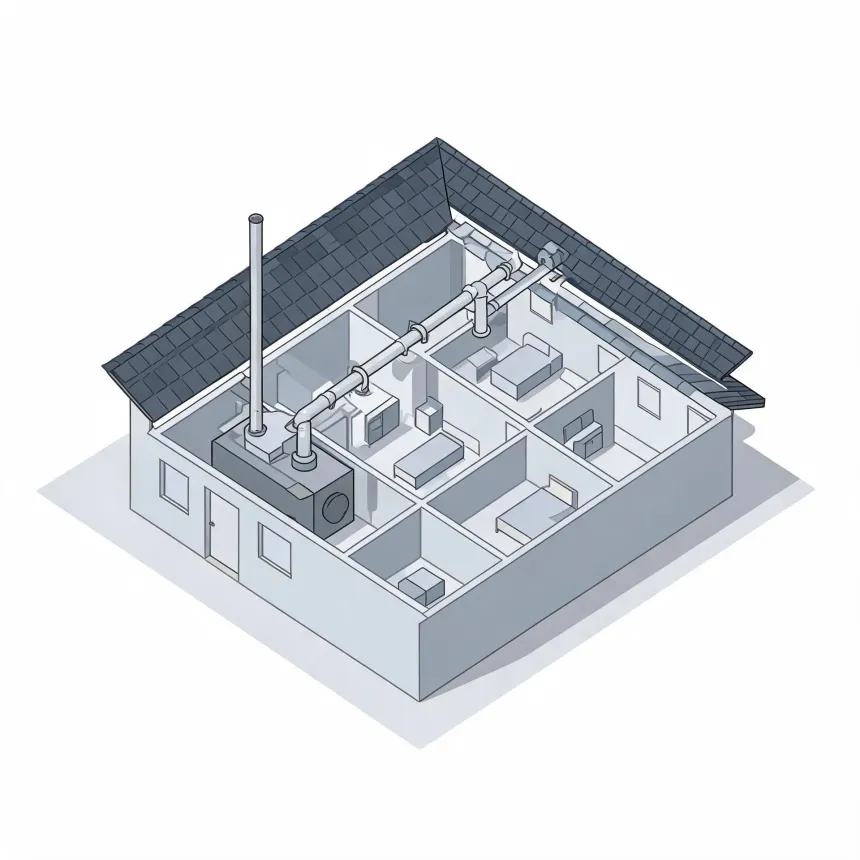
Isometric cutaway illustration of a single-story house showing interior rooms, furniture, a dark furnace unit with a tall vertical flue pipe, and ductwork running under the pitched shingle roof.
Your furnace works hardest from November through April.

NOAA nClimDiv, 1991–2020 normals

Furnaces here start running in September, a month earlier than most places.

Get it looked at in August, before that first cold night finds the weak part.

An old house doesn't mean an unusual furnace problem

Half the homes here were built by 1984
Heat runs September through May
Winter nights average 15°F
Winters here lean on the furnace, nothing else144 winter storms hit this county between 2015 and 2024

A furnace that's run hard for years doesn't usually fail all at once. It gets harder to light, or it runs longer to hit the same temperature, or it cycles on and off more than it used to. Those are worth a call before they turn into no heat at all. A tech who knows what nine winters of 15 degree nights do to an igniter or a blower motor can tell you whether you're looking at a simple repair or something further along. Waiting to see if it gets worse just gives a small problem more time to become a bigger one.

Get it diagnosed properly

Your furnace works hard here, and that's usually what's behind the problem. Have it diagnosed properly so the fix lasts.

Find a contractor
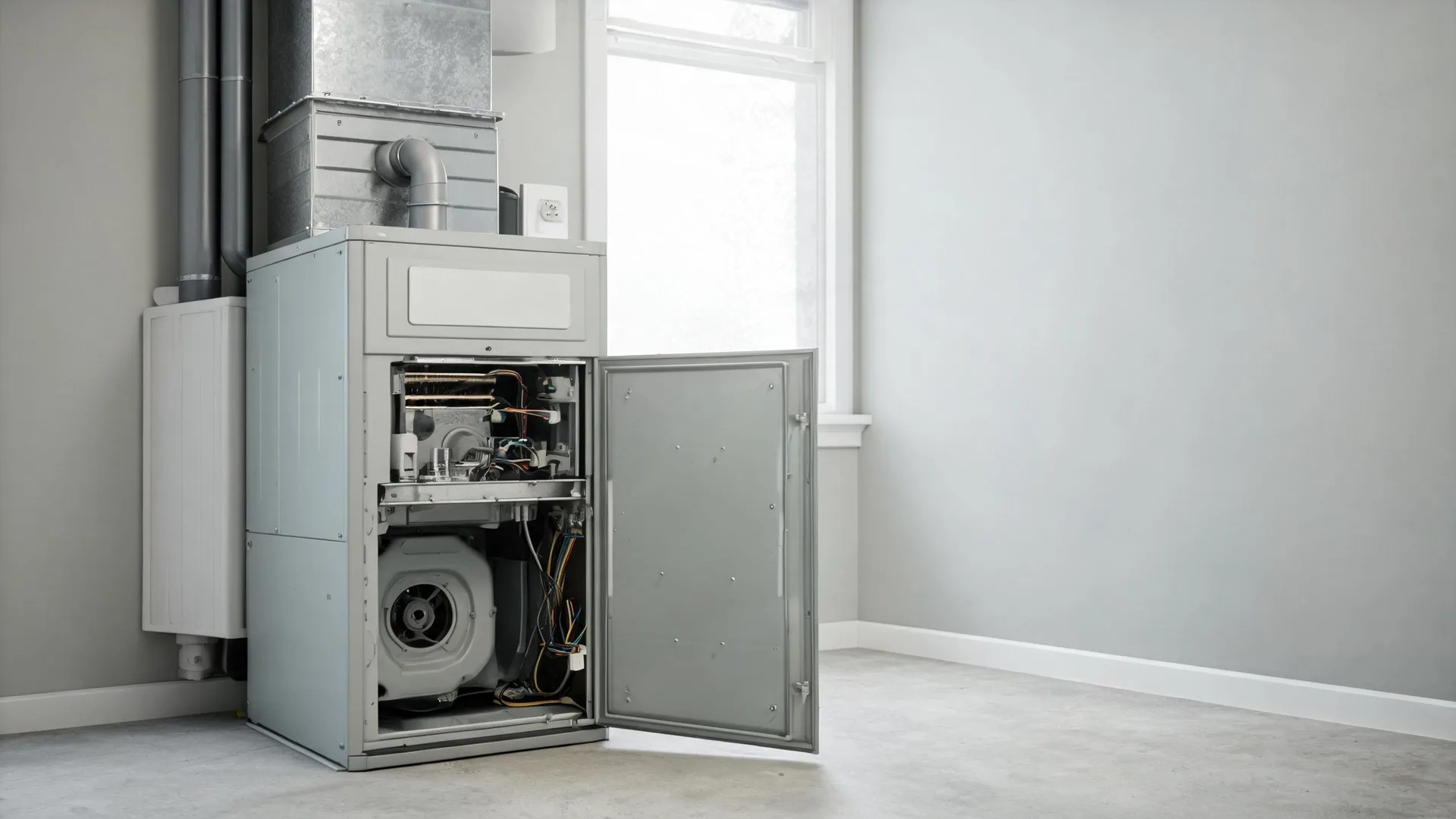
A gray high-efficiency gas furnace installed in an unfinished basement, surrounded by gas lines, a condensate drain, and sheet-metal ductwork.

The furnace tells you before it quits

A furnace that's starting to fail usually tells you before it quits outright. The burner takes longer to catch, or it clicks and doesn't light on the first try. The blower runs after the burner shuts off, longer than it used to. Air comes out lukewarm instead of hot, or it comes out hot then cools off partway through the cycle. Some part of the house stays cold while the rest heats fine. You hear a bang at startup, or a rattle that wasn't there before, or the burner makes a popping sound instead of a steady whoosh. None of that is normal wear you just live with. Each one points to a part working harder than it should, and parts that work harder fail sooner.

What you can check safely

Check that the thermostat is set to heat and the temperature is actually set above room temperature. Look at the furnace switch, it's a light switch on or near the unit, and make sure it's on. Check the air filter, if it's gray and clogged it can choke airflow and cause short cycling or weak heat. Go to the breaker panel and see if the furnace breaker has tripped. If you have a gas furnace, check that the gas valve is open and that other gas appliances are working.

What to leave alone

Don't open the burner compartment or touch the igniter, the flame sensor, or any wiring. Don't try to relight a pilot light unless you've been shown how and the furnace is built for it. If you smell gas, don't flip switches or look for the leak yourself, leave the house and call the gas company from outside. A furnace that trips its breaker repeatedly or smells like burning plastic needs a tech before it runs again, not a reset.

An unfinished concrete basement containing a metal HVAC air handler, exposed wooden ceiling joists with sheet-metal ducts, a hanging bare bulb, copper pipes, and stacked cardboard boxes.

A new furnace would cut about $90 a year off heating for a typical Rio Arriba County home.

  • A new high-efficiency furnace$420 a year
  • An older furnace$510 a year

Estimates for a typical Rio Arriba County home, compared with an older unit built to the previous federal minimum, from EIA household energy data, New Mexico fuel prices and NOAA climate normals. Your home will differ.

Repair makes sense when one part has failed and the heat exchanger is sound.

Replacement makes sense when the heat exchanger is cracked or the furnace keeps needing parts.

Age isn't really the question. The question is what's wearing out and whether it's worth fixing on its own, or whether it's one more part in a line of parts that are all about the same age and all about to go. A cracked heat exchanger ends the conversation, that gets replaced, no debate. A failed igniter or a bad flame sensor is almost always worth repairing, those are cheap parts that fail on their own regardless of the furnace's age. Where it gets harder is the blower motor or the control board going out on a furnace that's already had other repairs behind it. At that point you're not fixing a furnace, you're betting the next part holds. A tech who's actually inside the unit can tell you which situation you're in. Guessing from outside can't.