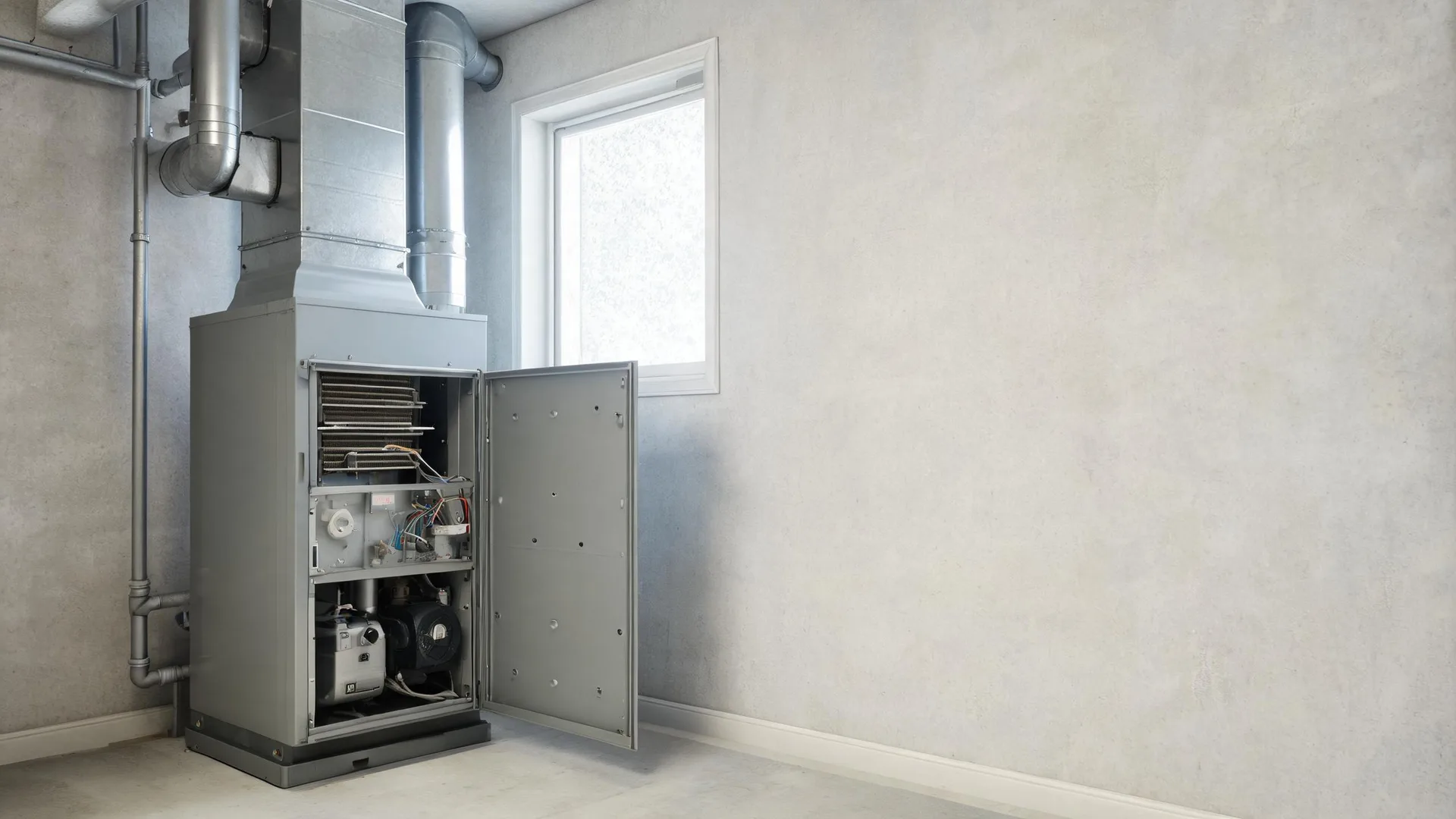
October is when to catch it
Furnaces here sit unused most of the year and come back on in November. October is when to get a furnace looked at, before it has to carry a full load on a cold night.
Takes about a minute. No obligation.
Furnaces here sit unused most of the year and come back on in November. October is when to get a furnace looked at, before it has to carry a full load on a cold night.
A furnace that struggles usually shows it in the first weeks of real use, from November on. Whatever was already weak, an igniter, a flame sensor, a worn blower motor, is what gives out when the system finally has to run hard.
NOAA nClimDiv, 1991–2020 normals
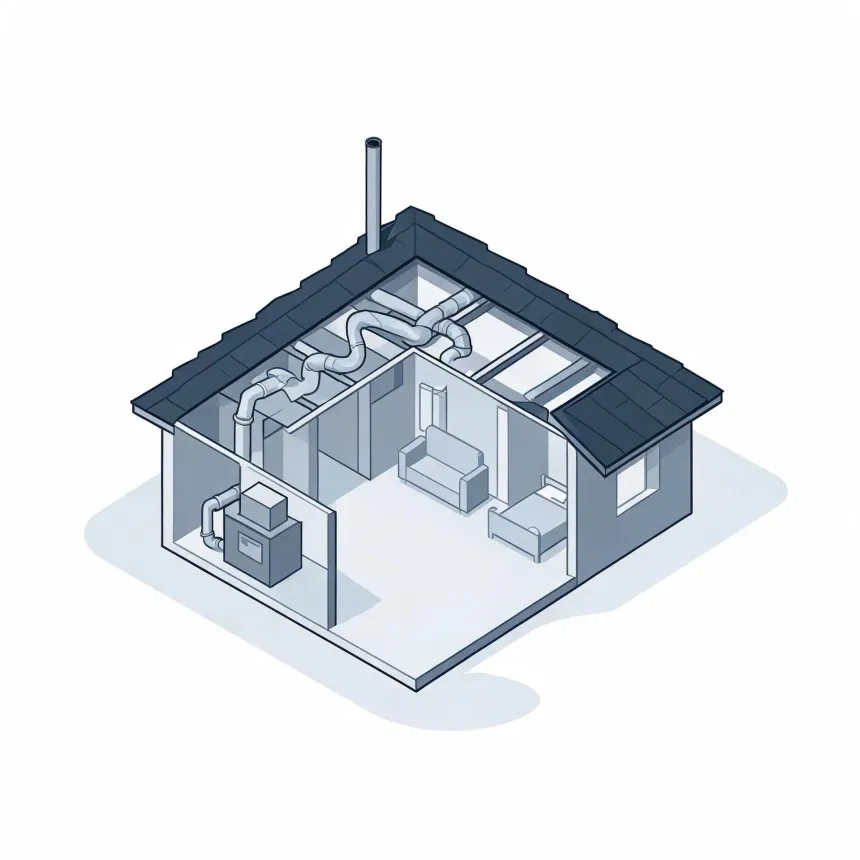
Furnaces in Deming run about six months a year, November through April.
A furnace with that light a workload usually still has the parts to be worth repairing.



So if a repair call turns up a cracked heat exchanger or a blower motor on its way out, replacing the part is usually the right call rather than the whole furnace. Six months of real use a year doesn't wear through a system the way a furnace up north gets worked. A tech can tell you in a few minutes whether what failed is a sign of real age or just one weak part that gave out first. Ask what shape the rest of the furnace is in before you decide anything.
Half the homes in Deming were built in 1980 or earlier. If yours is one of them, the furnace running now may not be the original. Ask the tech how old it is and what shape the rest of it is in before you decide on the repair.
Find a contractor
Before anyone comes out, check the thermostat is set to heat and the setting is above room temperature, not just on. Look at the filter. A filter clogged with dust chokes airflow and can cause the furnace to shut itself off partway through a cycle. Go to the furnace and check the power switch, it looks like a light switch on or near the unit, and make sure it hasn't been bumped off. If it's gas, check that the gas valve is open and that nothing nearby smells like gas. Check the breaker it runs on. A furnace that keeps shutting off after a few minutes, or won't fire at all, is past what you can fix yourself. Don't keep resetting it and trying again. Repeated short cycling is usually the system protecting itself from something a tech needs to look at.
An igniter fails. A flame sensor coats over with residue until it can't see the flame anymore. A draft inducer motor wears out on its bearings. Any one of these stops a furnace cold, and fixing it means swapping that part, not the whole system. The furnace around it is usually fine.
A furnace that fires and shuts off, fires and shuts off, is responding to a sensor that found something wrong. Maybe the flame sensor isn't reading a flame. Maybe a limit switch tripped because airflow is poor. Maybe a pressure switch never got satisfied. Resetting the furnace and trying again just runs it into the same wall.
Most furnace trouble doesn't start with a dead system. It starts small, and it gives you notice before it quits. A furnace that takes several tries to light, or lights with a soft boom instead of a quiet click, is telling you the igniter or the gas valve is on its way out. Short cycles, where it runs a few minutes and shuts off, mean something downstream is tripping a safety switch. A blower that runs on long after the heat stops, or air that comes out lukewarm instead of hot, points at the heat exchanger or the limit switch. A burner flame that should burn blue and steady but instead flickers yellow or orange is worth a call on its own, that color means incomplete combustion. None of these mean the furnace is done. They mean something specific inside it is failing, and a tech can usually name the part before taking the panel off.
A diagnostic call starts with the tech asking what the furnace has been doing. When it quits, what sound it makes, whether it's gotten worse. Then the panel comes off and the tech watches it run through a full cycle, ignition to shutdown, because a lot of failures only show themselves at one point in that sequence. A multimeter checks the igniter for continuity. A flame sensor gets pulled and looked at, sometimes cleaned on the spot to see if that alone fixes the problem. Pressure switches and limit switches get tested while the furnace is actually running, not just looked at sitting still. By the end the tech isn't guessing. They've found the one part that's out of spec and can show you what it's doing wrong.