October starts the season here
Furnaces in Lincoln County switch on in October and keep running through April. That is the first cold month, not a warm-up week, so a furnace with a bad igniter or a cracked heat exchanger gets found out right away.
Takes about a minute. No obligation.
Furnaces in Lincoln County switch on in October and keep running through April. That is the first cold month, not a warm-up week, so a furnace with a bad igniter or a cracked heat exchanger gets found out right away.
Have a contractor look at the furnace in September, before it has to carry the house through seven straight months. A furnace that starts the season working right tends to keep working right once it is running every day.
Furnace maintenance here is a once-a-year job, done before the season starts.
One visit before October covers the full seven-month stretch through April.



A tune-up starts with the flame itself. A burner flame should burn blue and steady. If it's flickering yellow or uneven, something is off in the combustion, and that can mean carbon monoxide isn't being vented the way it should. That's not something you'll notice from the living room. The heat exchanger gets checked too, since a crack in it can let exhaust mix into the air your furnace blows through the house, and you won't see that without pulling the furnace apart. The flame sensor gets cleaned, because a coated sensor is one of the most common reasons a furnace fires up and then shuts itself back off. None of this shows up as a problem until the week it fails outright.
Half the homes in Lincoln County were built in 1985 or earlier. A furnace does not come with a build date of its own, gas or electric, so the only way to know its condition is to have someone look at it. One visit a year is enough to catch a cracked heat exchanger or a coated flame sensor before it becomes a breakdown. That holds whether the house is older or newer.
Find a contractorA furnace usually gives warning before it quits outright. The burner takes longer to catch than it used to, or it lights with a thump instead of a soft whoosh. The blower runs louder, or the furnace cycles on and off more than it should. That kind of short cycling wears on the parts that start the furnace each time, since they see more starts and stops than a furnace running in normal long stretches. A pilot or igniter that struggles is usually a sign the flame sensor needs cleaning, not a sign the whole unit is failing. Caught during a check, that's a quick fix. Left alone, it's a furnace that won't start on the coldest morning of the year.
A fast tune-up has the tech confirm the furnace turns on and blows warm air, then move on. That tells you it worked that moment. It does not tell you the burner flame is steady, the heat exchanger has no crack in it, or the flame sensor is clean enough to keep firing the furnace next month.
A full tune-up has the tech pull the panels, look at the flame itself, and clean the parts that foul up over a season of running. It takes longer because the things that cause a midwinter breakdown do not show up in a glance. That is the visit that catches the coated sensor or the cracked exchanger before either one catches you.
A furnace that gets skipped for a few years doesn't fail on the first cold morning. The blower wheel picks up dust, the burner surfaces pick up grime, and the flame sensor builds up a coating from normal combustion byproducts. None of that stops the furnace from running right away. It just means the furnace is working harder to do what it used to do easily, and that catches up with it as higher cycling, a weaker flame, or a sensor that finally gives out. A heat exchanger that never gets inspected can develop a crack that sits unnoticed for the same reason. None of it shows up from the living room. It shows up when someone finally opens the furnace and looks.
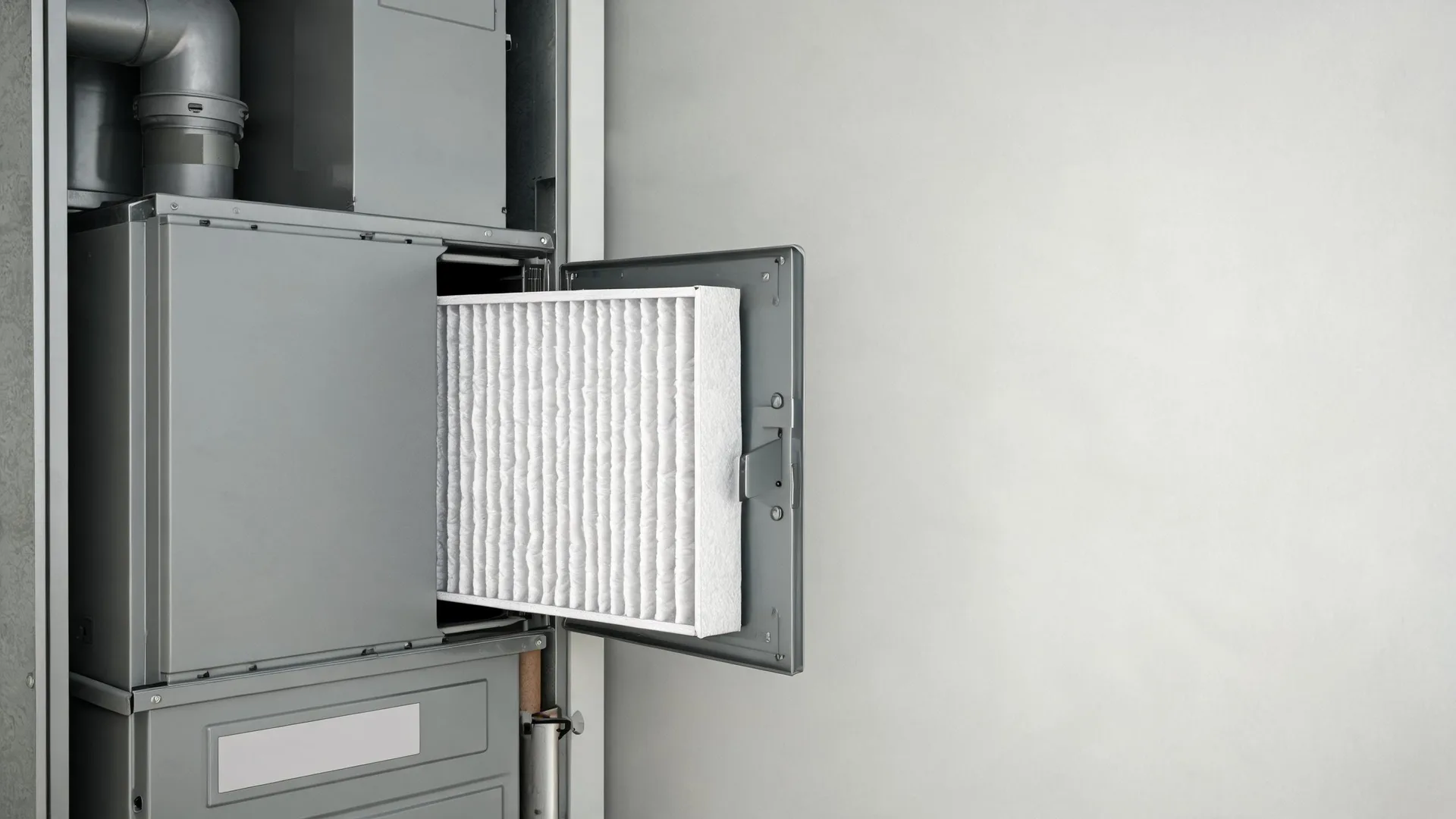
The rest of the job is airflow and controls, not just the burner. The filter gets checked, because a clogged one starves the blower and can make the heat exchanger run hotter than it should. The blower wheel gets looked at for dust buildup, since a dirty wheel moves less air even when the motor sounds fine. The igniter gets tested under load, not just glanced at, because some only fail once they've been running a while. Gas pressure gets checked at the valve, since too much or too little changes how clean the burner flame is. The condensate line gets checked too, if the furnace has one, since a clog there can shut the furnace down on its own safety switch. Each of these is quick to check and slow to go wrong on its own, which is exactly why they get missed without a yearly look.