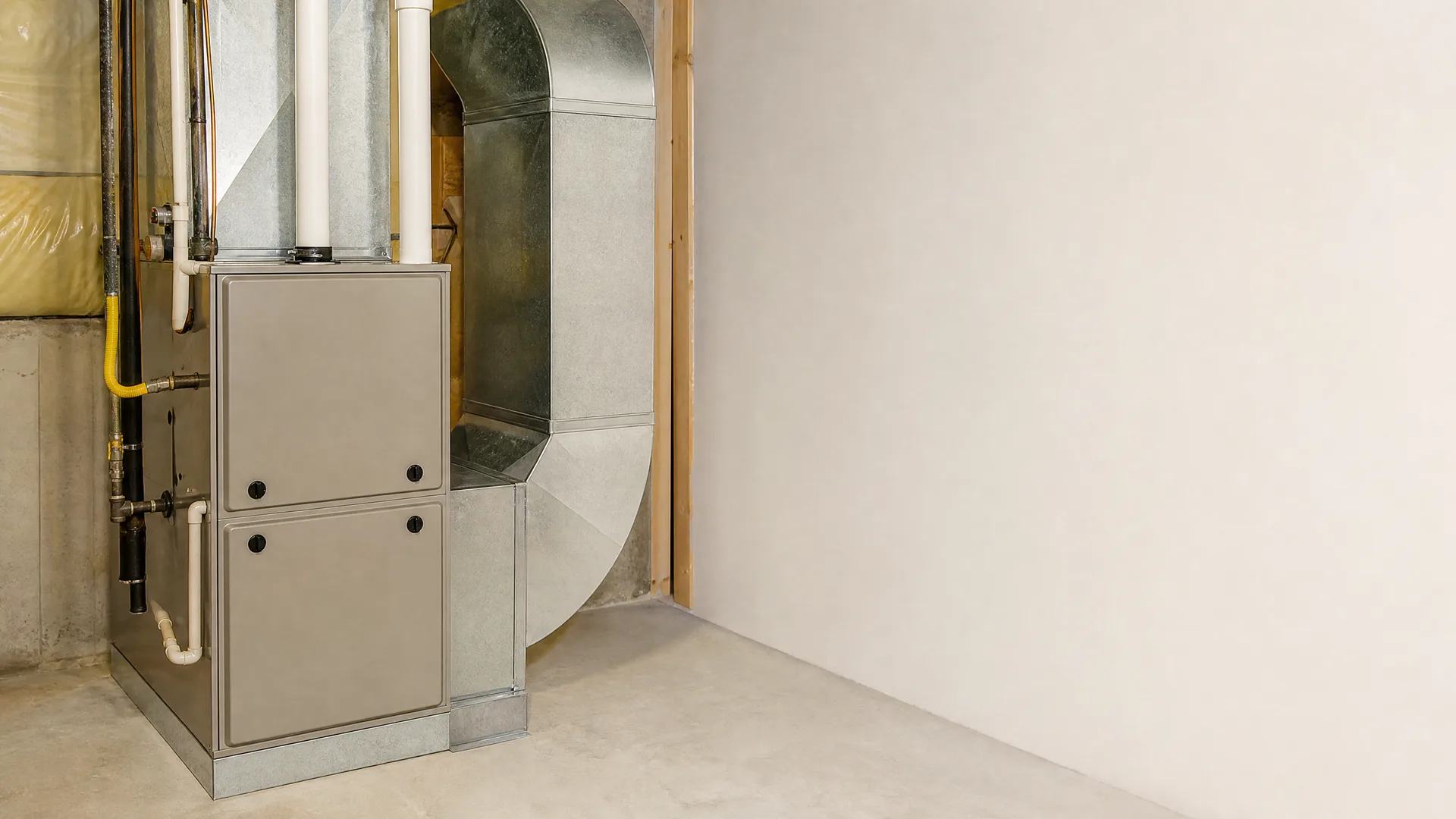
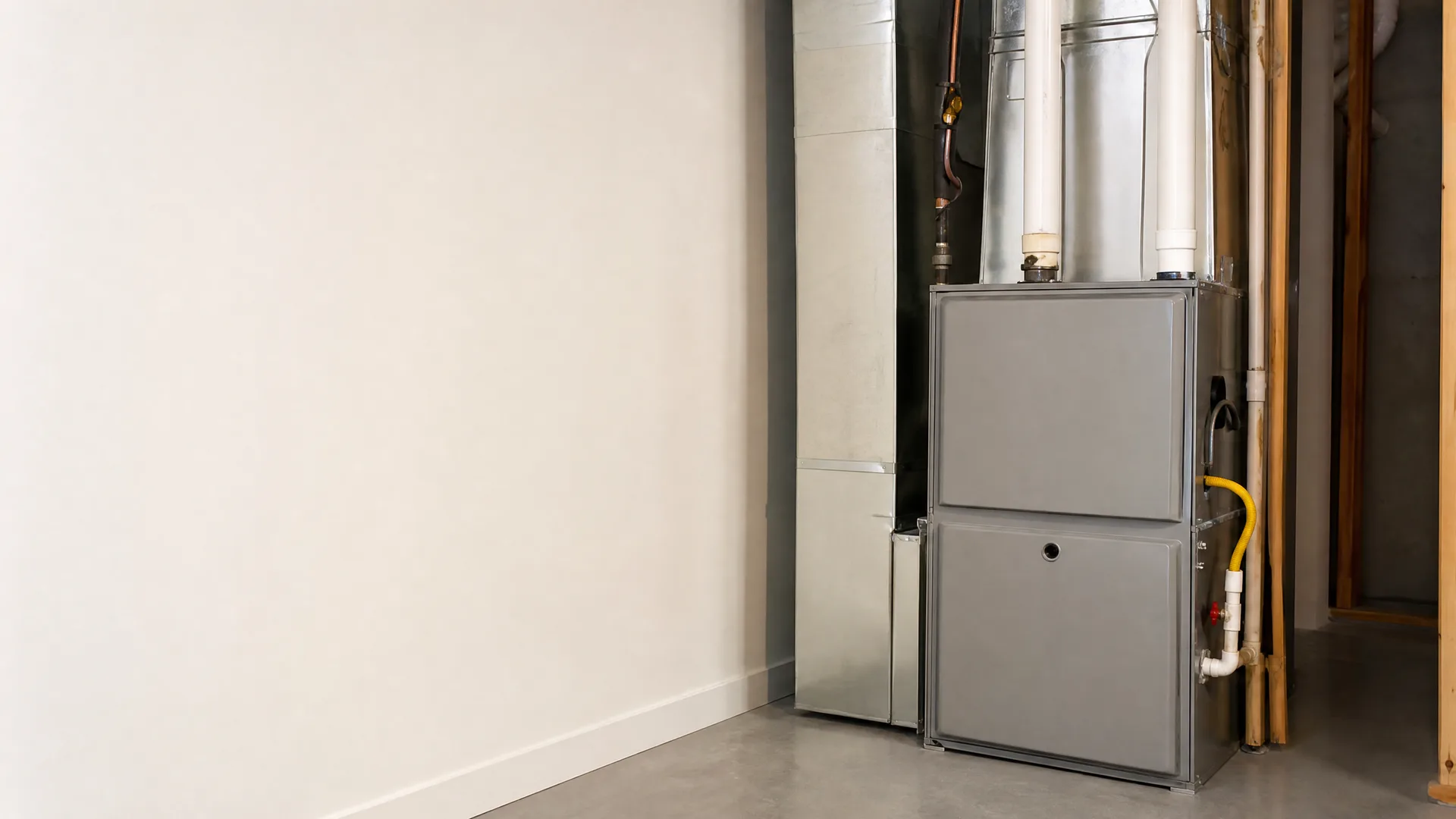

A gray high-efficiency furnace with two white PVC vent pipes stands beside galvanized sheet-metal ductwork in a dim basement with exposed joists and a concrete floor.

The right pro for this job

Furnace tune-up before winter in Farmington, NM

Cold weather in San Juan County doesn't give a gas furnace much warning. A tune-up before winter checks the igniter, the burners and the airflow while there's still time to fix what's wrong. This page gets into what that visit covers and what it finds, so you know what you're asking for before a contractor matched to your furnace calls you.

Find a pro near me

A furnace tune-up before winter means having a technician check and clean the parts that make your gas furnace run safely and reach full heat, before the cold settles in around Farmington. That means testing the igniter, inspecting the burners, checking the flame sensor, and making sure air moves through the system the way it should. Furnaces that sat idle since last winter can have a cracked heat exchanger, a dirty flame sensor, or a clogged filter choking airflow, and none of that shows up until the first cold snap when you need the heat most. A tune-up catches those problems while there's still time to fix them, instead of finding out on a night when it's already below freezing outside and a repair crew is booked solid. It also means the furnace burns gas the way it was built to, rather than straining to heat your house with a dirty burner or restricted airflow. For a house in San Juan County, where winters stay cold for months, that difference matters.

What does a furnace tune-up actually need to handle here?

  • Winter nights average 20°F

    Winter nights average 20°F. A furnace that misfires or short-cycles on a night that cold isn't a small problem, it's the only thing standing between your house and that temperature.

  • Heat runs October through May

    Heat runs October through May. That's eight months of the year your furnace has to work, so a part that's failing in October will keep failing for a long stretch after that.

  • 63% of homes heat with gas

    63% of homes heat with gas. Most furnaces in San Juan County share the same igniter, burner and venting setup, which is exactly what a tune-up is built to check.

NOAA nClimDiv 1991-2020 · ACS 2020-2024

A woman in a cream cowl-neck sweater sits by a window with snow outside, in a dimly lit living room with a sofa, lit lamp, mirror, candles and a fireplace.
A woman in a gray turtleneck sweater sits beside a large window looking out at snow-covered evergreen trees, in a dimly lit living room with a lit fireplace, lamps, couch and houseplant.
A woman in a cream turtleneck sweater stands beside a large window with snow-covered ground and bare trees outside, in a dimly lit living room with lamps, a sofa and framed art.
A woman in a grey cowl-neck sweater stands indoors near a window, looking out at falling snow, with a lamp, framed picture and couch in the warmly lit room behind her.

Is your furnace ready for the first cold snap?

You might already have a sense something's off. The furnace takes a few tries to light, or it clicks and clicks before it catches. Short cycles that never quite warm the house. A burner flame that looks yellow or ragged instead of steady blue. A burnt smell the first time it kicks on for the season, or a layer of dust blowing out of the vents. Maybe the pilot or igniter has gone out more than once this year. None of this means the furnace is done, but a furnace that's struggling in October won't do better in January, and a cracked heat exchanger or a failed igniter on a 20°F night leaves your house with no backup.

A gas furnace with sheet-metal ductwork, PVC vent pipes and copper and black piping stands against a wall in a basement with a bare light-colored wall and concrete floor.

Skip the tune-up this year

Your furnace might run fine all winter. Plenty do. But if the igniter is already weakening or the burners are dirty, you find out on a night when it's 20 degrees outside, not before. A breakdown call in January means living with cold air until someone can get to your house, and in San Juan County that wait matters.

A gray furnace with attached sheet-metal ductwork, white PVC vent pipes, copper and yellow gas lines stands against a wall in a room with a plain white wall and concrete floor.

Get it checked before November

A technician comes out, tests the igniter, looks at the burners, checks the airflow, and finds the small problems while they're still small and easy to fix. If something needs a part, there's time to order it before the cold sets in. You go into winter knowing the furnace was looked at, not hoping it holds.

Tune It Up or Take Your Chances

Tune-up now

  • A technician catches a cracked heat exchanger or a weak igniter while the furnace is sitting idle, not on the night you need it most.
  • You get one visit scheduled on your own time, instead of waiting on whoever can fit you in during a cold snap.
  • Burners get cleaned and the flame checked before they're running eight or more hours a day straight through January.
  • If a part needs replacing, there's time to source it instead of taking whatever's on the truck.
  • You know the furnace lit, held a steady flame, and cycled properly before you need to trust it at 20 degrees.

Skip it

  • The furnace may run the whole winter without issue, plenty do, and you spend nothing on a visit.
  • If something is wearing down, you won't know until it fails, and that's usually on a cold morning, not a mild one.
  • A breakdown in January means an emergency call, and those get booked solid when a cold snap hits the whole county at once.
  • A furnace that's been neglected for a few years is more likely to be the one that quits when it's working hardest.
  • You lose the chance to catch a small problem, a dirty flame sensor or a weak igniter, while it's still cheap and simple to fix.
A gray high-efficiency furnace with white PVC vent pipes stands beside galvanized sheet-metal ductwork in a basement with a concrete floor, with a wooden staircase and railing at left.

Furnace running clean

This is what a furnace looks like when the tune-up is done. The burners light on the first try and burn steady. Airflow across the plenum is even, and the exhaust pipe carries combustion gas out without any backdraft into the basement. Nothing about it needs your attention.


An older gas furnace with louvered panels sits on a concrete pad in a basement, connected to sheet-metal ductwork and PVC and metal pipes, with a water heater and wooden stair framing in the background.

Furnace left unchecked

Same setup, nothing visibly wrong, but no one has looked at the burners or the shutoff valve since it was installed. A cracked heat exchanger or a loose gas connection doesn't announce itself. It shows up as a smell, a carbon monoxide alarm, or a furnace that won't fire on the coldest night of the year.

A bearded man in a plaid flannel shirt stands indoors looking out a frost-covered window, with a steaming dark blue mug on the wooden sill and snow-covered trees outside.
A smiling man in a dark blue T-shirt sits on a light gray sofa in a living room with a wooden shelf and window behind him, with a laptop edge visible in the foreground.

Matched to your furnace job

Skip calling around to set up a furnace tune-up.

You only hire the pro if you want to.

What the technician checks for heat

A gas furnace makes heat by lighting burners inside a sealed chamber and pushing air from your house across the outside of that chamber with a blower. None of that air touches the flame. A tune-up checks the heat exchanger for cracks, because a cracked one can let combustion gas mix into the air moving through your ducts. It also checks that the flue draws properly, so what the burners produce goes outside instead of backing up. These checks matter more in San Juan County than someplace mild, because once the heat exchanger has a problem, you're the one running the furnace hardest to fight a 20 degree night.

Why the igniter gets tested now

Most furnaces built in the last couple decades use a hot surface igniter instead of a standing pilot light. It's a small ceramic part that glows to light the gas, and it weakens with age the same way a light bulb filament does, a little at a time, until one start it just doesn't get hot enough. A technician can test its resistance and tell you if it's near the end, which is useful information in October and useless information in January when it fails on the coldest night of the stretch. Replacing a weak igniter during a tune-up takes minutes. Finding out it failed overnight does not.

An older gas furnace with a louvered front panel stands on a concrete basement floor beside galvanized sheet-metal ductwork, a metal flue pipe, gas piping and a flexible conduit along a concrete wall.
Before you get your furnace maintenance
A gray furnace with sheet-metal ductwork, PVC vent pipes and a yellow gas line stands on a concrete basement floor beside wooden stair framing.
After you get your furnace maintenance

One visit, scheduled when you choose

A tune-up now happens on a day that works for you. No waiting by the phone, no rearranging your morning around whoever can come first.

Answer a few questions

20°F, no appointment

A breakdown in January means calling around while the house is cold, explaining the problem more than once, and taking whatever slot you can get.

Answer a few questions

What does the technician actually clean during a furnace tune-up?

You've heard the word "tune-up" plenty of times, but it doesn't tell you what's actually getting cleaned versus just looked at. If you're paying for a visit, it's fair to want to know where the dirt and buildup actually collects on a gas furnace, and why leaving it alone causes problems once the burners are running every day through the winter.

The burners, the flame sensor, and the blower wheel

The burners collect dust and a fine rust-colored scale over months of sitting idle through summer, and that buildup makes the flame burn uneven instead of steady. The flame sensor gets a thin coat of carbon on its tip every time the furnace runs, and once that coating is thick enough the sensor stops reading the flame at all, which shuts the furnace down. The blower wheel picks up dust from the air moving across it all winter, and a dirty wheel moves less air for the same effort. A technician cleans each of these by hand, since none of them clear themselves just by the furnace running.

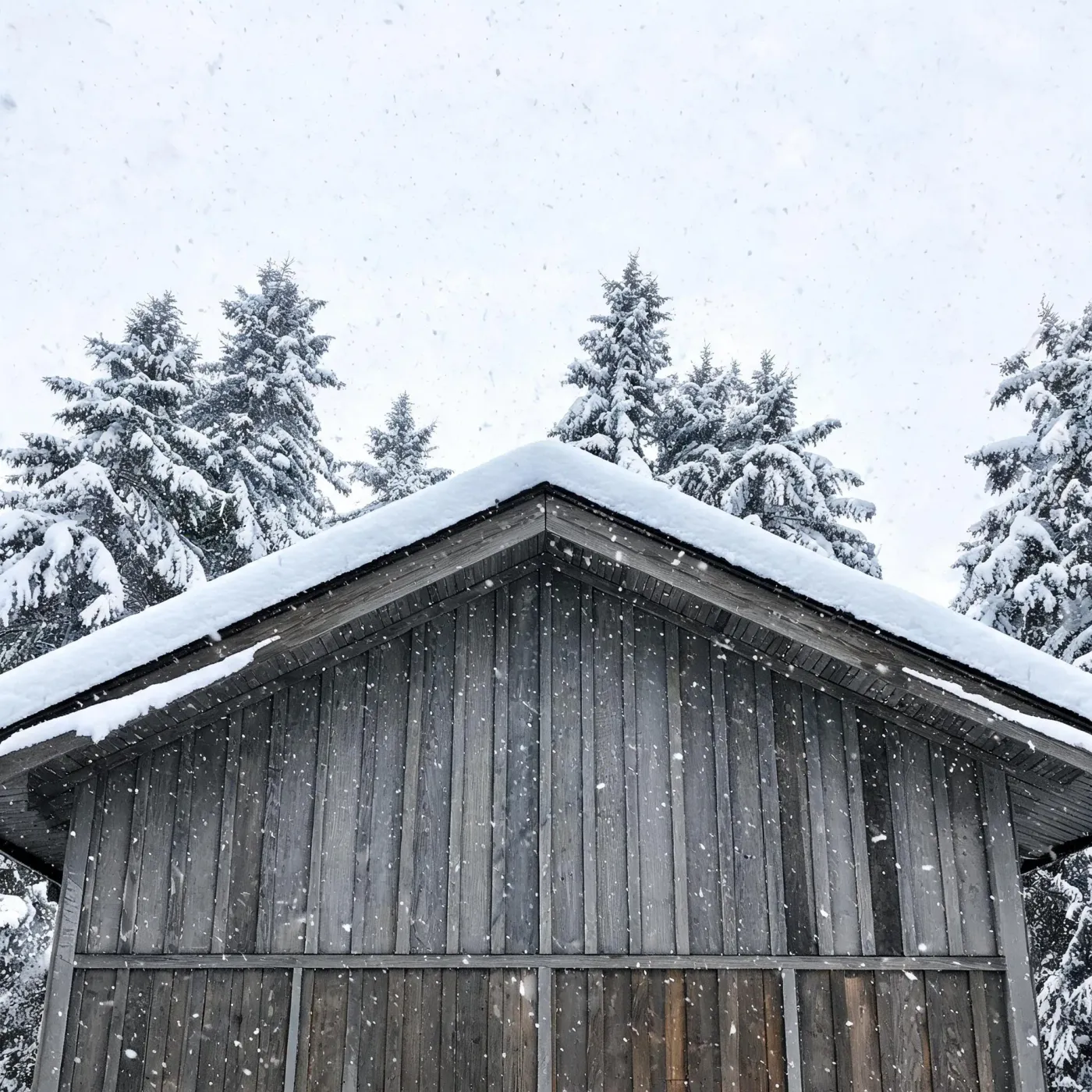
The gable end of a weathered vertical-board wooden building with a snow-covered roof, framed against snow-laden conifers and a pale sky with falling snowflakes.

That 20°F average is what San Juan County nights run December through February, according to National Weather Service data. A furnace sized for mild nights doesn't exist here. Yours is built to run long stretches, cycling on again and again until morning, and whatever is weak in it gets found on exactly those nights. A cracked heat exchanger or a clogged burner port doesn't show up when it's 45 outside. It shows up at 20, when the furnace is working its hardest and has no slack left to cover for a part that isn't pulling its weight.

NOAA nClimDiv 1991-2020

A man in a dark blue shirt stands in an open front doorway of a stucco and wood-clad house, facing a blond woman seen from behind in the foreground on a stone walkway.

A furnace tune-up before winter comes down to one visit

A technician checks the igniter, the burners and the airflow while the furnace is still sitting idle, not on a night when it's 20°F outside. That's the whole answer. Everything else on this page is what goes into making it true for your furnace.

You don't have to find that technician yourself. Matching you with one means you skip calling around San Juan County, explaining the same thing to three different shops, and sorting through quotes that don't line up. You answer a few questions about your furnace, and a contractor who covers Farmington reaches out to you directly. From there you know where you stand before the cold settles in.

Interior corner of a living room with a beige upholstered sofa and dark cushion in the foreground, a ceramic vase of leafy branches on a dark side table by a curtained window, a framed picture on the wall, and a wood-surround fireplace at right.
A dark gray high-efficiency furnace with two white vent pipes and connected sheet-metal ductwork stands in an unfinished basement with concrete walls, a support pole, and a small window.

Get matched with a furnace pro in San Juan County

Tune-up, service, or cleaningFurnace or heatingSan Juan County, NM
Step 1 of 2

What ZIP code is the job in?