Furnace season in Los Lunas runs October through April, about seven months. Overnight lows average 23°F through December, January and February, so the furnace is doing real work on most of those nights. One check-up a year is enough to catch a weak igniter or a cracked heat exchanger before the cold sets in. Nothing about the winters here calls for more than that, even with the snow and ice this county sees most years. The timing matters more than the frequency. Get it done before October, not after the cold has already set in.
Furnace season in Valencia County starts in October and runs seven months straight.
September is the month to get the furnace checked, before it has to carry the house.
Most furnaces in Los Lunas run on gas
67.6% of homes heat with gasHeat runs October through AprilWinter nights average 23°F
One check catches itWinter storms have hit this county 59 times between 2015 and 2024.
Half the homes in Valencia County were built in 1989 or earlier, so plenty of furnaces here have had a long run already. An older unit is exactly the one worth having checked before the cold sets in. Mobile homes make up close to a third of the housing stock in this county, and a furnace in a mobile home often sits in a different setup than one in a house, with less room around it to work with. None of that changes the schedule. Older furnace or newer, house or mobile home, once a year before the cold holds up.
A flame should burn steady and blue, with maybe a touch of yellow at the tip. During a tune-up the burner gets pulled and looked at for a flame that leans orange or flickers, which points to dirty burners or a mix of air and gas that's off. The heat exchanger gets checked for hairline cracks you'd never spot on your own, and would never see without pulling a panel. A cracked exchanger can let combustion gas mix into the air moving through your house, so this is the check that matters most. The igniter gets tested under load, not just looked at, because one that's gone brittle can still glow and still fail the next cold morning. Flue and venting get checked for a solid draft, since a weak draft backs exhaust up instead of pushing it outside. None of this shows up by looking at the furnace from across the room. It shows up when someone takes it apart.
Change the filter
A dirty filter chokes airflow, and a furnace starved for air runs hotter than it should and shuts off early on its limit switch. Check it every month furnace season is running. Hold it up to a light. If light doesn't pass through, swap it.
Keep the area clear
Don't stack boxes or stored items against the furnace or over the vents. It needs open air around it to pull combustion air in and move heat out. If you smell anything like rotten eggs near it, leave the house and call the gas company from outside, not the furnace repair line.
A furnace doesn't have the same coil and drain worries as the cooling side, but the filter still runs the whole show. Pull air through a clogged filter and the blower has to work harder to move the same amount of heat, and parts further down the line start running past where they're built to. The flame sensor and heat exchanger both sit downstream of that airflow, and both last longer when air moves through the system the way it's supposed to. Some furnaces pair with an evaporator coil mounted right above them for the summer side, and that coil needs clear airflow too, so a dirty filter works against both systems at once. If the furnace is a high-efficiency condensing model, it also has a drain line carrying off the condensation that forms as exhaust gas cools, and that line can clog with sludge over time. A blocked condensate drain will shut the furnace down on a safety switch rather than let water back up into the cabinet.
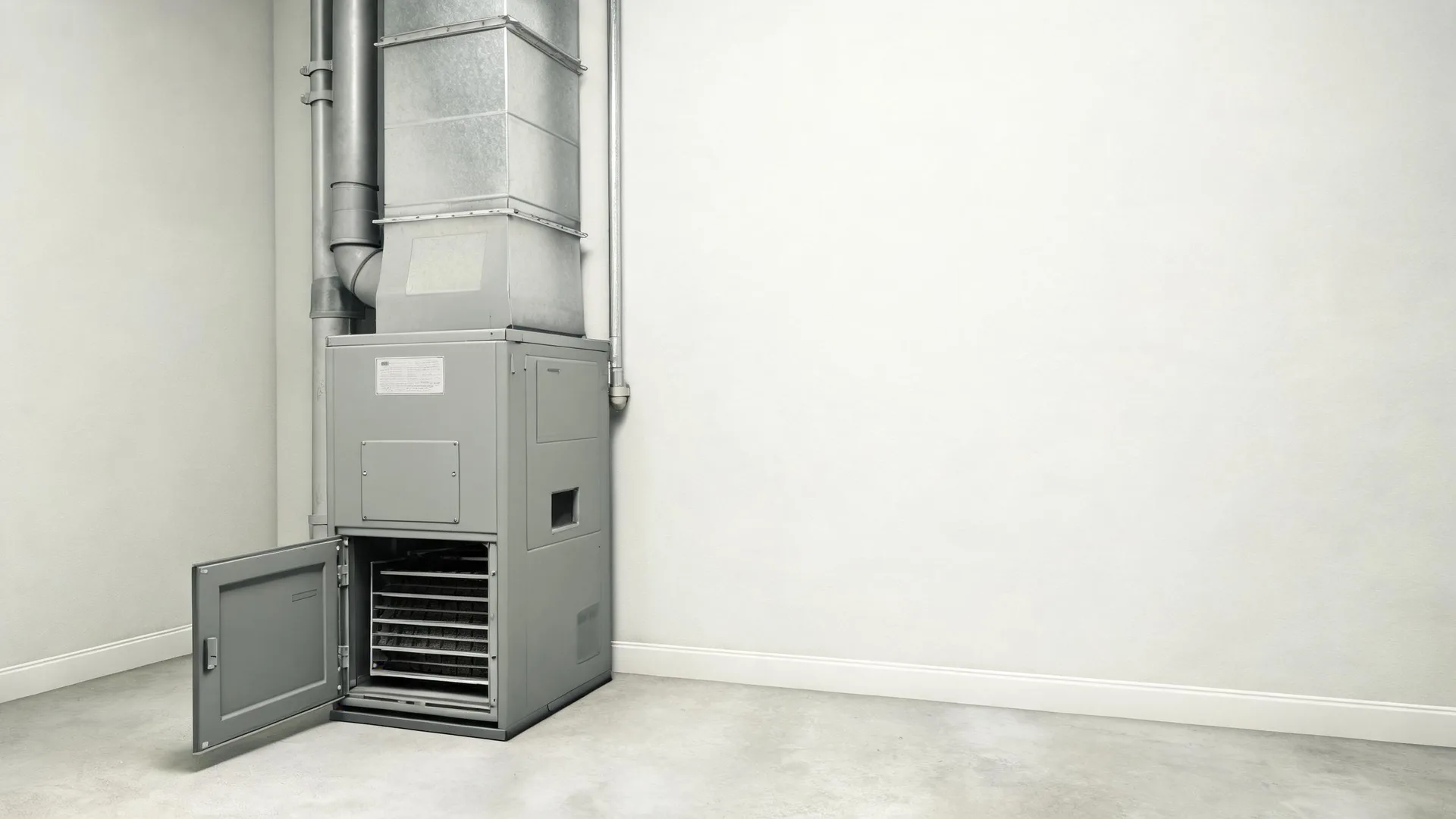
A tune-up starts with the furnace running, not off. A tech wants to see the flame, hear the blower, feel what the system is actually doing before taking anything apart. Static pressure gets checked across the filter and the coil, because that number says whether air is moving the way the furnace was designed to move it. Gas pressure gets set at the manifold, since too much or too little changes how clean the flame burns. The blower wheel gets looked at too, not just the motor. A wheel coated in dust moves less air even when the motor behind it is fine, and that kind of buildup never shows up from the front panel. Electrical connections get snugged down, because a loose wire at the control board or the blower motor causes trouble that looks electrical but started mechanical. None of this is guesswork. It's the same sequence, checked the same way, every single time.