A dark gray furnace with two access panels stands in a basement, connected to galvanized sheet-metal ductwork and PVC pipes, with exposed wood framing and a bare bulb light in the background.

A local pro for your furnace maintenance

Why your house is dry with the heat on in New Mexico

New Mexico air is already dry, and a gas furnace running all winter pulls what little moisture is left right out of your house. This page gets into why that happens and what it means for your furnace and your home. Answer a few questions and a contractor who handles maintenance in your area will reach out, so you skip the searching and the repeat phone calls.

Get matched

A gas furnace doesn't add any moisture to the air moving through your house. It just heats whatever air is already there, and in New Mexico that air starts out dry before it ever reaches the heat exchanger. Run the furnace for hours a day from November through February and that dry air cycles through your rooms again and again, pulling moisture out of your skin, your wood floors and trim, even your furniture, with nothing coming back in to replace it. In a place with humid summers, some of that moisture would still be in the walls and furnishings from the season before. Not here. New Mexico starts dry and stays dry, so the furnace has less to work with and the effect shows up faster: cracked skin, static shocks, wood joints that shrink and creak. None of this means the furnace is broken. It means it's doing exactly what it's built to do, and nothing about that design puts moisture back into the air.

Winter nights average 23°F statewide

Nights this cold mean the furnace is kicking on well past midnight and running long once it does. Longer runs push more of that dry air through the house, which is why the dryness is worse by morning than it was when you went to bed.

NOAA nClimDiv 1991-2020 county normals weighted by homes

A woman in a cream knit sweater sits in an armchair with her eyes closed and a slight smile, beside an open window showing orange autumn foliage, with a mug, books and a lit candle on a small side table.
An older man with gray hair and a beard leans back on a beige sofa with his eyes closed, in a sunlit room with potted plants, a wicker chair and large windows behind him.

How Your Furnace Handles Air

  • Combustion air for a gas furnace comes from inside the house or a vent to the outside, not from the duct air that reaches your rooms.
  • The heat exchanger warms air by contact, so nothing about the burner or exchanger adds water vapor to what's blowing out of your vents.
  • Relative humidity drops as air warms, so the same air that felt fine outside at 30 degrees reads much drier once the furnace heats it to 70.
  • A furnace cycles on and off through a thermostat, and each cycle pulls in the same dry house air and pushes it back out drier still.
  • Older or leaky ductwork can pull in extra outside air through gaps, adding even more dry air to what the furnace is already moving.
  • A whole-house humidifier mounted on the supply duct is the only part of the system built to put moisture back into that air.

A gas furnace is built to move air, not add anything to it. The blower pulls air from your return duct, pushes it across a heat exchanger, and sends it back out through the supply vents. Combustion happens in a separate chamber, sealed off from that airstream, with its own air supply drawn from inside the house or through a dedicated vent to the outside. None of that burner exhaust ever mixes with the air reaching your rooms. What the heat exchanger does is warm air by contact, the same way a pan on a stove warms the air above it. Warming air lowers its relative humidity even though the actual amount of moisture in it stays the same. That's why air that read as tolerable at 30 degrees outside feels bone dry once your furnace has it at 70. Every time the thermostat calls for heat, the furnace runs through this same cycle, pulling in house air and returning it slightly drier than before. Do that enough times a day for months and the effect adds up. If your ductwork has gaps or loose joints, especially runs through an attic or crawlspace, the system can draw in extra outside air at those gaps, which only adds to the dry air already moving through the house. None of the furnace's own parts are built to replace that lost moisture. The one component made for that job is a whole-house humidifier mounted directly on the supply duct, which sits outside the furnace's normal heating cycle entirely.

A gray high-efficiency furnace stands on a concrete basement floor beside galvanized sheet-metal ductwork, with white PVC vent pipes, gas and water lines, and unfinished wood framing behind it.
A furnace that's sized and set up right still won't add moisture, but a clean burner and a properly adjusted blower move only as much dry air as the house actually needs to stay warm.
A beige furnace with two louvered front panels stands on a concrete basement floor beside galvanized ductwork, metal pipes, and a wooden post.
A furnace that's short-cycling or running longer than it should pushes more dry air through the ductwork than the house needs, and the dryness shows up faster.

How Your Furnace Is Running

Running dry

  • A furnace that short-cycles turns on and off more often, and each startup pulls in a fresh batch of cold, dry outside air to replace through the ducts.
  • A dirty blower wheel or a clogged filter makes the furnace work harder and run longer to hit the same temperature on the thermostat.
  • A burner that's out of adjustment can run hotter or longer than the house actually needs, pushing more dry air through every room.
  • Leaky ducts pull in dry air from the attic or crawlspace instead of from the rooms you're trying to heat, adding to what the furnace moves.
  • A thermostat set too high keeps the furnace cycling more through the night, and more cycling means more dry air by morning.

Running right

  • A furnace with a clean burner and a properly adjusted flame heats the air it has without needing longer runs to catch up.
  • A blower set to the right speed moves only as much air as the house needs, rather than overworking to compensate for restricted airflow.
  • Sealed, intact ductwork delivers the air the furnace already heated instead of drawing in extra dry air along the way.
  • A furnace that cycles on and off at a normal rate, rather than short-cycling, moves air through the house less often overall.
  • A thermostat set to a steady, reasonable temperature keeps the furnace from running more than the house actually calls for.
A gray high-efficiency furnace in a basement with white PVC vent pipes, sheet-metal ductwork, copper and black piping, a condensate pump, and insulated walls above a concrete floor.

Running clean

A furnace like this is doing its job and nothing more. The ducts are sealed, the burner is clean, and the blower moves air at the rate it was set to. It still won't add moisture, but it won't make the house drier than it has to be either.


A beige residential furnace stands on a concrete basement floor beside galvanized sheet-metal ductwork, a round flue pipe, copper gas piping, and a PVC condensate line, with a wood-paneled wall at right.

Running rough

A furnace like this has been working harder than it should for a while. Grime on the cabinet usually means grime inside it too, and an older unit that hasn't been serviced tends to run longer to hold the same temperature, pulling more dry air through your house with every cycle.

A woman with long gray hair wrapped in a checked blanket sits on a sofa by a window with yellow autumn foliage outside, with a lamp, framed picture and plant in the background.
An older woman in a cream knit sweater sits on a sofa by a window, looking out at sunlit trees with yellow and orange autumn leaves, with a bookshelf and lamp behind her.
A woman with gray shoulder-length hair in a dark knit sweater sits on a cushioned seat by a window, looking out at yellow autumn foliage, with a living room, armchair, houseplant and framed picture behind her.
An older woman with gray hair in a bun, wearing a cream knit sweater, sits on a sofa with a gray blanket and looks out a large window toward yellow-green autumn trees, with a lit table lamp and dark armchair behind her.

Get the right pro for your furnace

A furnace that's tuned right won't fix dry air, but one that's neglected makes it worse than it needs to be, and there's no way to check a heat exchanger or a blower setting yourself. Someone has to pull the panel, look at the burner, check how long the cycles run. Finding that someone in the middle of a New Mexico winter usually means searching, calling a few numbers, describing the same dry-house problem three or four times, then sitting on quotes trying to guess which one is fair. Answer a few questions here instead and a contractor who works on furnaces in your area gets your information and reaches out. You skip the search, the repeat calls, and the back and forth, and get straight to someone who can look at what's actually running in your house this winter.

What a tuneup actually checks

A maintenance visit looks at the parts that decide how long your furnace runs to heat the house. The burner gets cleaned and checked so it fires evenly instead of struggling and staying on longer than it should. The blower gets checked for the right speed, because a blower moving more air than the house needs just pushes more dry air through the ducts for no reason. The flame sensor and igniter get tested so the furnace doesn't short-cycle, shutting off and restarting more than it needs to. None of this adds moisture back. It keeps the furnace from running longer or starting more often than your house actually calls for.

What you'd otherwise be stuck doing

Finding someone to look at this usually means searching for a contractor who works on furnaces in New Mexico, calling a few, explaining the dry air and the long overnight runs each time, then sitting on quotes trying to tell them apart. Answer a few questions here instead and a contractor who takes on jobs like yours gets in touch with you directly. You skip the search, the repeat calls, and the side-by-side comparing, and get straight to someone who can look at the burner, the blower, and the cycling and tell you what your furnace is actually doing.

A gray furnace with two access panels stands on a concrete basement floor beside sheet-metal ductwork, with pipes, flexible conduit and an electrical box on the concrete wall to the left.
Before you get your furnace maintenance
A gray high-efficiency furnace stands on a concrete basement floor beside galvanized sheet-metal ductwork, white PVC vent pipes, copper and black piping, and unfinished wood stud framing.
After you get your furnace maintenance

Cracked skin, static shocks, nosebleeds

Dry air in the house shows up on you first. Static on the doorknobs, a sore throat in the morning, skin that cracks at the knuckles by January.

Get a local pro

Wood floors and furniture pull apart

Wood trim, floors and furniture dry out and shrink right along with the air. Gaps open up between boards that were tight all summer.

Get a local pro

Does a bigger furnace dry the house out faster?

You're wondering if upgrading to a bigger furnace, or the fact that your current one is oversized, is part of why the air feels so dry once winter sets in. It seems like more heat would mean more drying, so a bigger unit sounds like it would make things worse.

Size doesn't change how dry the air gets. Run time does.

A furnace that's too big for the house heats it fast, then shuts off, then kicks back on again soon after. Each one of those startups pulls in a new batch of cold, dry outside air for combustion and replaces warm house air through the ducts. That short-cycling adds up to more total run time over a day than a furnace that's sized right and heats steadily until the house is warm, then stays off for a while. So it's not the size of the unit that dries out your house. It's whether it's cycling on and off more than it should, which a contractor can check by watching how long it runs and how often it starts.

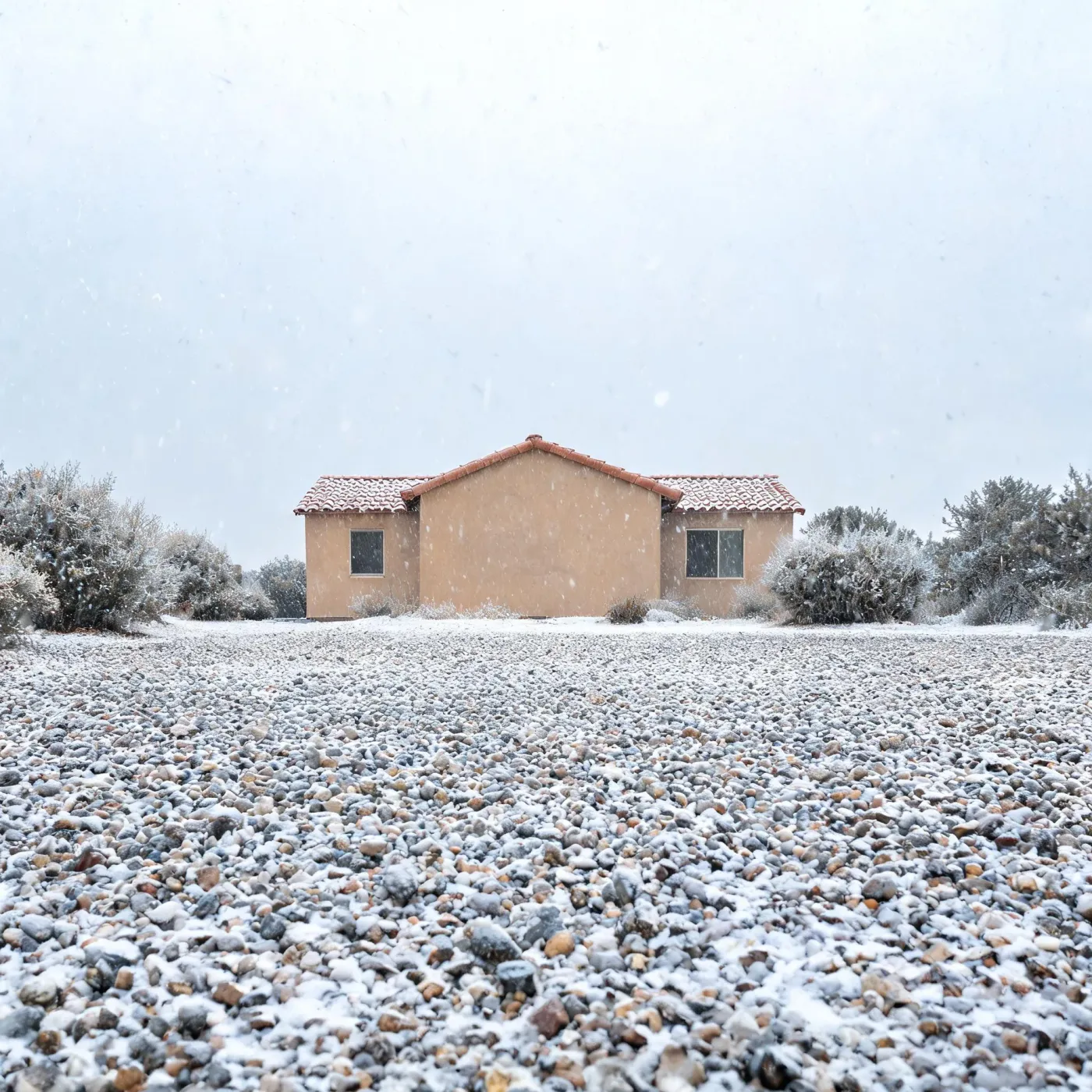
A single-story tan stucco house with a red tile roof stands behind a wide gravel yard dusted with snow, flanked by low shrubs, under a pale overcast sky with falling snowflakes.

Statewide, winter nights average 23°F, according to NOAA climate data. That's cold enough that your furnace isn't just kicking on for a short burst in the morning and evening. It's running long stretches through the night to keep the house at temperature, and every one of those stretches pulls more dry outside air through the ducts. By the time you're up for coffee, the air inside has gone through the heat exchanger more times than it did on a milder night. You'll notice it in dry skin, a dry throat, maybe a few extra static shocks off the doorknob. None of that means the furnace is broken. It means the air coming in was already dry, and a long cold night gives it more chances to move through your house.

NOAA nClimDiv 1991-2020 county normals weighted by homes

A man seen from behind raises his hand to wave at a woman standing in the open front doorway of a single-story house with gray shingle siding, white columns and a gabled porch entry.

Your furnace isn't the problem. How it's running might be.

New Mexico air is dry before it ever reaches your ducts, and nothing about a gas furnace changes that. What changes is how hard the furnace has to work to keep the house warm from November through March. A unit that cycles cleanly and shuts off when it should moves only the air your house needs. One that's short-cycling or running long because of a dirty burner or a clogged filter pushes more of that dry air through every room, night after night.

That difference is what a tuneup is for, and it's not something to check yourself without pulling panels and testing a cycle length. If you'd rather not spend a weekend calling around and explaining the same thing to three different companies, answer a few questions and a contractor who covers your part of New Mexico will reach out to you directly. You'll know where your furnace stands before the next cold night sets in.

A gray upholstered sofa with a textured cushion sits beside a dark round side table holding a vase of green foliage, with a table lamp and sheer-curtained window behind.
A gray high-efficiency furnace with two access panels stands on a concrete basement floor, connected to sheet-metal ductwork and white PVC vent pipes, with wood framing and a gas line nearby.

Get your furnace to the right pro

Tune-up, service, or cleaningFurnace or heatingNew Mexico
Step 1 of 2

What ZIP code is the job in?