View from a shaded covered patio with exposed wood beams toward a single-story tan stucco house, a gray concrete block wall, a gravel yard, and a mesquite-like tree under an overcast sky.

Heat Pump Repair in Tucumcari, NM

Tell us about the job

Takes about a minute. No obligation.

RepairHeat PumpQuay County, NM
Step 1 of 2

What ZIP code is the job in?

A normal system in a normal climate

Winter nights here average 25°F. That is well within what a heat pump is built to handle. Hail and wind show up most years in Quay County, but neither one is what usually knocks a heat pump down. When one in Tucumcari stops heating or cooling right, it is almost always a part inside it, not the weather outside it.

So the job is finding the part that failed

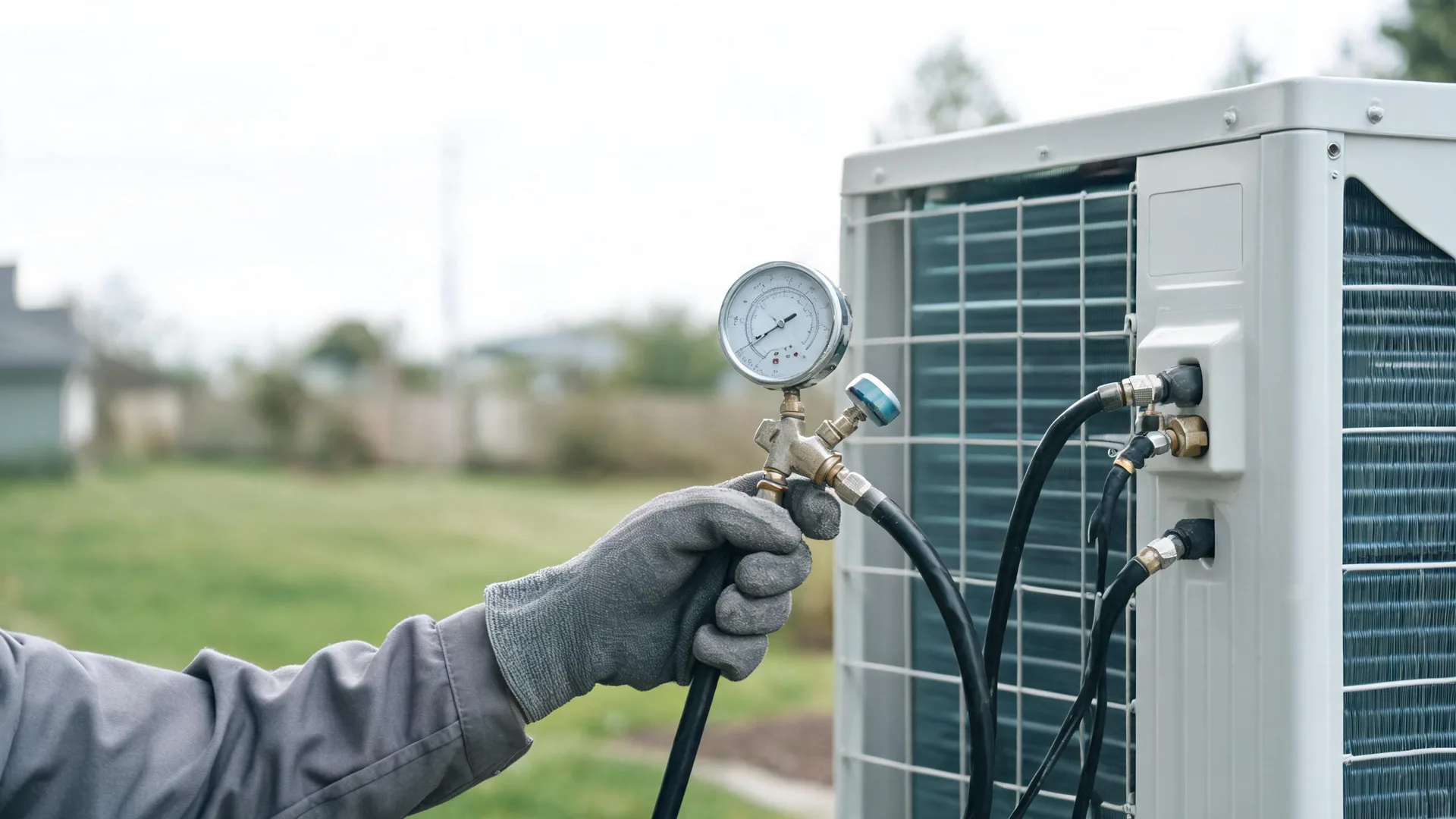
A heat pump that runs weak or won't switch over usually comes down to a low charge, a bad reversing valve, a failed capacitor, or a sensor sending the wrong signal. A tech who checks these in order finds the real cause. That beats guessing, and it beats replacing something that only looked like the problem.

7 months
October through April, your system heats
4 months
June through September, it cools
25°F
the average winter night it heats against
91°F
the average summer afternoon it cools against
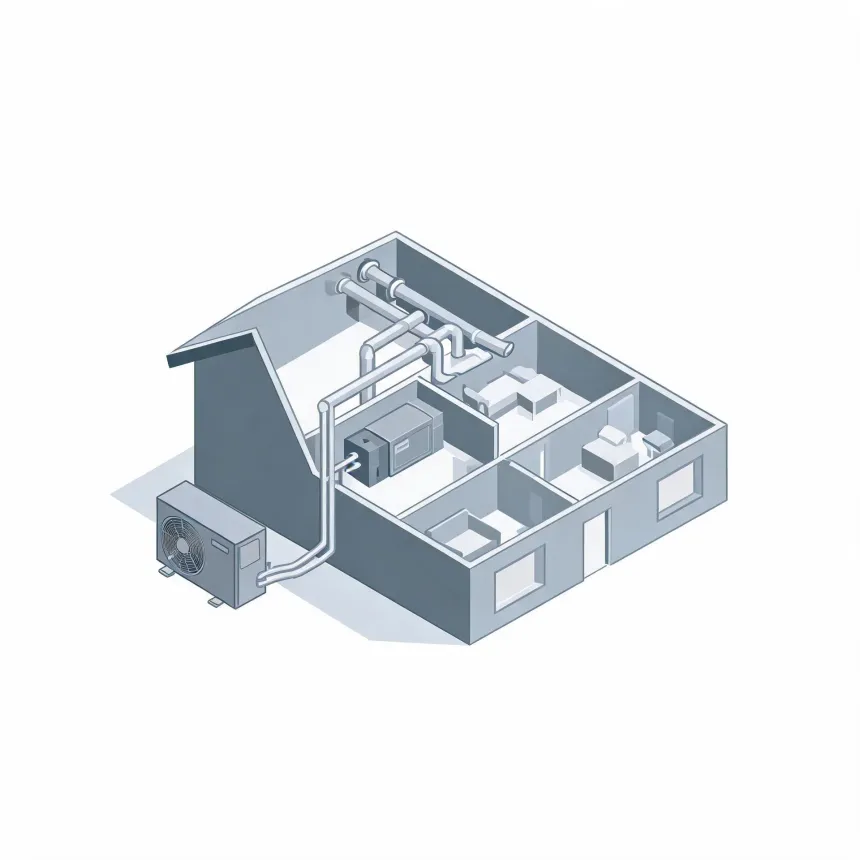
Isometric grayscale illustration of a cutaway house showing interior rooms, ducted air handler and duct runs, connected by pipes to an outdoor condenser unit beside the building.
Your system heats October through April and cools June through September.

NOAA nClimDiv, 1991–2020 normals

Heat here switches over in October and runs through April.

A heat pump that made it through last winter can still fail in the first cold week, when the system leans hard on whatever part was already weak.

Half the homes in Quay County are old enough that their heat pump isn't the first one

Half the homes here were built by 1966
113 damaging wind events from 2015 to 2024
84 hail events from 2015 to 2024

Quay County sees its share of wind and hail most years, and a few winter storms over a decade. None of that is what takes down a heat pump. Wind and hail hit the outside of a house, and the outdoor unit is built to sit outside through all of it. What actually fails is usually inside the cabinet. A capacitor weakens over time. A contactor gets pitted. The charge runs low, or the reversing valve sticks. Those failures come from age and from running, not from a storm. If your heat pump stopped working after a calm week, the weather is not the lead to chase.

The right fix now costs less than a running problem

Electricity here runs 14.20 cents per kilowatthour. A heat pump that is low on charge or running on a weak part works harder than it should, and that shows up on the bill before it shows up as a breakdown. Getting the right part fixed now is what stops that.

Find a contractor
A man in a cap, gray shirt and tan work pants walks up steps toward a dark front door, carrying a worn canvas and leather tool bag, with a potted shrub to the right.
A gray outdoor HVAC unit mounted on a concrete pad beside a house with gray lap siding and a stone foundation.

A second or third system by now

If your heat pump came with the house, it's probably not the first one. Half the homes in Quay County were built in 1966 or earlier, and a system from a later replacement is still old enough to be near the end of what it can give you. Before paying for a big repair, ask the tech straight out how much life is left in it. A reversing valve or compressor job on a unit that old may not be worth it. A capacitor or contactor swap usually still is.

A weak part gets worse under load

A capacitor that is starting to go still kicks the compressor on, just harder than it should. A reversing valve that sticks still moves, most of the time. Keep running the system on a failing part and the motor it's driving pulls more amperage every cycle, builds more heat, and wears down faster than it would on a part that's doing its job.

A small job can turn into a big one

A compressor is built to take a hard start once in a while, not every single cycle. Make it do that for days on end and the windings take damage that a new capacitor won't undo. What started as a part swap can end as a compressor replacement, and that's a different job entirely.

Most heat pump failures trace back to a handful of parts, and they fail the same way whether the system is new or old. The capacitor is usually first. It gives the compressor and fan motor the extra push they need to start, and it weakens with every cycle until one day it can't deliver that push at all. The contactor is next. It's the switch that sends power to the outdoor unit, and the contacts inside it pit and burn from years of making and breaking that connection. The reversing valve is what lets a heat pump switch between heating and cooling, and when its coil fails or the valve itself sticks, the system gets stuck in one mode or stops responding to the thermostat's call to switch. Refrigerant charge drops only if there's a leak somewhere in the line, and a system running low on charge will struggle to heat or cool no matter how well everything else works. None of these parts wear out because of a storm or a cold snap. They wear out from use, the same slow way a car battery or a set of brake pads does.

So when does a repair make sense and when doesn't it. A capacitor, a contactor, a run of low charge from a small leak, those are worth fixing almost every time. They're contained jobs, the part is known, and a tech can tell you going in what it will take to put it right. A compressor is a different question. It sits inside a sealed system, it's the most expensive part in the unit, and if it's failing from age rather than from a part that dragged it down, replacing it can cost close to what a new system runs. The reversing valve sits in between. It's a real repair, not a small one, and whether it's worth doing depends on what else is wearing out in the same unit. Ask the tech which kind of job you're looking at before you agree to it.