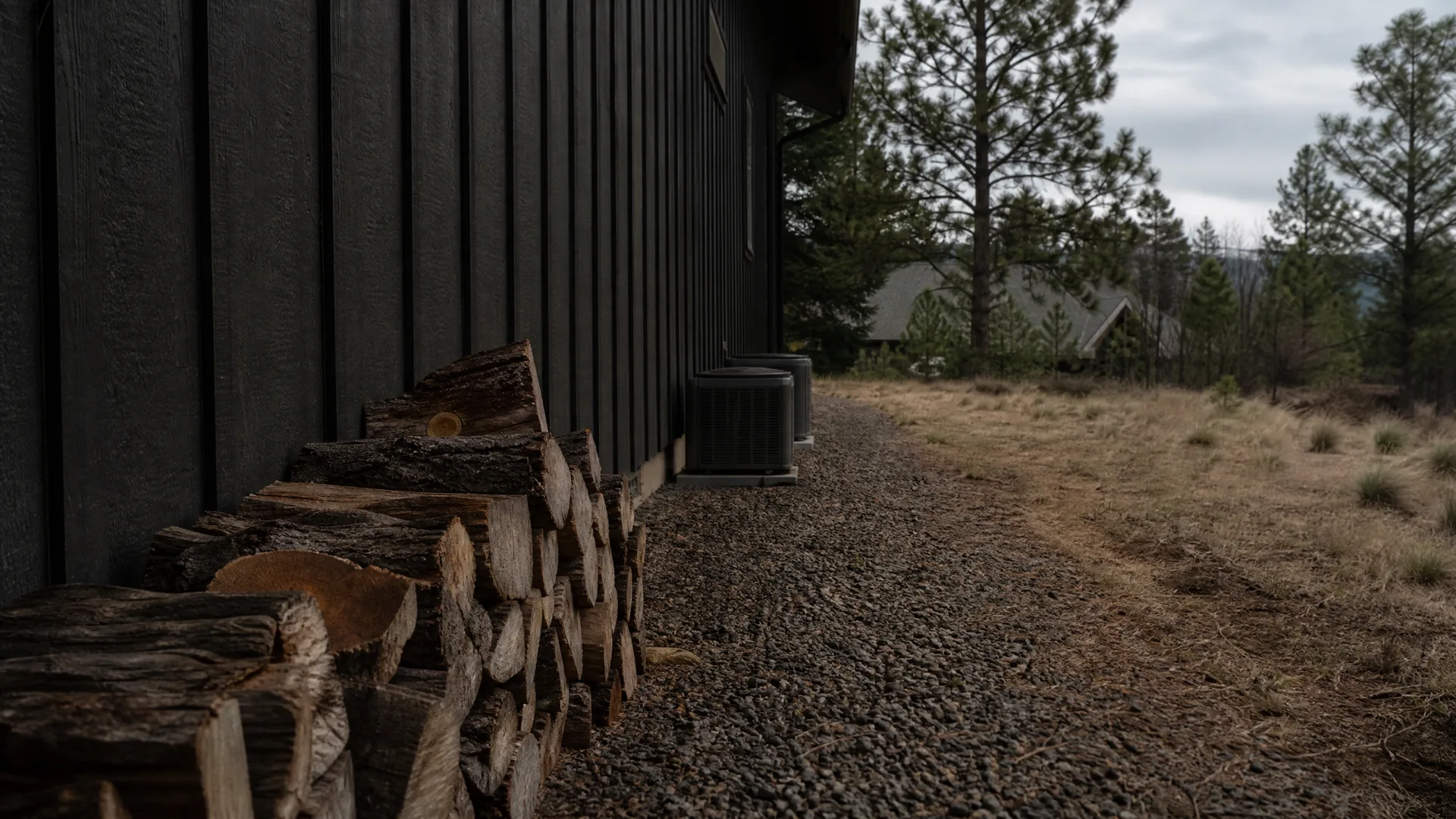







Stacked firewood along the dark vertical-board exterior wall of a house, with two outdoor condenser units, a gravel path, dry grass and pine trees under an overcast sky.

Heat Pump Repair in Taos, NM

Tell us about the job

Takes about a minute. No obligation.

RepairHeat PumpTaos County, NM
Step 1 of 2

What ZIP code is the job in?

Taos County skews newer than a lot of places. Half the homes here were built in 1985 or later. If your heat pump came with the house, there's a decent chance it's not as old as the one in your parents' place somewhere else, and that matters when something goes wrong with it. An older unit near the end of its life might not be worth sinking money into. A newer one almost always is. Before you assume the worst, it's worth finding out which situation you're actually in.

10 months
September through June, your system heats
14°F
the average winter night it heats against
76°F
the average summer afternoon it cools against
Isometric line illustration of a cutaway house showing interior rooms with furniture, a furnace or air handler with overhead ductwork, and an outdoor condenser unit connected by lines outside the wall.

Winter here means cold, not wind on the coils or storms tearing at the unit.

At 14°F average overnight through December, January and February, a heat pump just works steadily against the cold, so most repairs are worth making.

178 weather events in ten years, and your heat pump isn't what any of them were after

178 severe weather events from 2015 to 2024
13% of homes statewide lost power a day or more in 2024
44 damaging wind events from 2015 to 2024
Power here isn't cheapNew Mexico electricity ran 14.20 cents per kilowatt-hour in 2024, so a heat pump running wrong costs you every month it goes unfixed.

Heat here starts in September, and that first month is when a weak part tends to show up. The system has been sitting since spring, and the first real call for heat puts load on whatever was already marginal, a contactor, a capacitor, a sensor that was reading wrong last year too. If yours struggled at the start of last season, that's worth mentioning to whoever comes out, because it's likely the same part asking for attention again. August, before the heat starts, is a good time to get a unit looked at if you noticed anything off last winter. Once you're into September through June, the heat pump is working most days, and a small problem has more chances to turn into a bigger one.

A unit working against cold, not damage, is usually worth repairing

Your heat pump isn't fighting wind or hail here, just steady cold, and that's a job most units handle fine for years. If something's off with yours now, it's worth having looked at rather than replaced.

Find a contractor
A man in a cap, dark t-shirt and worn tan work pants walks up steps toward a dark front door, carrying a canvas tool bag filled with tools, beside a potted shrub.
A gray heat pump outdoor unit mounted on a concrete pad next to the stone-accented exterior wall of a house.

Check the age before you assume the worst

So when a repair tech asks the age of your system, it's worth actually checking rather than guessing. Look at the unit itself or whatever paperwork came with the house. A heat pump installed within the last decade or so has a lot of working life left in it, and a repair now is money spent on a system that's going to keep earning it back. That's worth knowing before anyone talks about replacement.

Check the thermostat first

Make sure it's set to heat, not cool, and set a few degrees above room temperature so it actually calls for heat. Check the batteries if it has a screen that looks dim or blank. A thermostat that lost its program can leave a heat pump idle for no reason anyone would notice right away.
Look at the outdoor unit

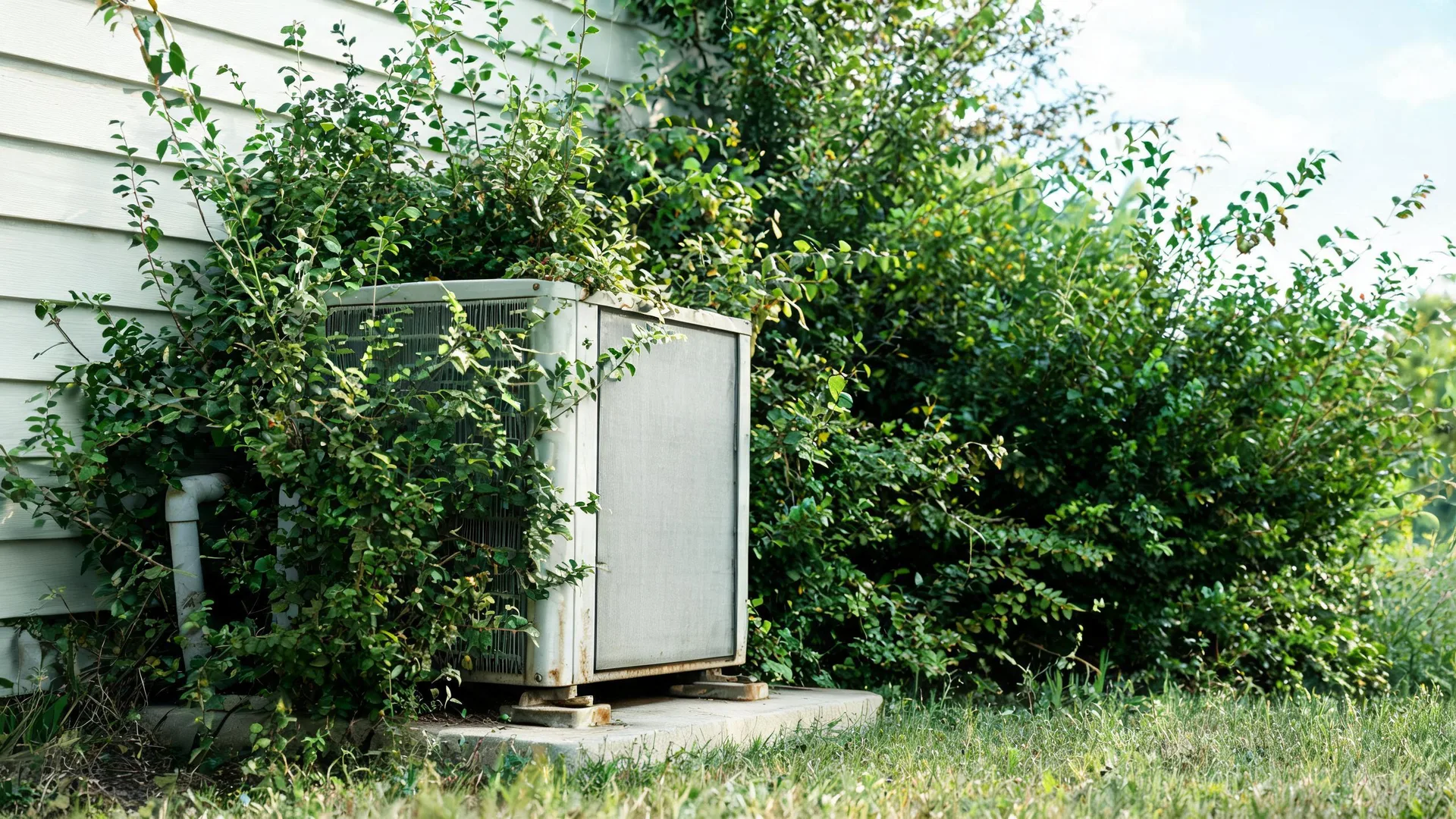
Walk outside and see if the outdoor unit is buried in snow or iced over solid. Some frost during a defrost cycle is normal. A heavy coat of ice that doesn't clear, or snow packed against the cabinet blocking airflow, will keep the system from working right. Clear away what you can reach without force, then check the breaker panel for a tripped switch before deciding it's something more.

Most heat pump failures trace back to a handful of parts. The reversing valve is the one unique to a heat pump, and when it sticks, the system blows cold air when you've called for heat. A failing capacitor is another common culprit. It gives the compressor or fan motor the jolt needed to start, and when it weakens, the unit hums or clicks but doesn't run. Refrigerant leaks show up as ice on the outdoor coil and heat that never quite keeps up. The defrost control board is worth knowing about too. It's supposed to melt frost off the outdoor coil on a schedule, and when it fails, ice builds up until the unit can't pull heat from the air at all. A dirty outdoor coil causes the same kind of trouble without any part failing, just airflow choked off until the system struggles.

A repair decision on a heat pump usually comes down to what's actually failed, not just how old the thing looks. A bad capacitor, a stuck reversing valve, a dirty coil, these are all normal wear items that get replaced on their own without touching the rest of the system. The compressor is the one part that changes the math. It's the most expensive thing in the cabinet, and if it's failing, a tech will usually walk you through whether putting money into it makes sense or not. Ask whoever comes out what actually failed before you decide anything. A clear answer about one part is worth more than a guess about the whole unit.