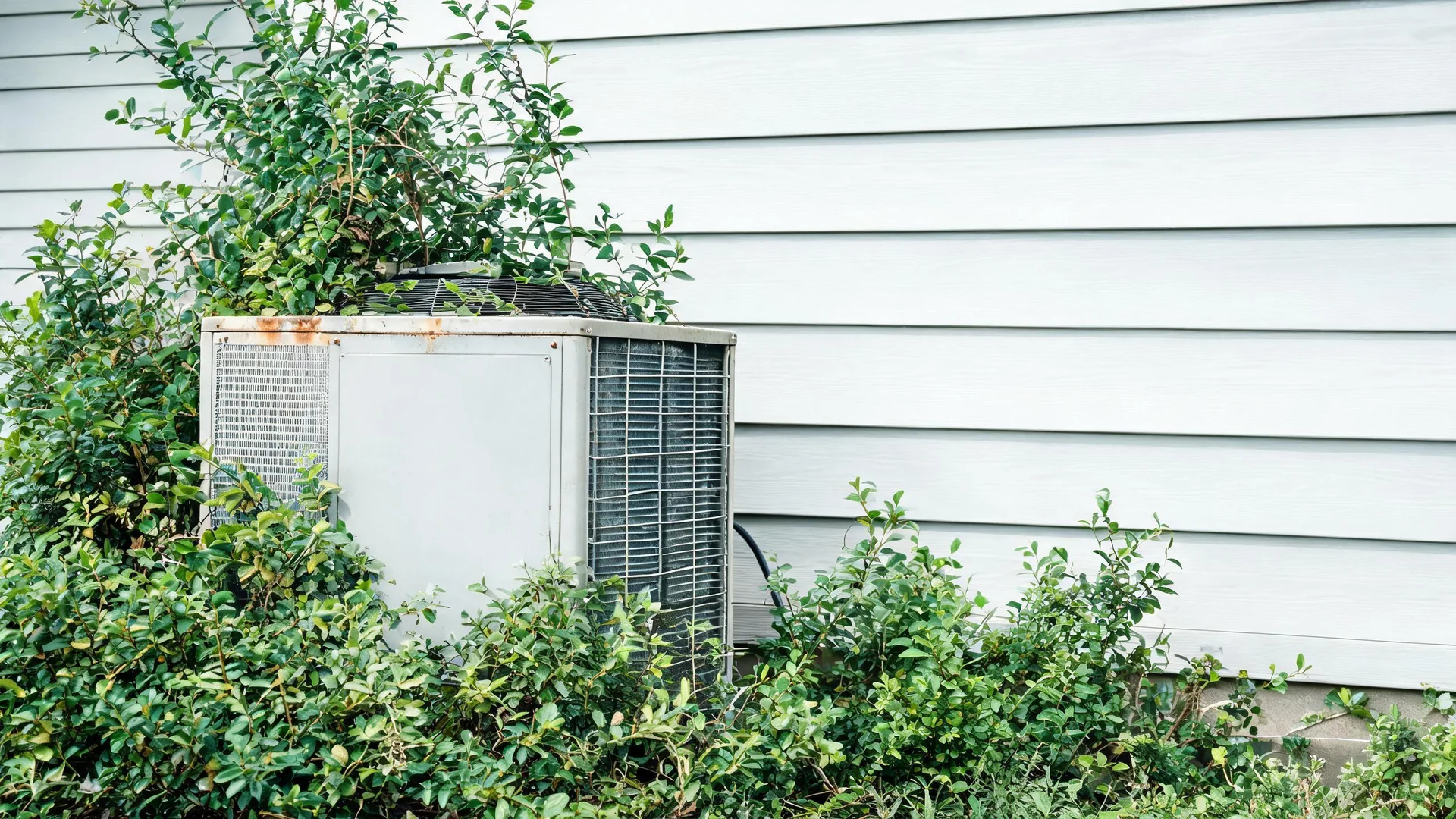
A grey heat pump outdoor unit mounted on a concrete pad in a suburban backyard, with a single-storey house visible behind it.

Heat Pump Repair in Santa Rosa, NM

Tell us about the job

Takes about a minute. No obligation.

RepairHeat PumpGuadalupe County, NM
Step 1 of 2

What ZIP code is the job in?

September is when a weak heat pump shows itself

Heat in Guadalupe County runs October through April. When a heat pump switches over after sitting idle since spring, whatever was already marginal in it, a weak capacitor, a low charge, a failing board, tends to give out in that first stretch of real cold.

Get it looked at before the switch to heat

A heat pump struggling in October will keep struggling through the winter months that follow. Having it checked in September means a contractor can find the real cause while the weather still gives some room to work.

7 months
October through April, your system heats
3 months
June through August, it cools
24°F
the average winter night it heats against
89°F
the average summer afternoon it cools against
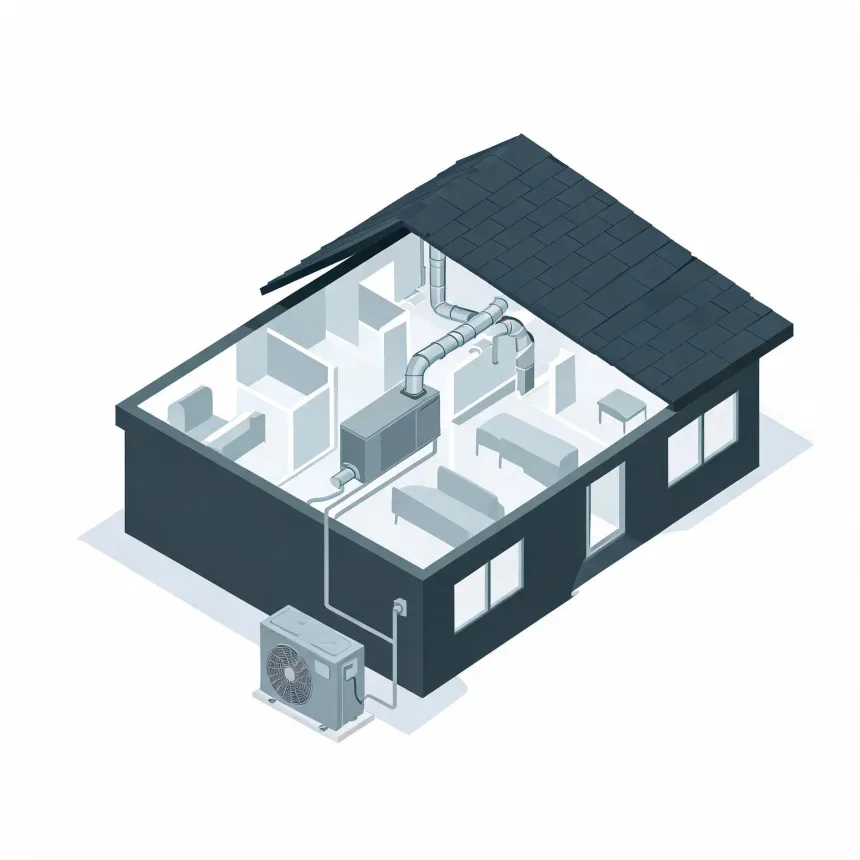
Isometric cutaway illustration of a single-story house showing interior rooms, ceiling ductwork connected to an air handler, and an outdoor condenser unit linked by a line set.
Your system heats October through April and cools June through August.

NOAA nClimDiv, 1991–2020 normals

Guadalupe County doesn't put much strain on a heat pump year round.

So a unit that's acting up here is more likely dealing with a worn part than years of hard use, and that's usually worth fixing.

A heat pump that's struggling here is usually just a part giving out, not the system reaching the end of its line. New Mexico homes paid 14.20 cents per kilowatt-hour in 2024, so a worn part doesn't just cost comfort, it shows up on the electric bill too, since a failing capacitor or low charge makes the unit run longer to do the same job. That's worth knowing when you're deciding whether a repair makes sense. Most of the time it does. Find the actual part that's failing and the fix is usually straightforward from there.

Worth fixing more often than not

A worn part is a fair reason to call someone out. This system hasn't been fighting the weather here, so there's a good chance it's one component holding the whole thing back, not the unit itself giving out.

Find a contractor
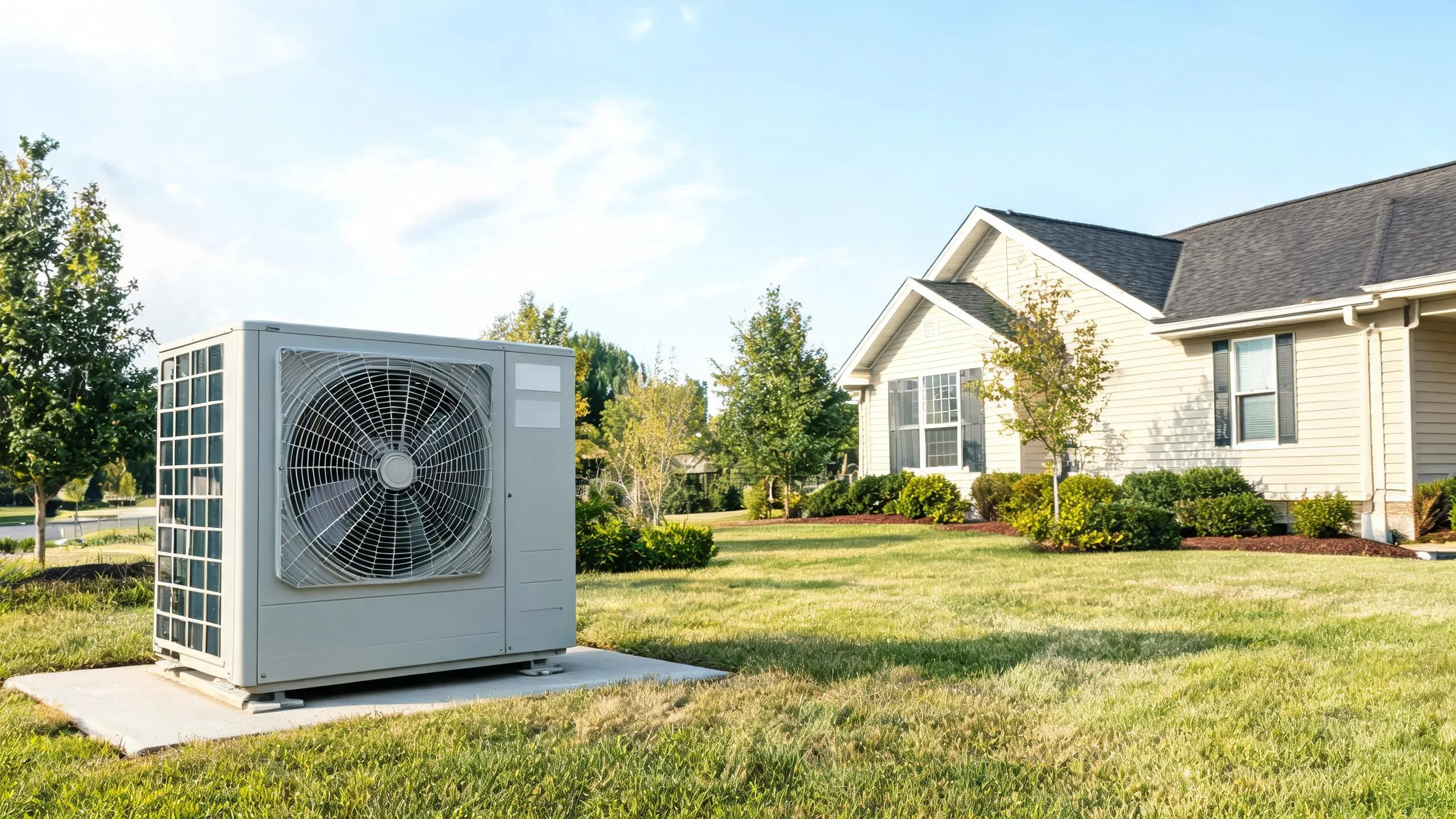
A gray heat pump outdoor unit mounted on a concrete pad next to a residential house with lap siding and stone accents.

What to check before you call

Before anyone comes out, walk outside and look at the outdoor unit. If the fan isn't spinning but you can hear it humming, that points to a capacitor or motor problem worth mentioning. Check for anything blocking the coil, leaves packed in, grass clippings, a cover left on from last season. Go inside and check the thermostat is set to heat. Air that feels cool to the hand can still be normal for a heat pump, it runs cooler than skin temperature even when it's working right. What's not normal is air with no warmth at all, or no air moving. Check your filter. A filter packed with dust chokes airflow and can make a working system seem broken. Check the breaker panel. A heat pump that won't start at all sometimes just needs a reset switch flipped back. If it trips again right away, leave it and call someone. Look for ice on the outdoor coil outside of a normal defrost cycle, that points to a problem with the charge or the airflow, not something to handle yourself. None of this tells you what's actually failing inside the unit. It tells the contractor what you saw before they get there.

The reversing valve is what makes a heat pump different

A straight air conditioner doesn't have one. The reversing valve is what lets a heat pump switch between heating and cooling. When it sticks, the unit keeps running but stops putting out heat, or it gets stuck in one mode and won't switch when the thermostat asks it to.

A weak part doesn't stop the unit. It just stops it from heating well

A low refrigerant charge, a failing capacitor, a dirty outdoor coil. None of these will stop a heat pump from running. They make it work harder for less heat, so it cycles longer and the air coming out feels barely warm instead of properly warm.

Most heat pump problems show up as a change, not a total stop. The unit runs longer than it used to but the house still feels off. Air comes out barely warm instead of warm. It short cycles, kicking on and off every few minutes instead of running a full stretch. Outside, the unit might ice up heavier than normal or stay frosted after a defrost cycle should have cleared it. Sometimes you hear it before you feel it, a clicking at startup that wasn't there before, or a hum with no fan movement. Any of these is worth a call. None of them mean the whole system is done.

A heat pump has more parts that can fail than a straight air conditioner, since it has to move heat both ways instead of one. That means more can go wrong, but it also means more of what goes wrong is a single part, not the whole machine. Age matters less than what's actually failed. A unit with a bad capacitor or a stuck reversing valve is an easy call to fix no matter how old it is, because swapping that part brings back a working system. What changes the math is when the compressor itself is failing. That's the part that actually moves the refrigerant, and nothing else in the system works without it. A contractor checking a heat pump is really asking whether this is a part the system depends on, or the part the system is built around.