View from beneath a concrete overhang toward a tan stucco single-story house with a gravel yard, a low concrete block wall, and a mesquite-like tree with a twisted trunk.

Heat Pump Repair in Portales, NM

Tell us about the job

Takes about a minute. No obligation.

RepairHeat PumpRoosevelt County, NM
Step 1 of 2

What ZIP code is the job in?

Winters here don't push a heat pump hard

Overnight lows in December, January and February average 26°F in Roosevelt County. That's cold enough to run a heat pump steadily, but it's not the kind of deep freeze that forces a system into constant defrost cycles or long runtimes to keep up.


So a unit here usually has some life left in it

A heat pump that hasn't been straining against brutal cold for years is less likely to have worn-out parts from overwork. When one in Portales breaks down, age or a specific failed part is the more likely story, and that's usually worth fixing rather than replacing.

7 months
October through April, your system heats
5 months
May through September, it cools
26°F
the average winter night it heats against
91°F
the average summer afternoon it cools against
Isometric cutaway illustration of a single-story house showing interior ductwork, an air handler and rooms, with an outdoor condenser unit connected by refrigerant lines on a plain white background.
Your system heats October through April and cools May through September.

NOAA nClimDiv, 1991–2020 normals

September is the last mild month before heat pumps here switch over in October.

A part that was already weak often shows itself in that first cold snap, not from strain but because it was due to fail anyway.

Nothing about Portales pushes a heat pump past normal wear

Power costs 14.2 cents a kWh statewide
Climate zone 4B
Cooling runs May through September

Half the homes in Roosevelt County were built in 1977 or earlier, and half after. That split doesn't change what's going on with your heat pump. A failure traces back to a part, not the age of the house around it. Close to one in five homes here is a mobile home, and those often run heat pump setups sized and installed differently than a standard split system. If that's your place, mention it when you call. It points a technician toward the right parts before they show up. Otherwise the job is the same as it would be anywhere else, find the failed part, replace it, move on.

Your heat pump is probably worth repairing

Get the failed part fixed rather than wonder whether the unit is worth saving. A heat pump that hasn't been run hard for years usually has life left in it, and most repairs here come down to finding the one part that gave out.

Find a contractor
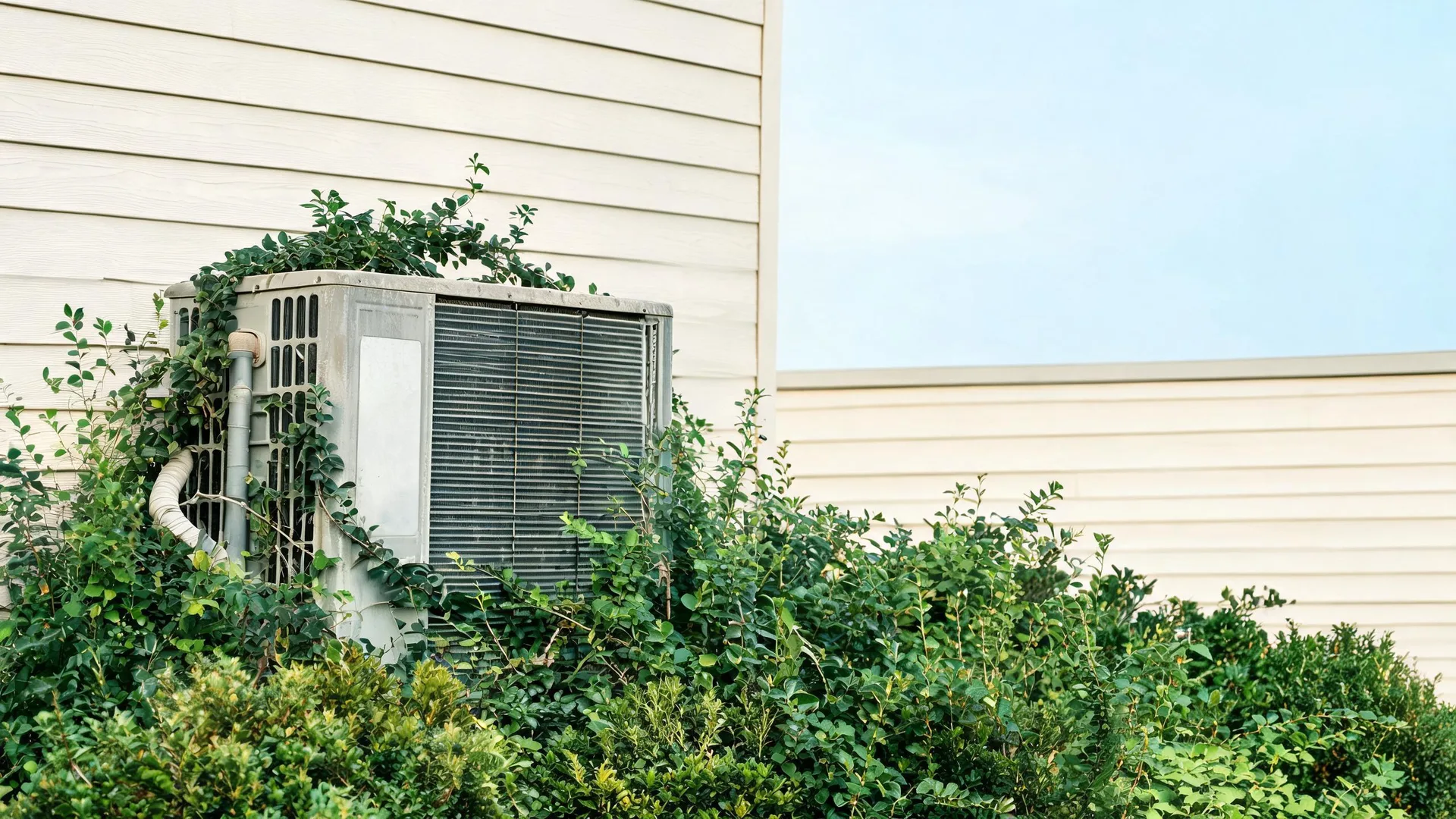
A gray heat pump condenser unit mounted on a concrete pad against the gray lap-siding exterior wall of a house.

What to check before you call

Before anyone comes out, go outside and look at the outdoor unit. If the fan isn't spinning, or if you see ice built up on the coil that isn't part of a normal defrost cycle, that's worth noting. Check the air filter inside. A clogged filter makes the whole system work harder and can cause icing or weak airflow that looks like a bigger problem than it is. Look at the thermostat. Make sure it's set to heat, not cool, and that the temperature is actually set above room temperature. Check your breaker panel for a tripped breaker on the air handler or the outdoor unit. If the system is running but blowing air that doesn't feel warm, that's useful to mention when you call, since a heat pump's air is naturally cooler than a furnace's even when it's working right. Don't take panels off the unit or touch any wiring. Those checks are enough to rule out the simple stuff and give a technician a head start.

A failing part rarely fails all at once

A weak run capacitor or a reversing valve starting to stick usually gives a warning first. The system short cycles. A breaker trips once and resets. A noise comes and goes, then stops for a day. The unit keeps running because it can still limp along on a part that has less and less margin left.

Ice on the coil is the clearest example

A little frost on the outdoor coil during a defrost cycle is normal. Ice that stays, or builds up thick, means the unit has stopped shedding it, often because a defrost control or sensor has failed. Run it in that state and the coil blocks up further. Airflow drops. The compressor ends up pushing against a coil that can't move heat anymore.

Most heat pump calls start with one of a handful of complaints. The system runs but the air feels cold, not warm, which can be normal for a heat pump but can also mean it's stuck in the wrong mode or low on refrigerant. The outdoor unit is caked in ice that hasn't melted off in a normal defrost cycle. The unit short cycles, kicking on and off every few minutes instead of running a full cycle. Or it just stops responding, no fan, no compressor, nothing from the outdoor unit at all. Each of those points a technician toward a different part, so the more specific you can be about what you're seeing and hearing, the faster they get to the actual problem.

A diagnostic visit starts outside, at the unit itself. A technician checks whether the compressor and fan are actually running, pulls readings on refrigerant pressure, and checks the amp draw on the motors against what that unit is supposed to pull. Low pressure points toward a leak. A motor pulling too many amps is wearing out its bearings or windings. Inside, they check the air handler, the thermostat wiring, and the defrost control board, since a bad sensor there is what causes a coil to ice over instead of clearing itself on schedule. Most of this is done with gauges and a multimeter, not guesswork, so the part that gets replaced is the part that actually tested bad.