





Adobe-style desert homes lit by warm outdoor lighting at dusk, with saguaro cacti in the foreground and a rocky mountain range behind them.

Heat Pump Repair in Hobbs, NM

Tell us about the job

Takes about a minute. No obligation.

RepairHeat PumpLea County, NM
Step 1 of 2

What ZIP code is the job in?

Most heat pump failures trace back to a handful of things. The reversing valve sticks and the system gets stuck in one mode, blowing cold air when it should heat. A capacitor weakens and the outdoor fan or compressor struggles to start, or won't start at all. Refrigerant leaks out slowly at a fitting or coil, and the system runs longer and longer to keep up before it finally can't. The defrost sensor or control board fails, and ice builds up on the outdoor coil because the unit never gets the signal to thaw itself out. A dirty outdoor coil does the same thing from the other direction, blocking the airflow the unit needs to pull heat from outside air. Any of these can start as a small loss in performance before they turn into a system that won't run at all.

6 months
November through April, your system heats
5 months
May through September, it cools
28°F
the average winter night it heats against
94°F
the average summer afternoon it cools against
Isometric illustration of a cutaway single-family house showing interior ductwork and an air handler, with an outdoor condenser unit connected by lines along the exterior wall.
Your system heats November through April and cools May through September.

NOAA nClimDiv, 1991–2020 normals

Heat pumps in Hobbs switch over to heating in November.

October is the month to get a weak reversing valve or defrost sensor looked at, before the first cold week finds it.

Hobbs sees its share of wind and hail, but that's not why heat pumps here fail

231 severe weather events from 2015 to 2024
13% of homes statewide lost power a day or more in 2024
127 damaging wind events from 2015 to 2024

Half the homes in Lea County were built in 1979 or earlier, half later. That split doesn't single out a heat pump for failure. A unit wears the same way whether the house around it is old or new. Mobile homes make up a real share of the housing here too, and the heat pump on one fails for the same reasons as any other, a weak capacitor, a stuck reversing valve, a dirty outdoor coil. The house doesn't decide which part gives out first. The system does.

Get it looked at early

Problems tend to show up in the first weeks of the season, when the load hits a part that was already weak.

Find a contractor
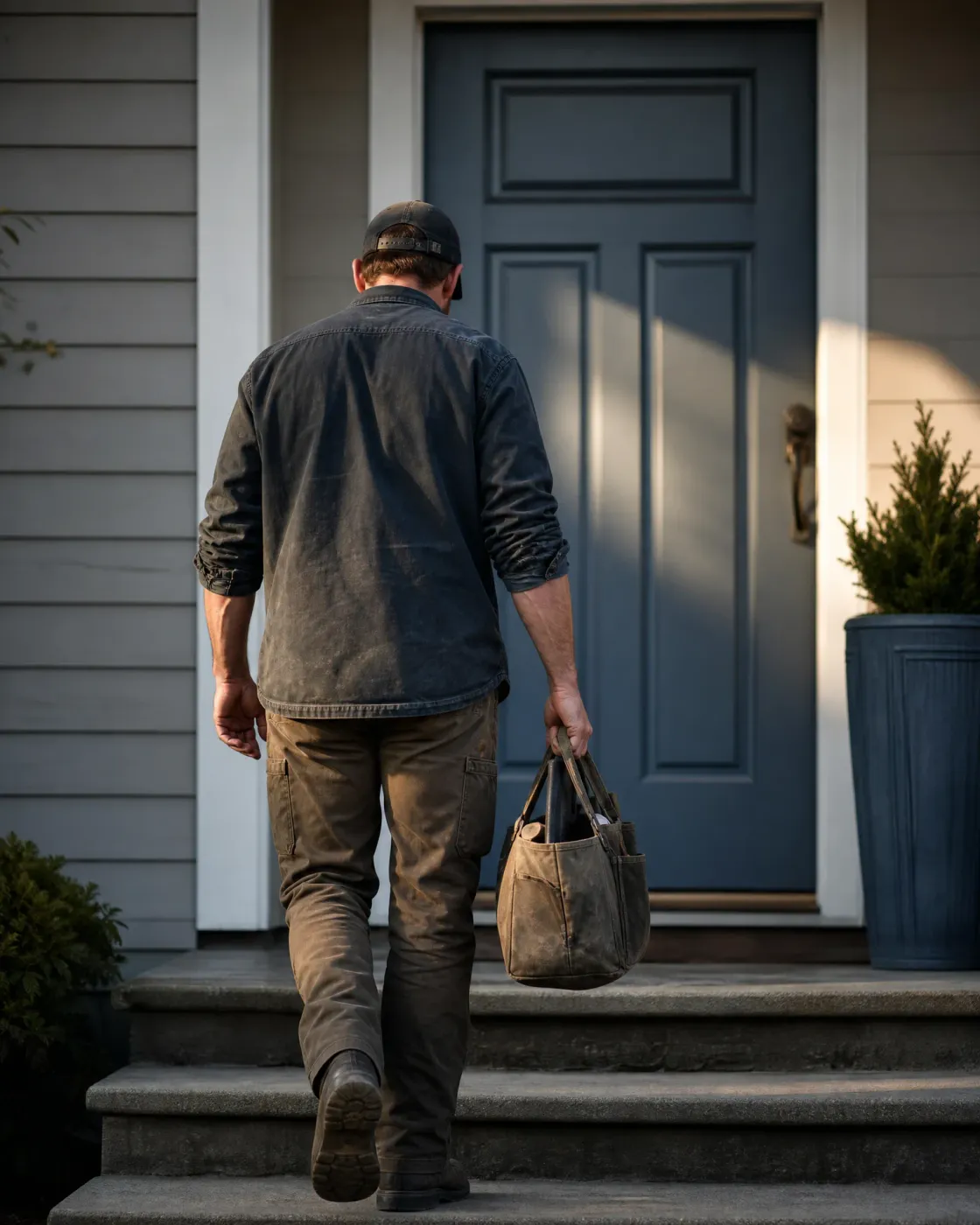
A man in a cap, dark work shirt and brown cargo pants walks up concrete steps toward a blue-gray front door, carrying a worn canvas tool bag in his right hand, with a potted shrub beside the entry.
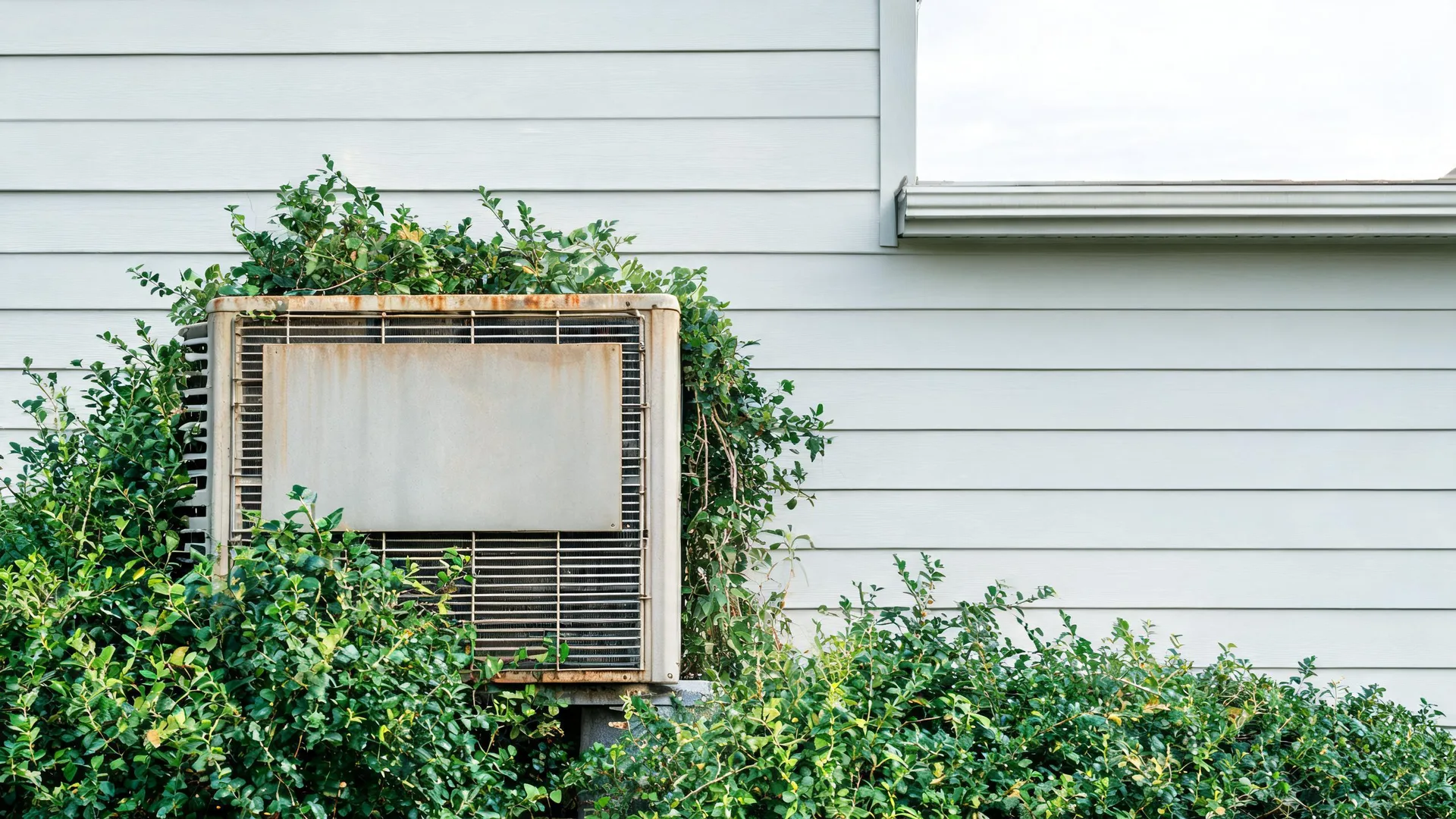
A gray heat pump condenser unit mounted on a concrete pad against the gray lap-siding exterior wall of a house.

What a heat pump tells you before it quits

A heat pump that's failing doesn't usually just stop. It tells you first. Air coming from the vents feels cool when it should feel warm, or the system runs without the house actually catching up to the thermostat. Short cycling is another sign, the unit kicks on, shuts off, then starts again before it's done anything useful. That wears on the compressor every time it happens. Listen for a clicking at the outdoor unit that never settles into a running motor, that's often a weak capacitor trying and failing to start it. Look at the outdoor coil too. If it's caked in ice outside of a defrost cycle, the defrost control has likely stopped signaling the unit to thaw. None of these improve with time. A part that's struggling under a light load fails outright once the load gets heavier.

What part failed changes the answer

A capacitor or reversing valve is a straightforward swap, and a system that's otherwise sound is worth fixing when that's what failed. A compressor failing is different. It sits at the center of the system, and when it's leaking refrigerant internally or seizing, the repair is bigger and the odds of something else going next climb fast.
A string of repairs is its own answer

One repair doesn't tell you much on its own. A system that needed a capacitor last year and a defrost control this year is wearing out across the board, not failing in one spot. At that point another repair just buys a little time before the next part gives out. Replacing the unit stops that cycle instead of paying for it one part at a time.

A heat pump rarely fails all at once, and running it while something's wrong usually makes the eventual repair bigger. A low refrigerant charge is the clearest case. As it drops, the compressor works harder to move the same amount of heat, and it runs hotter doing it. Keep running it that way and the compressor itself can take the damage, turning a leak repair into a compressor replacement. A failing capacitor does something similar. The outdoor fan or compressor motor strains every time it tries to start, and each failed start adds wear the motor doesn't recover from. Ice on the outdoor coil is its own trap. A little ice blocks some airflow, the system works harder to compensate, and that extra strain often brings on more ice, not less. Left alone, a problem that started as reduced airflow or a slow leak ends as a part that has to be replaced instead of repaired.

A diagnostic visit starts outside, at the unit itself. A contractor checks the refrigerant charge, because low refrigerant explains a lot of what a heat pump does wrong at once. Electrical readings come next, pulling the actual amp draw on the compressor and fan motor and testing the capacitor under load rather than just looking at it. Indoors, they check the temperature split between the air going into the system and the air coming out, which says whether the unit is actually moving heat the way it should. If the system's stuck in one mode or won't defrost, they'll run it through a cycle and watch the reversing valve and defrost control actually respond, or not. None of this is guesswork. Each reading rules something out or points at the part that's actually failing.