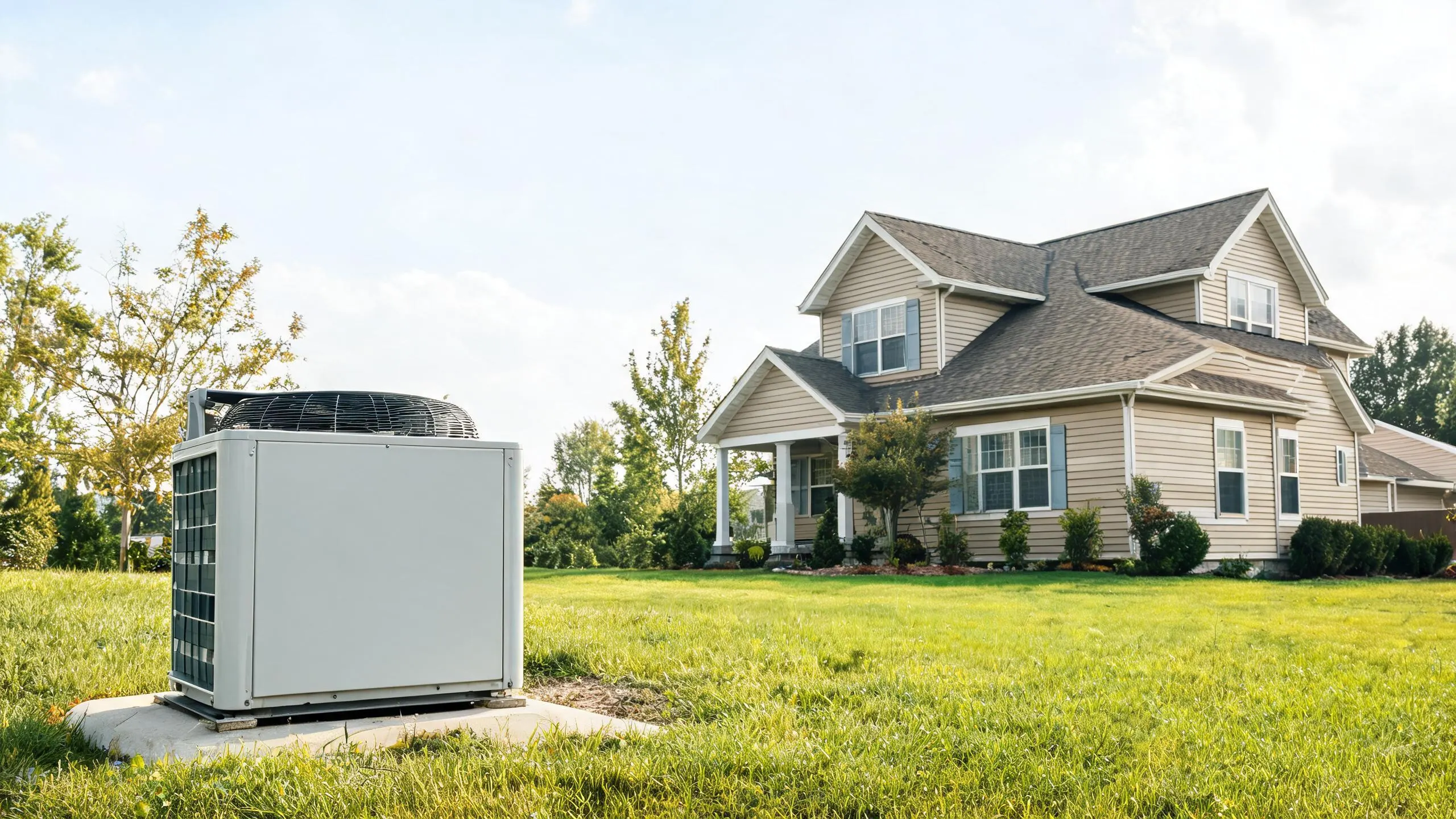





An outdoor HVAC condenser unit on a concrete pad in front of a two-story suburban house.

Heat Pump Repair in Clovis, NM

Tell us about the job

Takes about a minute. No obligation.

RepairHeat PumpCurry County, NM
Step 1 of 2

What ZIP code is the job in?

September is the month to get a heat pump looked at here. Heat kicks on in October and runs clear through April, seven months of relying on this one system. If the reversing valve or the defrost control was already borderline, the first real cold snap is what finds it. A unit that limped through last winter without a proper check is the one most likely to quit when you need it most. Catching it in September means a contractor instead of a space heater and a wait.

7 months
October through April, your system heats
4 months
June through September, it cools
25°F
the average winter night it heats against
90°F
the average summer afternoon it cools against
Isometric line illustration of a cutaway house showing interior rooms with furniture, ceiling ductwork connected to an indoor air handler, and refrigerant lines running to an outdoor condenser unit on a pad.
Your system heats October through April and cools June through September.

NOAA nClimDiv, 1991–2020 normals

Clovis winters are cold, but they don't grind on a heat pump the way wind, hail or ice would.

A heat pump here acting up is usually one bad part, not years of hard use. That's worth fixing.

An old house and a hard storm still point to one worn part, not years catching up

Half the homes here were built by 1976
101 damaging wind events from 2015 to 2024
99 hail events from 2015 to 2024

Electricity in New Mexico ran 14.2 cents per kilowatthour last year. A heat pump that's working right still costs less to run than the furnace it replaced, because it's moving heat instead of making it. That math only holds up when the system is actually running the way it's supposed to. A failing reversing valve or a low charge makes it work harder for the same heat, and you pay for that difference whether you notice it or not. If your bill crept up and nothing else changed, that's worth mentioning when the contractor looks at it.

One bad part is the likely cause, not the county

Curry County sees its share of wind and hail, but none of that is what's wearing on a heat pump. If yours is acting up, look for the one part behind it rather than wondering if the place itself is to blame.

Find a contractor
A gray outdoor HVAC unit mounted on a concrete pad beside a house with gray lap siding and a stone foundation.

What the days add up to here is a part failing, not a system wearing out

A heat pump here spends its days moving heat, not fighting the weather. Wind and hail wear on a roof or a fence line. They don't touch what's happening inside a compressor. So when one acts up after a few years of normal running, the cause is almost always a single part giving out, not the system worn down from a hard life. That's the kind of problem a contractor can find and fix in one visit.

Heat that isn't as warm as it should be

A heat pump in trouble doesn't always quit outright. More often the air coming out of the vents feels lukewarm instead of warm, and the system runs longer to make up for it. That's usually a refrigerant charge that's dropped or a reversing valve not shifting all the way into heat mode. Either one leaves the system working without delivering the heat it should.
Ice building up and not clearing

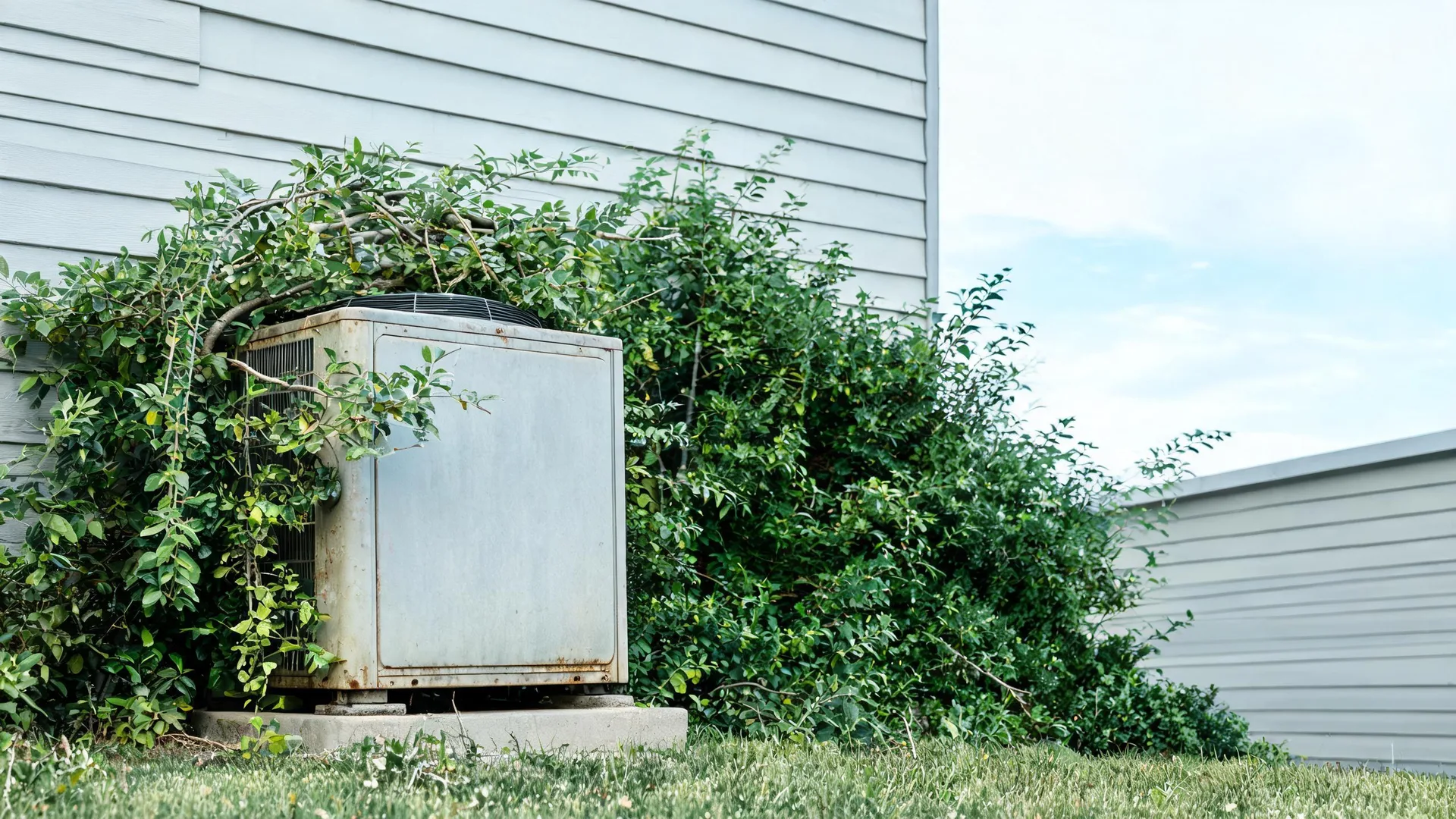
Some frost on the outdoor unit in cold weather is normal, and the defrost cycle is supposed to clear it on its own. If you're seeing a heavy coat of ice that stays, or the unit never seems to go through that defrost cycle at all, the defrost control or the sensor that triggers it is the likely cause. Left alone, that ice blocks airflow across the coil and the problem gets worse from there.

Most heat pump failures trace back to a handful of parts, and they fail for ordinary reasons. The reversing valve is the one unique to a heat pump, and it can stick from simple wear after enough cycles switching between heat and cool. A capacitor weakens over time and stops giving the compressor or fan motor the jolt it needs to start. Refrigerant doesn't get used up, so a low charge almost always means a slow leak somewhere in the line set or coil. The defrost sensor or control board can fail outright and leave the outdoor unit icing over with no way to clear itself. None of these are tied to how hard the system has run. They're parts that wear out or fail on their own schedule, in a unit that's otherwise been doing its job fine.

A diagnostic visit starts outside, at the unit itself. A contractor checks refrigerant pressure, looks at the reversing valve to see if it's shifting the way it should, and checks the capacitor and contactor for wear. Inside, they'll check the air handler, the airflow across the coil, and whether the defrost cycle is triggering and clearing like it's supposed to. Most of this is gauges and a multimeter, not guesswork. A heat pump that's lukewarm or icing over usually points to one of a few parts, and checking them in order is what narrows it down to the actual cause. By the end of the visit you should know which part is failing and what it takes to fix it, not just that something's wrong.