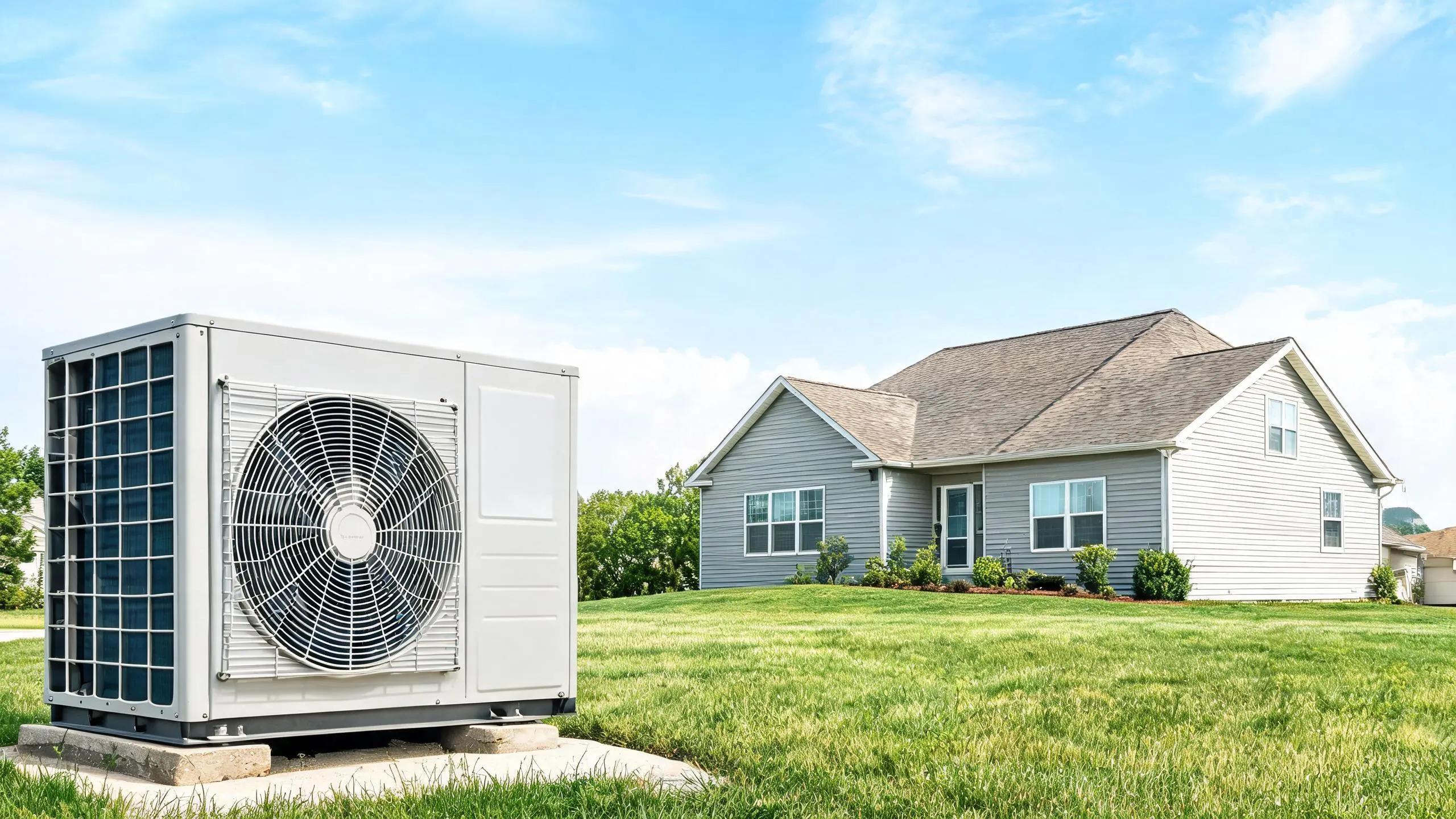






An outdoor HVAC condenser unit on a concrete pad in front of a single-story house with gray siding and a shingle roof.

Heat Pump Repair in Clayton, NM

Tell us about the job

Takes about a minute. No obligation.

RepairHeat PumpUnion County, NM
Step 1 of 2

What ZIP code is the job in?

Winter nights in Union County average 20°F. That's cold enough that a heat pump runs most of the day just to keep the house at temperature, and that kind of steady run time is normal here. It isn't a sign something is wrong. If yours is short cycling, blowing cool air, or not keeping up, the cause is usually ordinary. A dirty filter. A low refrigerant charge. A defrost cycle that isn't kicking in right. A contractor can check those in order and find the one that's failing. Most heat pump trouble comes down to one part doing its job poorly, not the system falling apart.

8 months
October through May, your system heats
3 months
June through August, it cools
20°F
the average winter night it heats against
86°F
the average summer afternoon it cools against
Isometric line illustration of a cutaway house showing interior rooms with furniture, ceiling ductwork connected to an indoor air handler, and refrigerant lines running to an outdoor condenser unit on a pad.
Your system heats October through May and cools June through August.

NOAA nClimDiv, 1991–2020 normals

Heat pumps in Union County start their heat cycle in October, after sitting idle most of May through September.

A weak part that made it through summer without much strain usually fails in the first cold snap, not before.

Union County sees its share of wind, hail and storm outages, but none of it singles out your heat pump

307 severe weather events from 2015 to 2024
13% of homes statewide lost power a day or more in 2024
126 damaging wind events from 2015 to 2024

Electricity in New Mexico ran 14.20 cents per kilowatt-hour in 2024. A heat pump runs on that power start to finish, with no gas line involved and no pilot to relight. That doesn't change how the parts inside it fail. A capacitor, a contactor, a defrost sensor wears out the same way whether the call comes from Clayton or from Albuquerque. The contractor checks the same handful of things, in the same order, no matter where the house sits.

Half the homes here were built in 1961 or earlier

If your heat pump came with the house, it may be older than the house itself, or it may be the first replacement a previous owner made decades ago. Either way, a unit that old is closer to the end of its life than the middle. Before paying for a major repair, it's worth asking a contractor how much life is left in it.

Find a contractor
A man in a dark long-sleeve shirt and tan work pants carries a waxed canvas tool bag up concrete steps toward a blue front door of a gray-sided house, with potted shrubs nearby.
A residential heat pump outdoor unit mounted on a concrete pad next to a house with gray vinyl siding.

Worth asking before you pay for the repair

A contractor can usually tell within a few minutes how old a unit is and what shape it's in once the panel is off. That's worth knowing before you commit to a repair, not after. If the heat pump is original to a house built decades back, ask for that read before you pay for parts or labor.

What you'll actually notice first

The outdoor unit runs and the air coming out of the vents feels cool instead of warm. Or the system shuts off and starts over again and again instead of running a full cycle. Or it clicks on, hums, and trips off before it ever really gets going. Each points somewhere different. Short cycling usually means a bad capacitor or a contactor sticking. Cool air with the system running steady often traces back to a low refrigerant charge or a stuck reversing valve. A unit that hums and trips is usually a motor or compressor drawing too much current, with a safety switch cutting power before it burns up.
What's worth a call now versus a call soon

Ice building up on the outdoor coil that doesn't melt off during the defrost cycle needs attention before it packs solid and blocks airflow entirely. So does a burning or electrical smell, or a breaker that keeps tripping. Those get worse fast. A system that's just noisier than it used to be, or takes longer to warm the house than it did before, can usually wait for a scheduled visit. The difference is whether a part is actively being damaged right now or just wearing down.

A diagnostic visit starts outside, at the unit itself. The contractor checks for voltage at the contactor, checks the capacitor's charge, and watches whether the compressor and fan actually start when the thermostat calls. From there it's refrigerant pressures on a gauge set, checked against what the system is supposed to be running at its current temperature. Inside, they'll pull the filter, check airflow at the return, and look at the reversing valve to see whether it's actually switching when it's told to. Each check rules something out. By the time the panel goes back on, the failing part is usually known, not guessed at.

A heat pump has more moving parts than a furnace, since it has to handle both the outdoor unit and the switch between heating and cooling. That means more things can wear out, but it also means a single worn part rarely justifies writing off the whole system. The compressor is the one part that changes the math. If it's failing, the cost and labor to replace it usually get closer to a full system swap, and a contractor will say so plainly rather than quote the repair. Everything else, the capacitor, the contactor, the reversing valve, the defrost board, gets replaced on its own without touching the rest of the system. Age matters alongside the part. A reversing valve going bad on a unit that's otherwise young is a repair. The same failure on a unit near the end of its expected life is a sign more parts are likely to follow it.