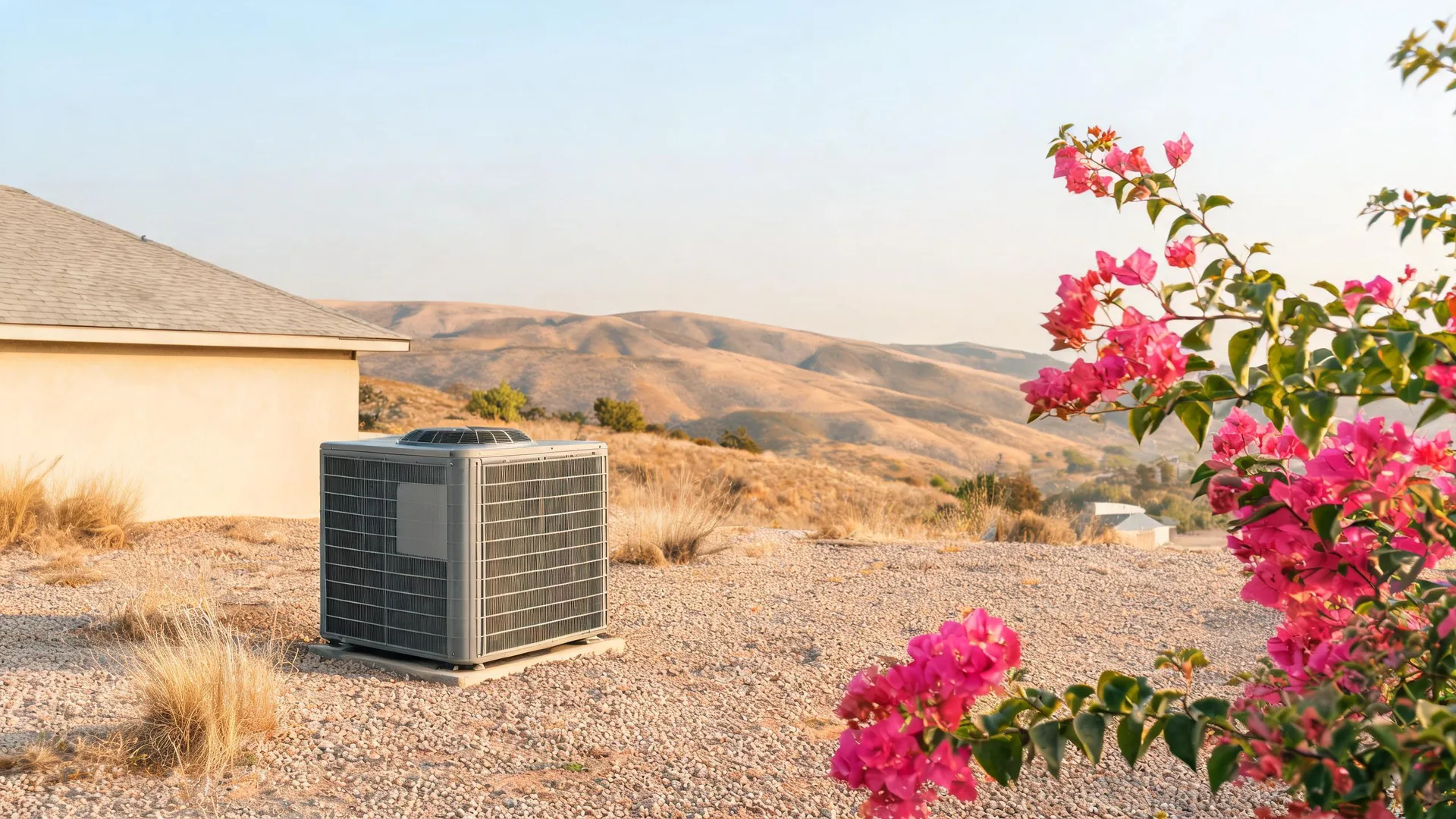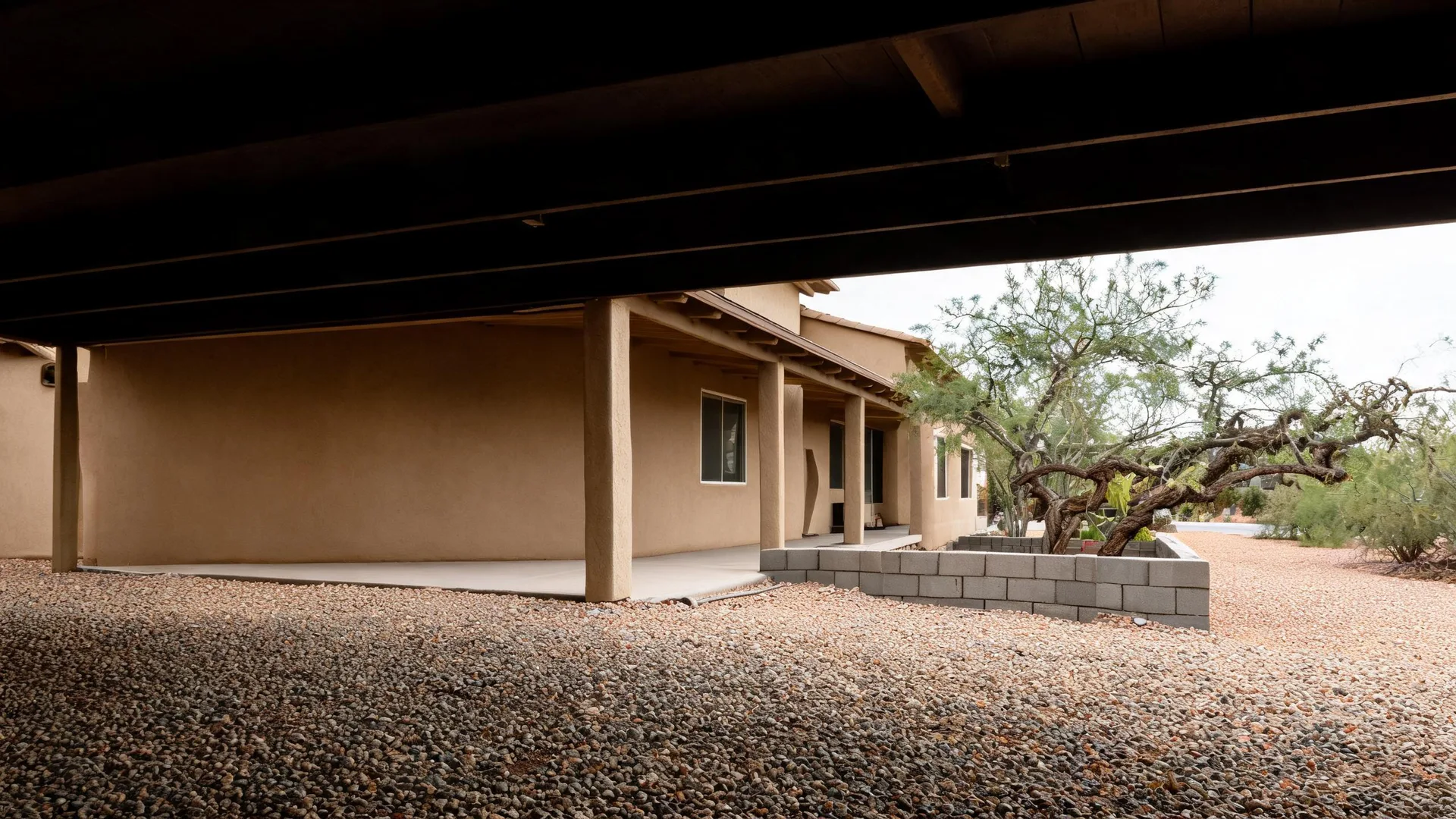
View from under a shaded patio roof toward a single-story stucco house with a covered walkway, a concrete block retaining wall, a low spreading tree, and gravel ground cover.

Heat Pump Installation in Tucumcari, NM

Tell us about the job

Takes about a minute. No obligation.

New system or replacementHeat PumpQuay County, NM
Step 1 of 2

What ZIP code is the job in?

A standard heat pump fits this job

Tucumcari doesn't push a heat pump into extreme territory in either direction. A properly sized unit, matched to the home's square footage and existing ductwork, handles the heating and cooling load here without needing oversized equipment or a high-end efficiency tier.

Efficiency still affects the bill

New Mexico homes paid 14.20 cents per kilowatthour in 2024. A heat pump sized right for the home will run on that rate without surprises, and there's no reason here to pay more upfront chasing savings a standard model already delivers.

7 months
October through April, your system heats
4 months
June through September, it cools
25°F
the average winter night it heats against
91°F
the average summer afternoon it cools against
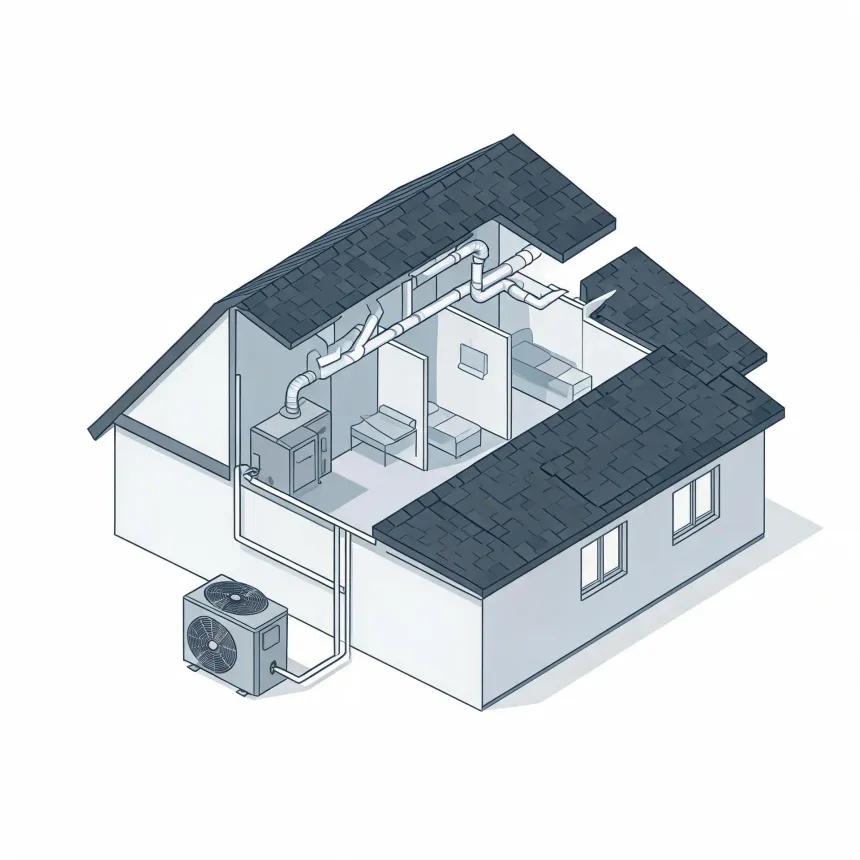
Isometric line illustration of a cutaway single-story house showing interior ductwork, an indoor air handler unit, and an outdoor condenser connected by refrigerant lines, with a dark shingled roof.
Your system heats October through April and cools June through September.

NOAA nClimDiv, 1991–2020 normals

Heat pumps in Quay County run heat from October through April, about seven months straight.

Get the install done before September ends and the first cold morning isn't a surprise.

Half the homes here were built by 1966, and the install has to match the one you've got

Half the homes here were built by 1966
Climate zone 4B
Power costs 14.2 cents a kWh statewide

A right-sized heat pump is all this job calls for

A standard heat pump sized to your home handles winter nights here, averaging 25°F in December, January and February. Nothing about Quay County pushes you toward bigger equipment or a higher efficiency tier than usual. Get the sizing right and the install set before the cold settles in.

Find a contractor
A man in a dark long-sleeved shirt and olive work pants carries a canvas tool bag up steps toward a blue-gray front door of a shingled house, with a potted shrub beside the entry.
A white mini-split heat pump outdoor unit mounted on a concrete pad beside a gray-sided house, surrounded by gravel and green shrubs.

Match the new system to the ductwork already there

An old duct system was sized for whatever heated this house before. Before the new unit goes in, that ductwork gets checked against it, same as the electrical panel and the line set. Skip that step and the heat pump can't move the air it needs to, no matter how good the unit is.

Ask for the load calculation, not a guess

A contractor should run a room by room load calculation before quoting equipment, using window count, insulation and square footage. Sizing off the old system's tonnage alone carries over any mistake that was built into that install.

Ask what happens on the coldest nights

Every heat pump has a balance point where it needs backup heat to keep up. Ask what that temperature is for the unit being quoted and what kicks in below it, since that answer tells you how the system actually behaves in the coldest stretch of winter, not just on a mild day.

The efficiency rating on a heat pump tells you how much heat it moves for the power it uses, not how much heat it can put out. A higher rated unit can still leave you cold if it's undersized for the house, and a standard rated unit heats the place just fine if it's sized right. Where the rating actually matters is the power bill, since a more efficient unit moves the same heat using less electricity every hour it runs. That difference shows up most on the days the system runs longest, because a unit that's barely working costs little either way. Ask what rating the quoted unit carries and compare it against others being quoted, but don't let a high number talk you into equipment bigger or fancier than the load calculation calls for.

Installation day starts with the old equipment coming out, indoor and outdoor units both, along with the line set if it's not being reused. The outdoor pad gets leveled and the new unit set on it, then the line set gets run between outside and in, pressure tested, and pulled down into a vacuum before any refrigerant goes in. That vacuum step matters because any moisture or air left in the line causes problems later, and it's not something you can see once the system's buttoned up. Indoors, the air handler or coil gets tied into the ductwork and the electrical connections get made, then the whole system gets charged and run through its paces, checking temperatures, pressures and airflow at the vents. A straightforward swap can wrap in a day. Anything involving ductwork changes or electrical panel work tends to run longer, so ask upfront what the crew expects for this job specifically.