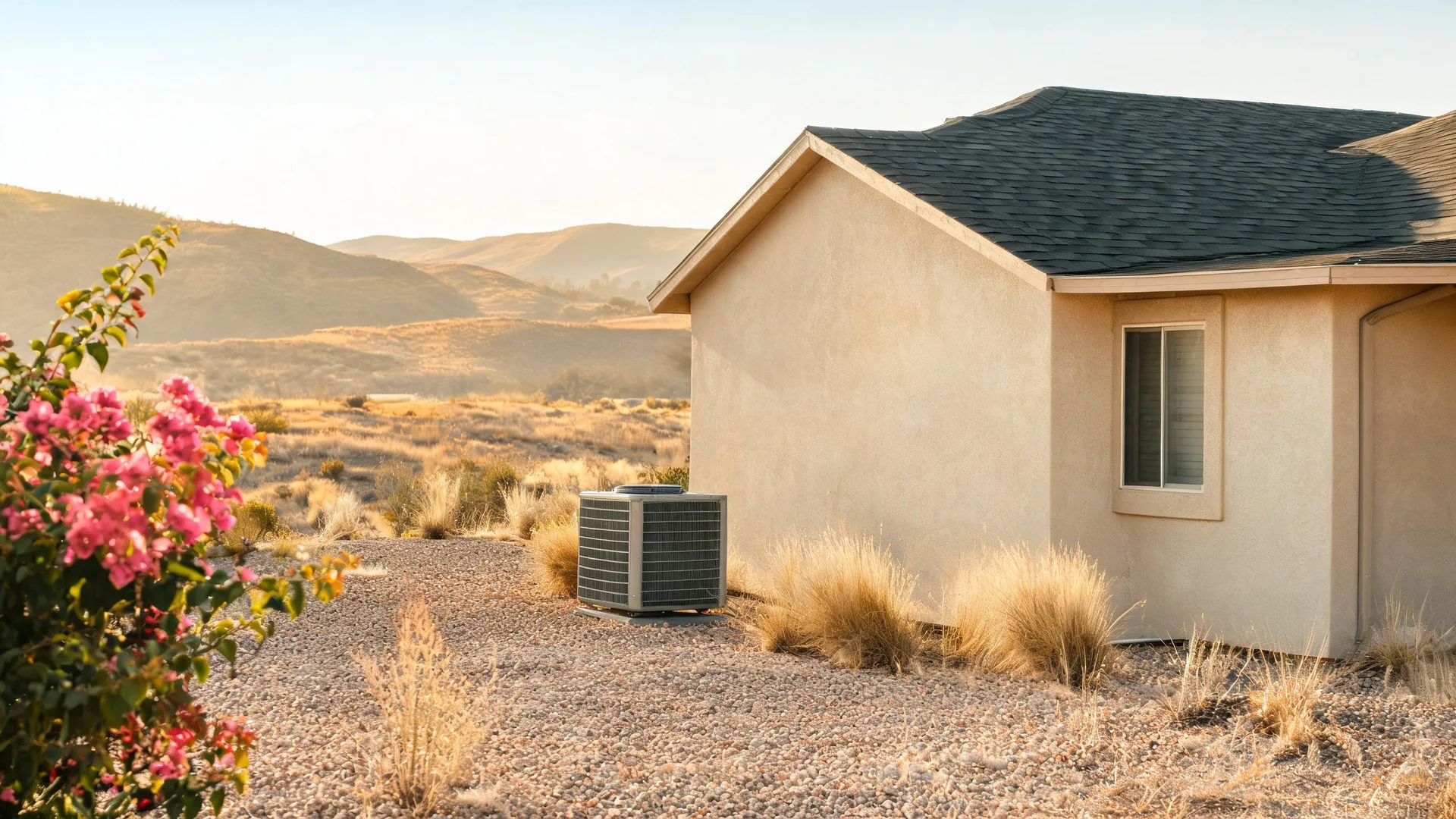
Most homes here run on propane
Just over half of Guadalupe County homes heat with bottled, tank or LP gas. That's a propane furnace or boiler for most of your neighbors, not a heat pump or electric baseboard.
Takes about a minute. No obligation.
Just over half of Guadalupe County homes heat with bottled, tank or LP gas. That's a propane furnace or boiler for most of your neighbors, not a heat pump or electric baseboard.
Installing a heat pump instead of propane means sizing it for Santa Rosa's winters and deciding what happens to the propane line and tank. That's a different job than swapping one electric system for another.

NOAA nClimDiv, 1991–2020 normals
Winter nights in Guadalupe County average 24°F, and the county sees a damaging wind or hail event most years.
A heat pump sized for Santa Rosa winters has an easy job the rest of the year, since nothing here pushes it as hard as January does.



Guadalupe County falls under zone 4B, and any heat pump installed here has to meet the federal minimum of 14.3 SEER2 for cooling and 7.5 HSPF2 for heating. That's the baseline for equipment built from 2023 on, not an upgrade option. If the install qualifies, a federal tax credit is available on top of whatever the unit itself saves you. Ask a contractor which models on the quote actually meet the 4B numbers, since not every heat pump on the market does.
Heat here runs October through April, seven months of the year. Get the heat pump installed before September and it's already sized and running before that first cold night in October asks anything of it.
Find a contractor
Half the homes in Guadalupe County were built in 1976 or earlier. A heat pump going into a house that old is going into walls, ducts and a breaker panel built for a different system, maybe more than one system ago. The installer has to size the unit to the house, not the other way around, and check what the ductwork and electrical can actually take before the equipment goes in. Mobile homes make up close to a third of the housing stock here too, and those need their own sizing and ducting, not a scaled-down version of what goes in a site-built house.
A heat pump's outdoor unit runs a compressor and a fan, and some models run quieter than others at the same output. Ask for the decibel rating and where the installer plans to place the unit. A spot too close to a bedroom window matters more with a loud unit than a quiet one.
Most heat pump warranties cover the compressor for longer than they cover other parts, and some require the homeowner to register the unit within a set window after install. Ask what's covered, for how long, and whether registration is the installer's job or yours. Missing that window can shorten a warranty before it's ever used.
If a propane furnace is coming out, the old unit and line don't just disappear on install day. A contractor can disconnect the furnace and cap the gas line, but the propane tank itself is usually owned by the supplier, not the homeowner, so getting rid of it means a call to whoever owns it. Leave a tank sitting unused and it still needs to be purged and capped properly, not just shut off at the valve. If the old system used a chimney or flue, that opening has to be sealed once nothing is venting through it anymore. None of this is hard work, but it's a separate job from putting the heat pump in, and it's worth asking the installer upfront whether they handle it or whether that call is on you.
Install day starts with the old equipment coming out, not the new unit going in. Lines get disconnected, and whatever is being removed gets hauled off or capped depending on what it was. The outdoor unit needs a level pad to sit on, since vibration off an uneven surface works screws loose over months of running. Once the outdoor unit and indoor coil are both set, the line set connecting them gets pressure tested before any refrigerant goes in, so a leak gets caught while it's still easy to fix. The electrical has to be checked against what the new heat pump draws, not just whatever the old system used. Last comes commissioning, which means running the system through a full cycle, checking airflow at every register, and setting the thermostat so backup heat only steps in when the heat pump actually needs it. Skip or rush that last step and the equipment can be sized right and still leave rooms uneven.