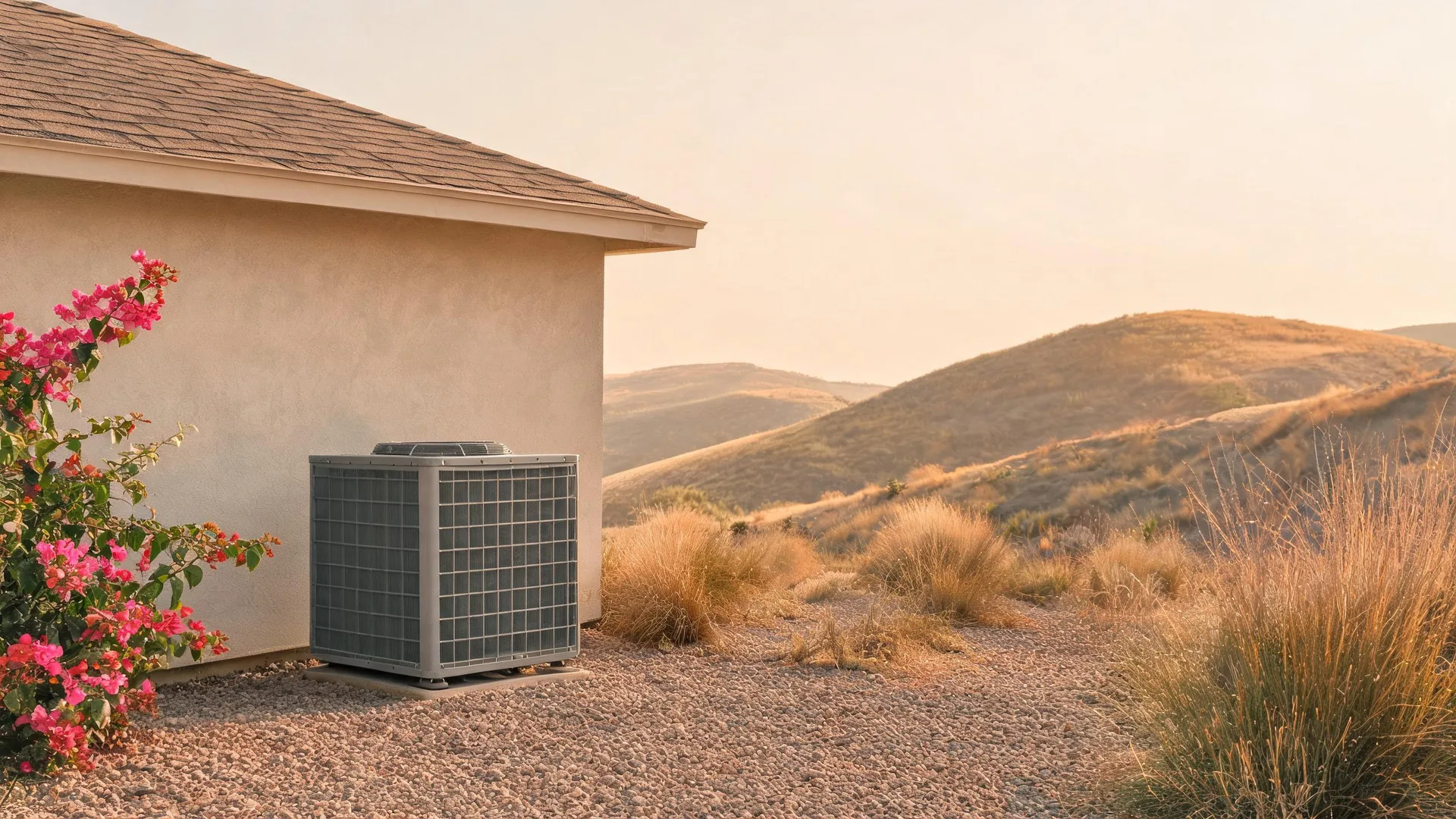
Most homes here run on gas
Utility gas heats 66.3% of occupied homes in Santa Fe County. Electricity is a distant second at 18.4%, with propane at 7.9%.
Takes about a minute. No obligation.
Utility gas heats 66.3% of occupied homes in Santa Fe County. Electricity is a distant second at 18.4%, with propane at 7.9%.
Swapping a gas furnace for a heat pump means sizing the system against Santa Fe's winters, not just matching what the house already has. Ask the contractor what backup heat the install needs on the coldest days.
NOAA nClimDiv, 1991–2020 normals
Heat pumps here run nearly all year, eight months of heat from October through May and cooling in July and August.
September is the month to get a new system in, before the first cold night puts it to work.



Santa Fe falls under zone 5B, a cool, dry climate code where heating carries most of the load. Any heat pump installed here has to clear 14.3 SEER2 and 7.5 HSPF2 at minimum. That floor shapes what a contractor can offer you, and a federal tax credit is available toward the cost of a qualifying system.
Find a contractor
A heat pump sized right runs long and steady, not hard and short. Oversize it and it blasts the house to temperature fast, then shuts off, cycling on and off all day instead of holding a steady output. Those short cycles wear on the compressor and leave the house swinging between too warm and too cool. Undersize it and the unit runs flat out around the clock in the coldest stretch, leaning hard on backup heat to make up the difference. Getting the size right starts with a load calculation, room by room, weighing the square footage against the windows, the insulation and how much air leaks out. A contractor doing this right isn't just matching the old furnace's output. A gas furnace and a heat pump earn their keep differently, so the number that worked for one doesn't carry over to the other.
A gas furnace gets disconnected from the gas line, and that line gets capped off by whoever handles the gas work, not left for later. The old ductwork either stays, if it checks out for the new system, or gets modified where the heat pump needs different airflow than the furnace did. If the furnace shared a closet or space with a water heater, that spot usually gets reworked once the furnace is gone.
A heat pump often needs different thermostat wiring than a gas furnace did, since it's managing a reversing valve and sometimes backup heat strips that a furnace never had. The old thermostat may not be compatible at all. This is usually sorted during the same visit, not as a separate trip, so the new system has a matching control from day one.
The SEER2 and HSPF2 numbers on the label are efficiency ratings, not a measure of how much heat or cool air the unit puts out. A higher number means the compressor moves the same amount of heat using less electricity, nothing about capacity. Units can carry the same rating and still behave differently in the field, because the number comes from lab testing under set conditions, not from your ductwork or your house. It tells you where the unit stands against the minimum allowed here, and that's worth knowing when you compare quotes. It doesn't tell you the balance point, how the unit sounds outside your window, or whether it was sized right for the rooms it has to heat. Weigh it alongside those, not instead of them.
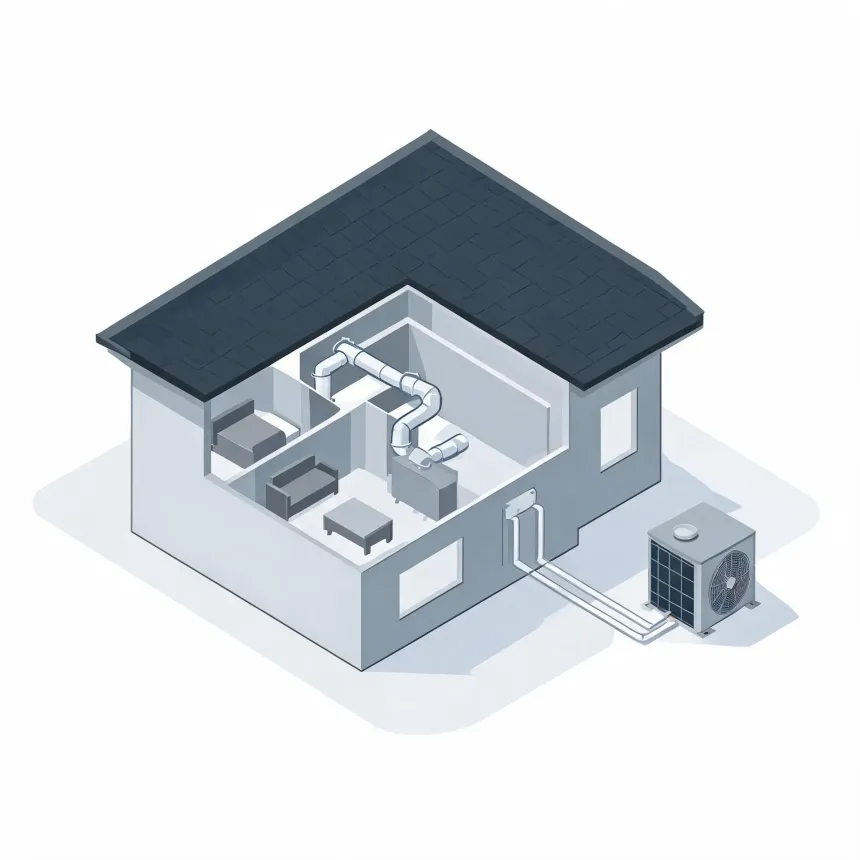
Installation day starts with the outdoor unit and indoor coil going in, then the line set connecting them gets run, brazed and pressure tested for leaks before any refrigerant goes in. If ductwork is already there, the crew checks it against the new system rather than assuming it carries over, since a heat pump moves air differently than a furnace did. Electrical work usually follows, because a heat pump draws on circuits a gas furnace never needed, and that can mean a new breaker or a dedicated disconnect outside by the unit. Once everything's connected, the system gets charged to the manufacturer's spec and run through its paces, heating and cooling both, so airflow and temperature can be checked at the vents. A contractor worth hiring walks the thermostat settings with you before leaving, including how backup heat engages, since that's new behavior if you're coming from a furnace. The job runs long because of the testing, not because any one step is slow.