





Two illuminated adobe-style desert homes at night, surrounded by saguaro cacti and low desert shrubs along a curved driveway.

Heat Pump Installation in Roswell, NM

Tell us about the job

Takes about a minute. No obligation.

New system or replacementHeat PumpChaves County, NM
Step 1 of 2

What ZIP code is the job in?

Electricity heats 52.1% of homes in Chaves County, more than any other fuel. Utility gas comes in second at 40.6%, with bottled or LP gas a distant third at 4.5%. A heat pump fits naturally into a home already wired for electric heat, since the circuits and panel capacity are often already there. If your home currently heats with gas, swapping to a heat pump means the contractor will need to look at your electrical setup before anything else.

7 months
October through April, your system heats
5 months
May through September, it cools
27°F
the average winter night it heats against
93°F
the average summer afternoon it cools against
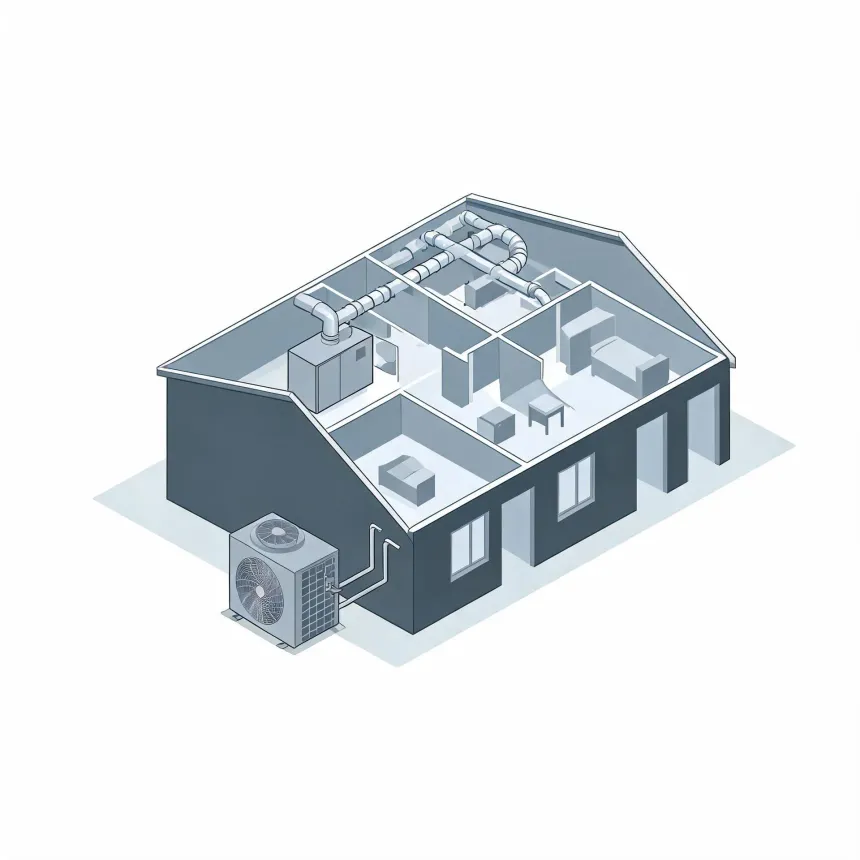
Isometric cutaway illustration of a single-story house showing interior rooms, attic ductwork and an air handler, with an outdoor condenser unit connected by lines along the exterior wall.
Your system heats October through April and cools May through September.

NOAA nClimDiv, 1991–2020 normals

Your old furnace or air handler doesn't just get switched off and left in place.

Pulling it out clears the space and the ductwork connections the new heat pump needs to tie into.

Half the homes here were built before the duct system you have today was standard

Half the homes here were built by 1972
108 damaging wind events from 2015 to 2024
83 hail events from 2015 to 2024
Roswell winters don't ask much of a heat pumpOvernight lows here average 27°F in December, January and February, well within what a standard heat pump handles.

New Mexico households paid 14.20 cents per kilowatt-hour in 2024, well below what most of the country pays. That changes the math on which heat pump makes sense here. A higher-efficiency model still uses less power than a standard one, but with electricity this cheap, the gap in your bill is smaller, and it takes longer for that difference to cover the higher price of the unit. Spend more up front here and you're buying quieter operation, steadier temperatures, or a longer warranty more than you're buying savings. Ask the contractor to walk through what a mid-efficiency and a high-efficiency model would each cost you to run, side by side, before deciding which one fits your budget.

Any heat pump installed here has to clear 14.3 SEER2 and 7.5 HSPF2

Roswell is in climate zone 3B, and since January 2023 every split-system heat pump sold here has to hit 14.3 SEER2 for cooling and 7.5 HSPF2 for heating. That minimum narrows the field to equipment built for a place with a long run of hot months and a short mild winter. A federal tax credit is available on qualifying models, and a contractor can confirm which ones meet it.

Find a contractor
A man in a cap, dark long-sleeved shirt and brown work pants walks up porch steps toward a gray front door, carrying a worn canvas tool bag filled with hand tools.
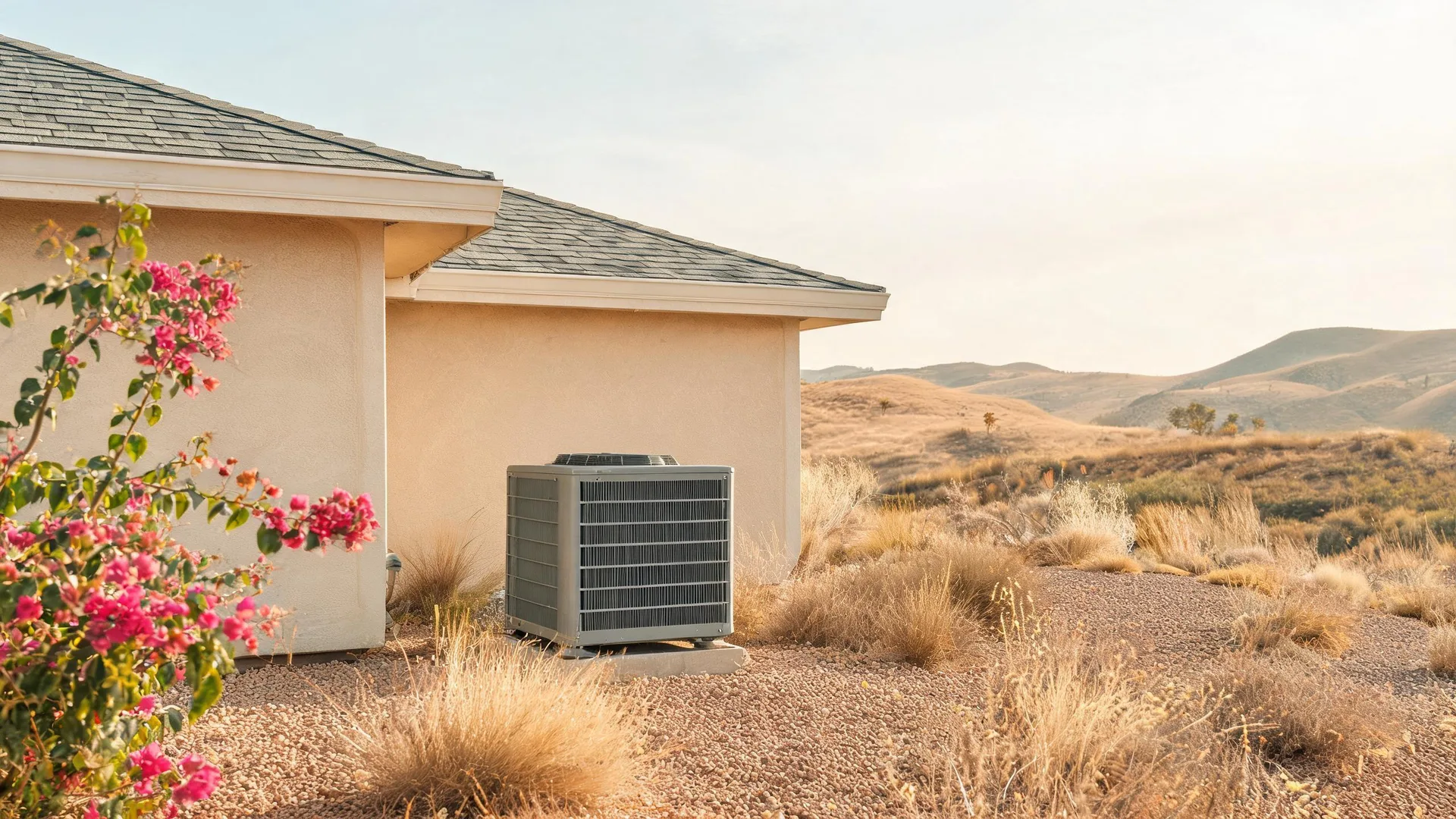
A dark gray heat pump unit mounted on a concrete pad next to a house with gray siding and a stone veneer wall.

Seven months of heat, five of cooling, one month to get ready

Heat runs here from October through April, seven months. Cooling picks up in May and holds through September, five more. That's nearly the whole year with this system doing one job or the other, and only April stands between them. Install before September ends and the heat pump is already settled in when it needs to switch over, not getting finished on the first cold night.

Ask what size they're putting in, and why

A heat pump that's too big cools the room fast and shuts off before it pulls the moisture out, so the air stays damp. One that's too small runs constantly and never quite catches up on the coldest or hottest days. Sizing comes from a load calculation on your actual house, the windows, the insulation, the layout, not a rule of thumb based on square footage. Ask to see the calculation, not just the final number.
Ask how they're handling the backup heat

A heat pump pulls heat from outside air, and on the coldest nights it needs help keeping up. Some systems answer that with electric resistance coils built into the air handler. Others pair the heat pump with a furnace that kicks in below a set temperature. Each has a different effect on your power draw and your comfort on the worst night of the year, so ask which setup you're getting and at what outdoor temperature it switches over.

The SEER2 and HSPF2 numbers on the label are ratings, not promises. SEER2 tells you how much cooling you get for the power you put in, and HSPF2 does the same for heating. A higher number means the unit gets more out of every bit of electricity it draws, not that it cools or heats a bigger space. Units with the same rating can still behave differently in your house depending on the ductwork, the sizing and how well the installation was done. The rating tells you what the equipment is capable of under test conditions. What you actually get depends on whether the contractor matched it to your home.

Install day starts with the old equipment coming out, then the new outdoor unit and air handler go in, and the refrigerant lines between them get cut to length, run and sealed on site. Those lines get pressure tested before any refrigerant goes in, because a joint that leaks slowly can take a while to show up as a comfort problem instead of showing up today. Once the system holds pressure, it gets evacuated to pull out moisture and air, then charged to the weight the manufacturer specifies for that line length. The electrical hookup matters as much as the refrigerant work. A heat pump needs its own breaker sized to the equipment, and the disconnect box outside has to be reachable and wired correctly before the unit ever runs. Before the crew leaves, the system gets run in both heating and cooling, and the airflow at the vents gets checked room by room, not just at the unit itself.