A flat-roofed adobe-style desert house photographed at twilight, surrounded by saguaro cacti and xeriscape landscaping.

Heat Pump Installation in Portales, NM

Tell us about the job

Takes about a minute. No obligation.

New system or replacementHeat PumpRoosevelt County, NM
Step 1 of 2

What ZIP code is the job in?

Most homes here run on electricity already

Electricity heats 61.3% of homes in Roosevelt County, more than any other fuel. Gas comes in second at 23.9%, with propane a distant third at 5.3%. A heat pump fits into a home already wired for electric heat without adding a fuel line or a tank.


That makes this a swap, not a conversion

When a home already heats with electricity, installing a heat pump usually means working with the existing electrical setup rather than changing it. That keeps the job closer to a straight equipment replacement than a system overhaul.

7 months
October through April, your system heats
5 months
May through September, it cools
26°F
the average winter night it heats against
91°F
the average summer afternoon it cools against
Isometric cutaway illustration of a single-story house showing interior ductwork, an indoor air handler and furnace unit, and an outdoor condenser connected by a line, on a white background.
Your system heats October through April and cools May through September.

NOAA nClimDiv, 1991–2020 normals

The efficiency number on the label tells you how much heat it moves for the power it uses, not how warm it can get.

A higher rating costs more up front and less every month after that, so the right one depends on how long you plan to stay in the house.

Put a heat pump in before September, so it's ready when heat season starts in October

Cooling runs May through September
Heat runs October through April
Climate zone 4B

Half the homes in Roosevelt County were built in 1977 or earlier, half in 1977 or later, which is a normal spread and not a reason to size a heat pump differently. A standard unit sized to the house works here the same as anywhere else. The one thing worth checking is whether yours is a mobile home, since those make up close to a fifth of the housing stock in the county. Mobile homes take a different kind of heat pump, built to fit the space and tie into the home's existing ductwork or wiring. If your home came on a frame like that, say so when comparing quotes, so you're pricing the right equipment from the start.

What a new heat pump here has to meet

Roosevelt County sits in climate zone 4B, which asks real work of both heating and cooling. Any heat pump installed here has to clear 14.3 SEER2 and 7.5 HSPF2, and a federal tax credit is available toward the cost of qualifying equipment. That sets the floor for what goes in and what you get back for it.

Find a contractor
A person in a dark long-sleeve shirt and tan work pants, seen from behind, carries a canvas tool bag while stepping up porch stairs toward a dark blue front door.
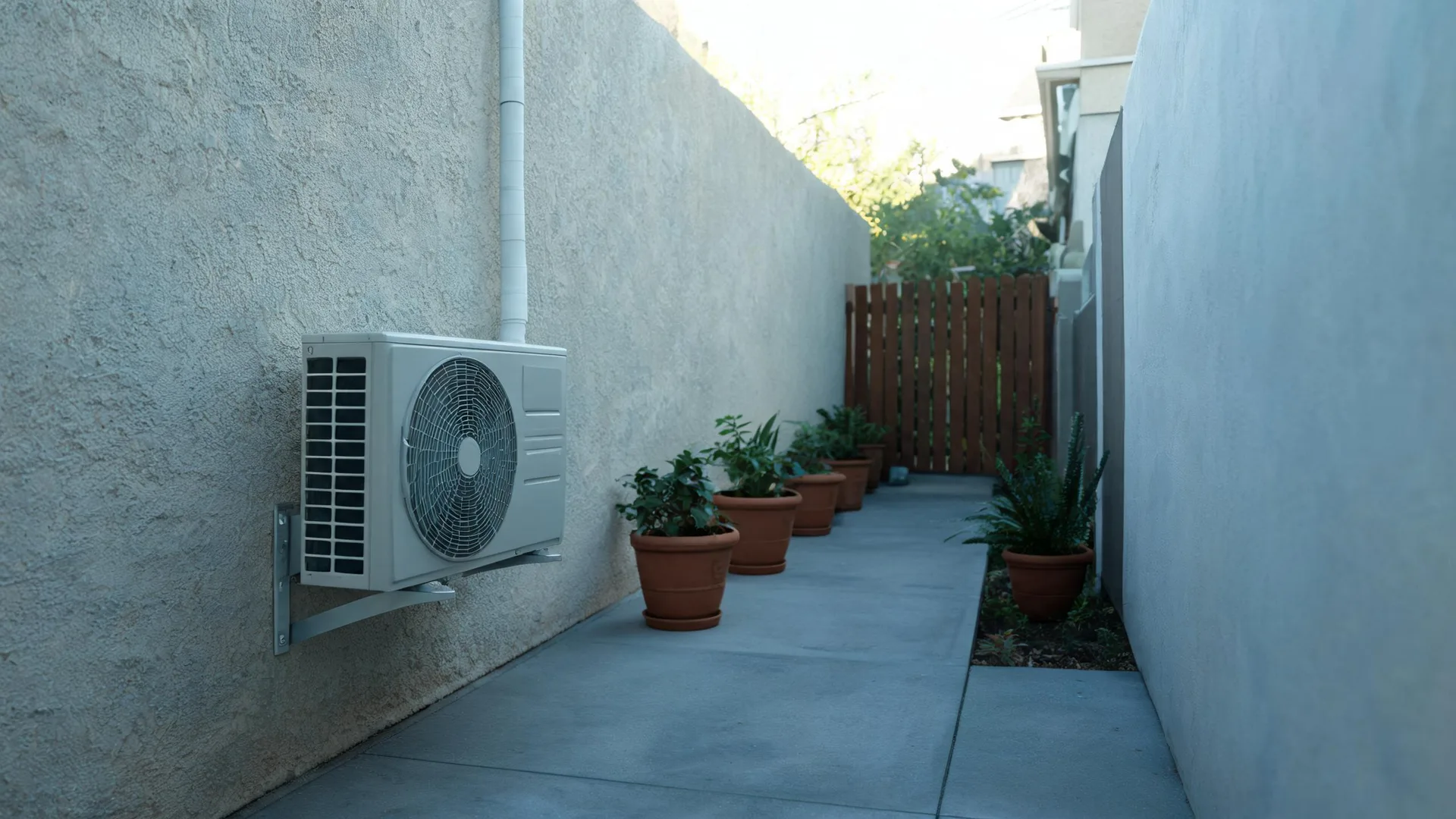
A gray heat pump outdoor unit mounted on a concrete pad next to the stone-accented exterior wall of a house.

It won't be working against much

Overnight lows average 26 degrees through December, January and February here. That's cold enough to keep a heat pump running steady, not cold enough to make it strain. Roosevelt County does see its share of rough weather, damaging wind and hail both, but that's wear on the roof and siding, not extra load on the unit itself. With nothing extreme to design around, a mid-range system sized right for the house will hold up fine. The top-efficiency model earns its keep in places where the system fights the weather for months. That's not the case here.

Your old furnace or AC doesn't sit around as a backup

Once the heat pump goes in, the installer disconnects the old equipment and hauls it away. A system that no longer ties into the thermostat or the electrical panel is just taking up space, and most installers fold removal into the job rather than leaving it for the homeowner to deal with.

A gas furnace leaves behind a line that needs capping

If the old system ran on gas, the gas line feeding it has to be capped off safely once it's disconnected, not just left in place. That's a job for whoever handles the gas work, and it's worth confirming it's part of the scope before the old furnace comes out.

Ask what happens below freezing. Every heat pump has a balance point, the temperature where it can no longer pull enough heat from outside air to keep up, and below that a backup heat source takes over. Some use electric resistance coils built into the air handler, which cost more to run but need no extra space or ductwork. Ask where that backup kicks in and what it costs to operate compared to the heat pump itself. Also ask about the defrost cycle, since every heat pump reverses briefly in cold weather to melt frost off the outdoor coil, and a unit that defrosts often is losing ground to the weather rather than keeping up with it. The answer tells you whether the system was sized right or just sized cheap.

Installation day starts with the old equipment coming out, not the new unit going in. The crew disconnects the furnace or AC, pulls the indoor air handler if it's being replaced, and sets the new outdoor unit on a pad outside. Refrigerant lines run between the outdoor unit and the indoor coil, and those connections get checked for leaks before anything is charged with refrigerant. The electrical hookup matters as much as the refrigerant work. A heat pump draws power the old furnace never did, so the breaker panel gets checked to confirm it can carry the load, and a dedicated circuit usually gets run if one isn't already there. Once everything's connected, the system gets charged, the thermostat gets wired in, and the crew runs it through a cycle in both directions, heating and cooling, before calling the job done. Expect most of a day for a straight swap, longer if the ductwork needs changes or the electrical panel needs upgrading first.