Electricity is the default fuel here
Just over half of homes in Lea County heat with electricity, more than gas and propane combined. A heat pump runs on that same electric service, so it fits into what's already there.
Takes about a minute. No obligation.
Just over half of homes in Lea County heat with electricity, more than gas and propane combined. A heat pump runs on that same electric service, so it fits into what's already there.
Utility gas heats 40.3% of homes in the county. If that's your setup, a heat pump installation means weighing it against a gas furnace, not assuming electric is the only option on the table.

NOAA nClimDiv, 1991–2020 normals
A heat pump sized too big will short cycle, running in quick bursts that never let it settle into steady, efficient operation.
The right size comes from a load calculation on the house itself, not a guess based on square footage or what the old system was rated for.



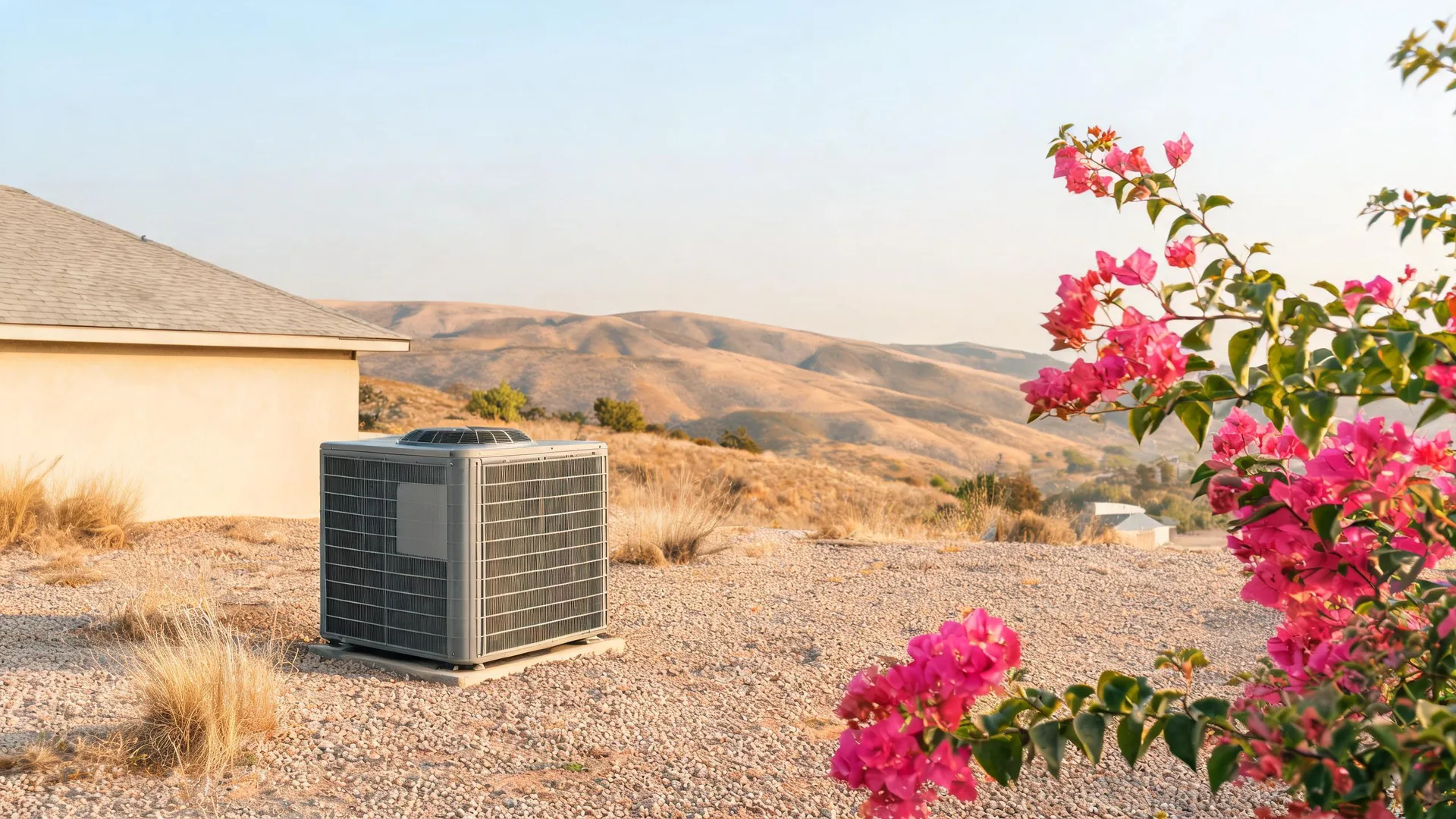
A heat pump installed outdoors here has to stand up to more than steady heat and cold. Lea County saw damaging wind 127 times between 2015 and 2024, with hail in the mix too. That's weather working on the outdoor unit directly, on its cabinet, its coil, its fan. A contractor who sizes the system right and mounts it the way the manufacturer specifies gives it a fair shot at handling that. One sized wrong, or set on a weak pad, is starting out already behind.
Any heat pump installed here now has to hit 14.3 SEER2 and 7.5 HSPF2 at minimum, the federal rule for units made from 2023 on. Central air systems installed in the Southwest carry their own efficiency floor too. That narrows the field before you even start comparing brands, so it helps to get a quote built around equipment that actually qualifies, and to ask what federal credit applies to the install.
Find a contractor
Half the houses in Lea County were built in 1979 or earlier, half later. That split doesn't call for a bigger or pricier heat pump either way. A unit sized to the load on the house runs the same no matter the decade it was built. Mobile homes are 17.3% of the housing stock here, and that's the one case where the equipment itself has to be rated differently, something a contractor doing the load calculation will account for. Outside of that, a standard system sized to the house is what fits here.
A heat pump installation means pulling the old equipment, not working around it. If a furnace is going, the contractor disconnects the gas line and caps it, or coordinates with the gas utility to do so. An old condenser gets disconnected from its electrical whip and hauled off along with the indoor coil if it's being replaced too.
An old air conditioner's outdoor unit still has refrigerant in its lines. Before it can be cut loose and removed, a contractor has to recover that refrigerant into a tank rather than letting it vent into the air, which federal law requires regardless of what kind of refrigerant it is.
Comparing heat pumps means comparing more than the sticker price. Ask what the manufacturer's rated capacity is at low outdoor temperatures, not just at mild ones, since that number tells you how the system actually carries the home when it's cold out, not how it performs on a test bench. Ask whether the quote includes a backup heat source and how the system decides when to switch to it. Ask what refrigerant the unit uses, since older refrigerants are being phased out and that affects what service will look like down the road. Ask who is doing the load calculation and whether it accounts for the ductwork already in place, since a heat pump matched to undersized or leaky ducts will struggle no matter how good the outdoor unit is. And ask what the warranty actually covers, parts or labor or both, because that gap is where a lot of homeowners get surprised later.
The SEER2 and HSPF2 numbers on the label are efficiency ratings, not a measure of how much heat or cool the unit can put out. A higher SEER2 means the system moves more heat per unit of electricity it draws during cooling. HSPF2 is the same idea for the heating side, since a heat pump handles both. A pair of units can carry the same capacity and heat the same size house, with one costing less to run because it's rated higher on these scales. The rating comes from a test run under set conditions, so it describes how the unit performs in that test, not what you'll see on the coldest or hottest day of the year. A unit sized wrong for the house will run harder than its rating suggests no matter how efficient it is on paper, so the rating only tells its real story once the sizing is right too.