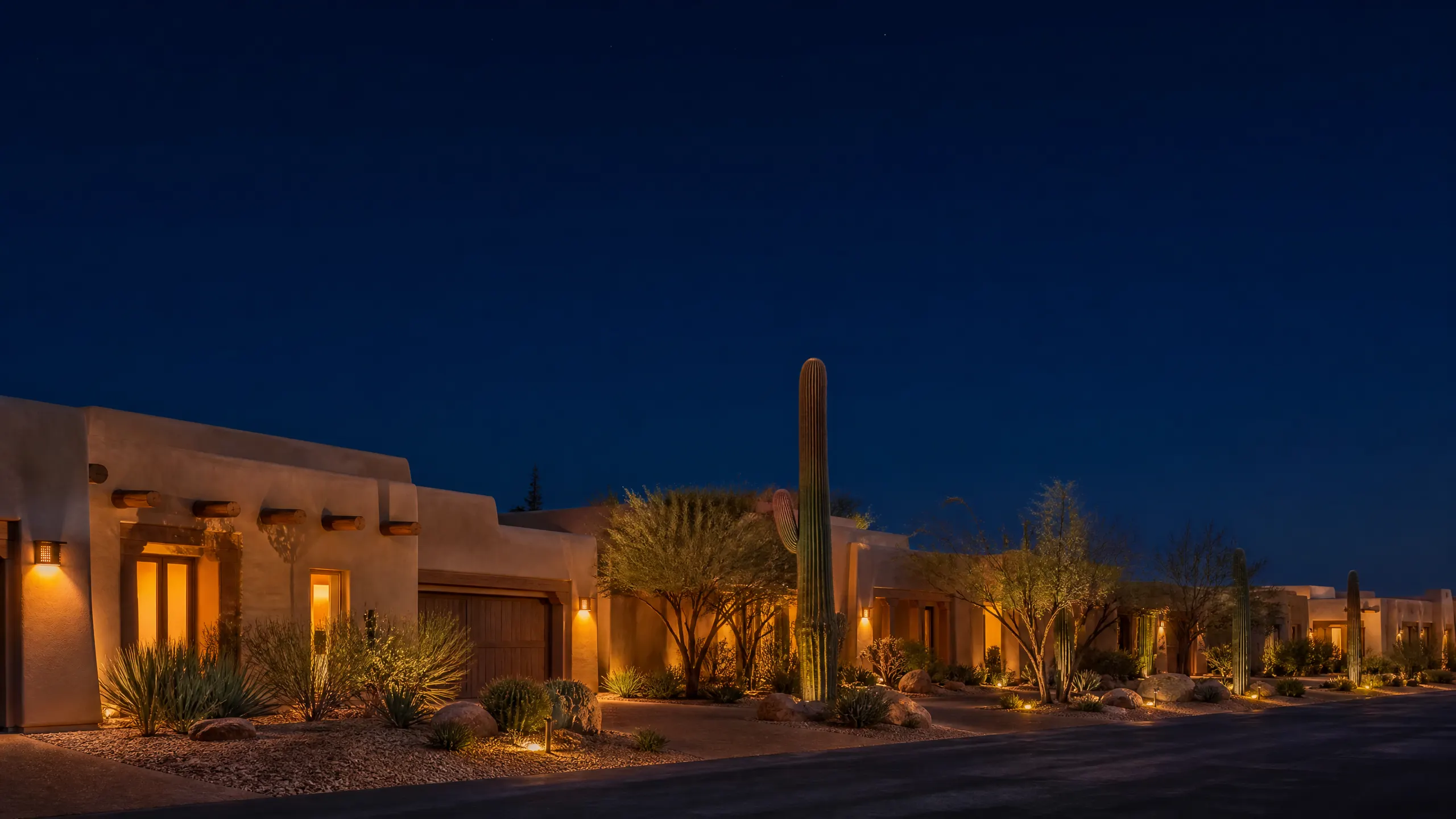







Adobe-style desert homes lit by warm exterior lights at dusk, surrounded by saguaro cacti and native desert plants.

Heat Pump Installation in Grants, NM

Tell us about the job

Takes about a minute. No obligation.

New system or replacementHeat PumpCibola County, NM
Step 1 of 2

What ZIP code is the job in?

Utility gas heats 42.2% of homes in Cibola County, more than any other fuel. Electricity is a distant second at 14.1%, with propane close behind at 12.9%. A heat pump installed here usually goes into a home that has never run on electric heat alone, so the question is how it works alongside what's already there rather than what replaces it outright. Some homes add a heat pump to pair with a gas furnace, letting the heat pump carry the mild months and the furnace take over when it's coldest. Others are switching off propane entirely, which can mean changes to the electrical panel that a gas system never needed.

8 months
October through May, your system heats
1 months
July through July, it cools
18°F
the average winter night it heats against
84°F
the average summer afternoon it cools against
Isometric cutaway illustration of a two-room house showing an indoor air handler with ductwork connected by lines to an outdoor condenser unit on a pad.
Your system heats October through May and cools July through July.

NOAA nClimDiv, 1991–2020 normals

Heat pumps in Cibola County run heat from October through May, about eight months a year.

Have the install finished before September ends, so the switch to heat is already done and tested, not happening in a hurry on the coldest morning.

Half the homes here were built by 1978, and a heat pump install has to match the house it's going into

Half the homes here were built by 1978
Climate zone 4B
Power costs 14.2 cents a kWh statewide
A standard heat pump does the job in GrantsNew Mexico homes paid 14.20 cents per kilowatthour in 2024, electricity prices don't call for anything bigger than a standard system here

Cibola County sits in zone 4B, a mixed climate that asks real work of both heating and cooling. Any split-system heat pump installed here now has to clear 14.3 SEER2 for cooling and 7.5 HSPF2 for heating. Those are federal floors, not local add-ons, so they apply whether the house is switching off propane or adding a heat pump alongside a gas furnace. A homeowner comparing quotes here can ask straight out whether the equipment meets those numbers, since anything sold short of them shouldn't be on the table.

Replace it before the season

Replace it before the season starts, so it happens on your schedule, not in a hurry.

Find a contractor
A man in a gray t-shirt, tan work pants and brown boots, seen from behind, climbs steps toward a dark front door while carrying a canvas tool bag holding a tape measure and screwdrivers, with a potted flowering shrub beside the entry.
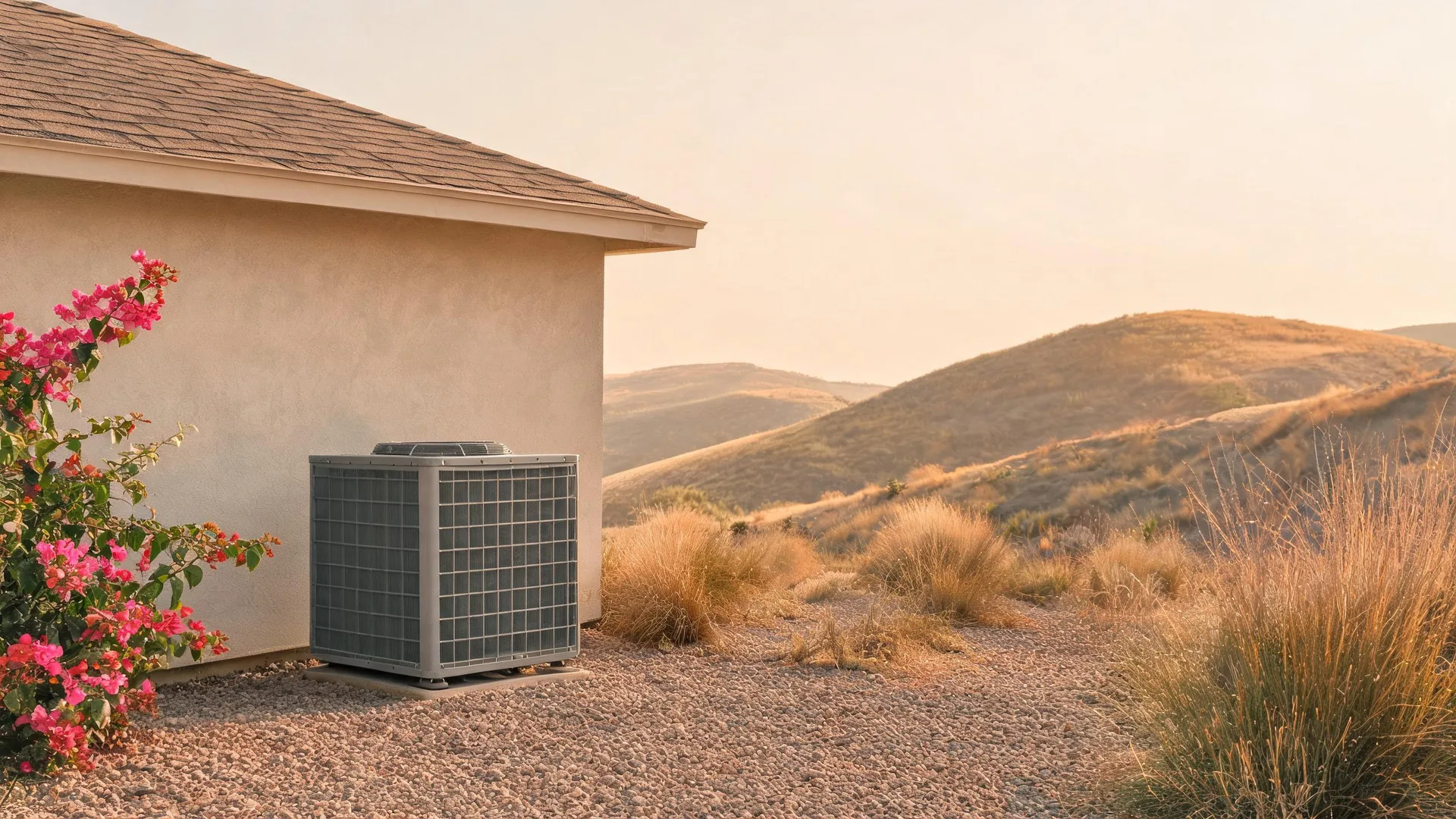
A gray heat pump outdoor unit mounted on a concrete pad next to the stone-accented exterior wall of a house.

Get the house looked at before you get a quote

A contractor sizing the new system needs to see the house first. The panel, the gas line if there is one, the ductwork if there is any. Ask what they plan to check before they hand you a number, not after.

The old equipment comes out once the new one works

A contractor doesn't pull the furnace or old condenser until the heat pump is running and tested. If the house is keeping a gas furnace as backup, that furnace stays in place and just gets wired into the new controls. If the house is dropping propane entirely, the old furnace and its tank or line get disconnected and removed as part of the same job.
A removed fuel line or tank needs its own shutoff

Switching off propane means the gas line has to be capped and the tank either pulled or shut off at the source, not just left alone. That's separate work from the heat pump install itself, and it's worth asking whether it's included in the quote or billed on its own.

Sizing a heat pump means matching its output to how fast the house loses heat and gains it, not rounding up to be safe. A unit that's too big cools the air fast then shuts off before it pulls the moisture out, so the house feels clammy even at the right temperature. It also cycles on and off more, and every start and stop wears on the compressor more than running steady does. A unit that's too small just never catches up on the coldest or hottest days, running constantly and still losing ground. The right size comes from the load calculation, not the size of the old equipment being replaced, since that system may have been wrong for the house from the start.

The outdoor unit and the indoor coil go in as a matched pair, not whatever happens to be on the truck. The outdoor unit gets set on a pad and leveled. Refrigerant lines run from there to the indoor coil, usually mounted with the furnace or air handler. Those lines get brazed, then pressure tested before anyone charges the system. A joint that leaks slowly can take months to show up as poor performance, so this step matters more than it looks. The electrical work runs alongside the refrigerant work, a dedicated circuit sized to the equipment, a disconnect box within sight of the outdoor unit, a thermostat wire run back to where the controls live. Once everything is connected, the system gets charged to the weight the manufacturer specifies for that equipment, not just run until the air feels cold. The last step is commissioning. The contractor checks airflow, measures the temperature split across the coil, and confirms the backup heat is wired to come on at the right point. Skip that last check and the system can run fine the first week and show problems once the weather turns.