





View from beneath a dark overhanging structure across a gravel yard toward a concrete block wall, a gnarled tree, and a single-story stucco house under a pale sky.

Heat Pump Installation in Fort Sumner, NM

Tell us about the job

Takes about a minute. No obligation.

New system or replacementHeat PumpDe Baca County, NM
Step 1 of 2

What ZIP code is the job in?

Winters here aren't brutal. Overnight lows average 26°F through December, January and February, cold enough for a heat pump to work against, but not the kind of extreme that pushes a system night after night. A well-sized, reliable heat pump handles that without strain. The bigger risk to equipment in Fort Sumner is wind and hail, not cold. De Baca County has seen damaging wind and dozens of hail events over the past decade, so the outdoor unit's housing and where it sits matter more here than chasing the highest efficiency rating on the market.

7 months
October through April, your system heats
5 months
May through September, it cools
26°F
the average winter night it heats against
91°F
the average summer afternoon it cools against
Isometric line illustration of a cutaway house showing interior rooms with furniture, a furnace or air handler with overhead ductwork, and an outdoor condenser unit connected by lines outside the wall.
Your system heats October through April and cools May through September.

NOAA nClimDiv, 1991–2020 normals

A heat pump sized for this house is all this job needs.

There's no reason to pay more for a bigger or higher-tier system than Fort Sumner winters call for.

A standard heat pump, sized right, is all this job needs

Half the homes here were built by 1977
50 damaging wind events from 2015 to 2024
37 hail events from 2015 to 2024
Plan the install around SeptemberHeat runs October through April here, so get it in before September ends.

Fort Sumner falls in zone 4B, a mixed climate that asks real work of both sides of the system, heating and cooling. Any split-system heat pump installed new has to meet 14.3 SEER2 for cooling and 7.5 HSPF2 for heating, so that floor is set before a contractor even quotes the job. That's a baseline, not a ceiling, and a correctly sized system at that rating will do the job this climate asks of it. A federal tax credit is available for qualifying heat pump installations, worth checking against the system you're quoted.

Get a heat pump that fits, not one built for harder winters

A reliable, correctly sized heat pump is the right call here. Pick a model with a solid outdoor unit and a good spot out of the wind, and let it do the job this climate actually asks of it.

Find a contractor
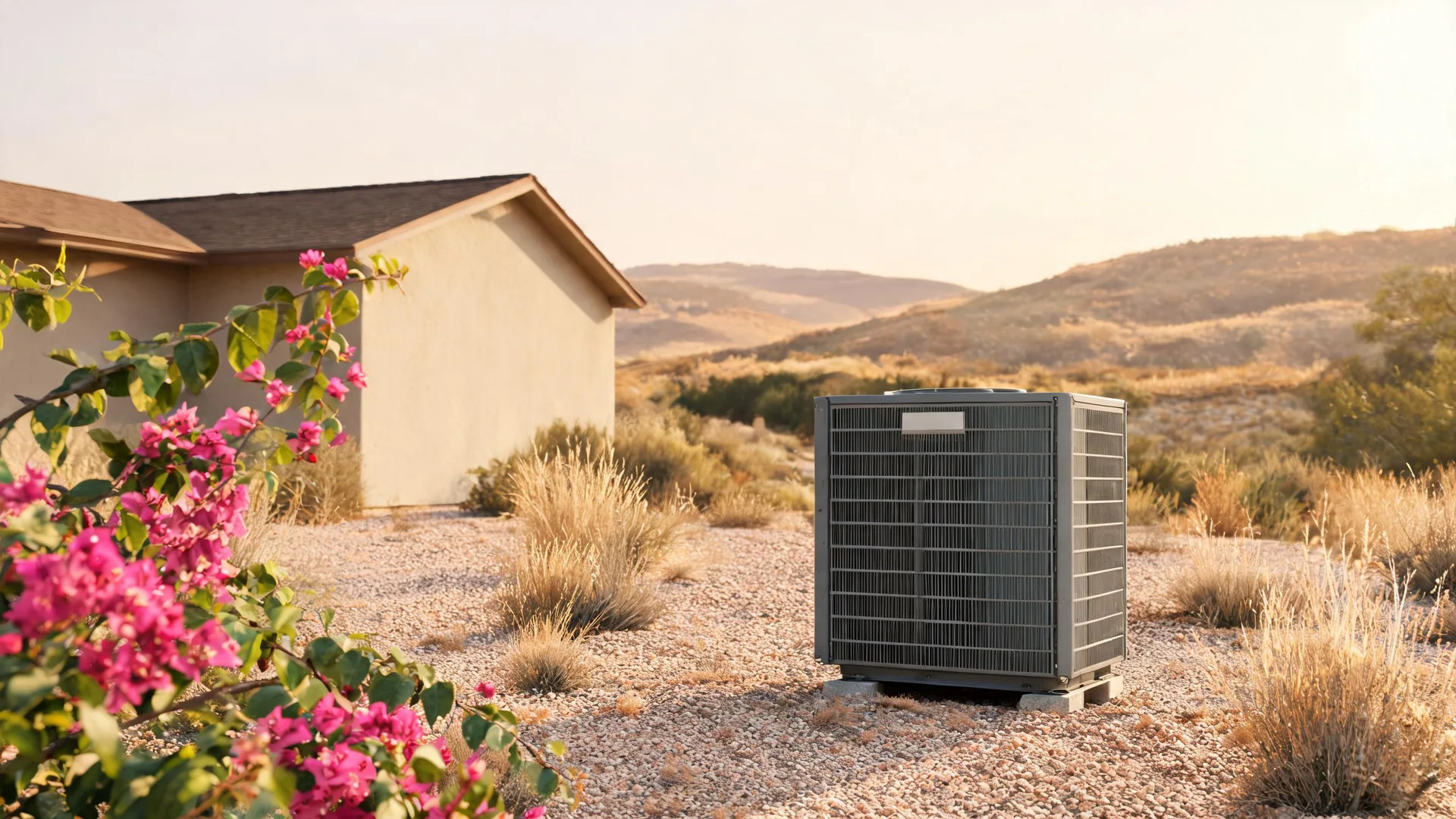
A white mini-split heat pump outdoor unit mounted on a concrete pad beside a gray-sided house, surrounded by gravel and green shrubs.

Running right starts with sizing it right, not swapping like for like

Sizing a heat pump means matching its output to how fast this specific house loses heat in winter and gains it in summer, not picking the biggest unit on the lot. A unit too big short cycles, running in bursts that never last long enough to dehumidify the air or settle into a steady airflow. One too small runs constantly during the hardest days and still falls behind. The right size comes from a load calculation done room by room, accounting for window area, insulation and duct layout, not a rule of thumb based on square footage alone. A contractor who skips that step and just matches the old system's size can carry over a mistake from the last install instead of fixing it.

The old system gets disconnected and hauled off

Whoever installs the new heat pump will disconnect the old equipment, including the refrigerant lines, electrical connections and any ductwork tie-ins, and remove it from the property. If the old system used refrigerant, that refrigerant has to be recovered properly rather than vented, since releasing it into the air is against the law.
A gas furnace paired with the old system needs its own plan

If the home is replacing a heat pump with another heat pump, the swap is straightforward. But if there's a gas furnace in the mix now being replaced or left in place for backup heat, the gas line and venting need to be addressed directly, not assumed to carry over as is.

What drives the cost of a heat pump install is mostly what has to change to put the system in, not the unit itself. A straight swap, same spot outside, same line set, same ductwork, is the cheapest version of this job because there's little to touch besides the equipment. Cost climbs when the ductwork needs modification, when the electrical panel needs more capacity to run the new system, or when the line set has to be replaced instead of reused. Where the outdoor unit goes matters too. A pad that needs leveling, or a spot that needs protection from wind, adds work before the unit ever gets set. None of that shows up on a spec sheet, but it's most of what separates one quote from another.

Install day starts outside, with the old unit disconnected and the refrigerant recovered before anything new goes in. The new outdoor unit gets set on its pad, leveled, and connected to the line set. Inside, the air handler or existing ductwork gets tied in, and the electrical connections are made to the circuit that serves the system. Once everything's connected, the system gets charged with refrigerant to the manufacturer's spec and run through its paces, heating and cooling both, to check airflow and temperature split at the vents. A contractor should walk through the thermostat settings before leaving, since a heat pump's controls work differently than a furnace or straight air conditioner, especially around defrost cycles and backup heat.