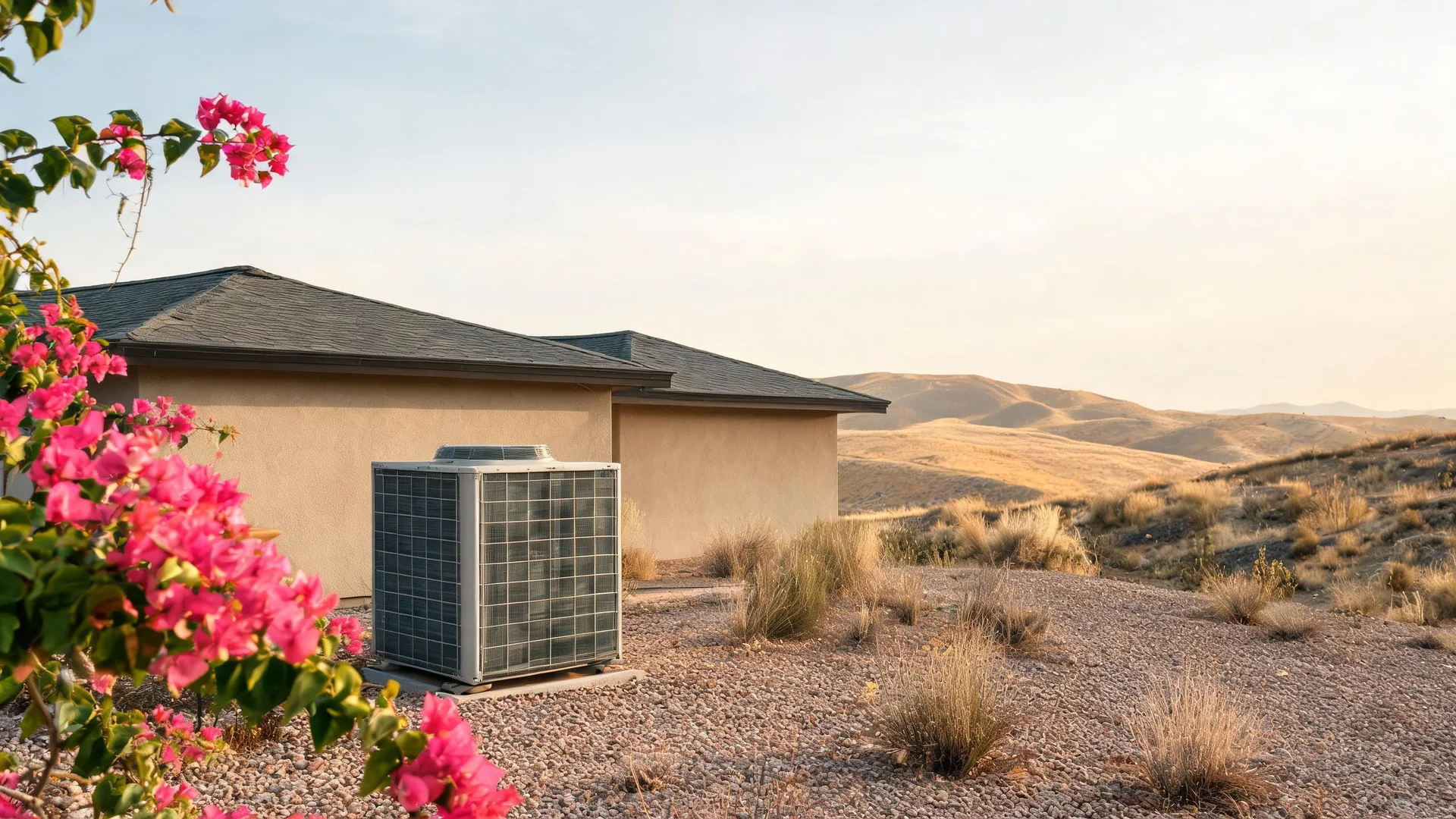
Gas is the default here
Utility gas heats 59% of homes in Union County, with LP gas covering another 21.6%. A heat pump here is usually going in alongside an existing gas furnace, not replacing the only thing a home has.
Takes about a minute. No obligation.
Utility gas heats 59% of homes in Union County, with LP gas covering another 21.6%. A heat pump here is usually going in alongside an existing gas furnace, not replacing the only thing a home has.
A contractor sizing a heat pump for a home with a gas furnace can set it up to handle milder days and let the furnace take over when it gets cold, or size it to carry the full load. Which approach fits depends on the furnace already there.

NOAA nClimDiv, 1991–2020 normals
Electricity here runs 14.20 cents a kilowatt-hour.
A standard heat pump sized for this home works fine. There's no local reason to pay more for a bigger or higher-efficiency unit.



Clayton falls in climate zone 4B, which asks real work of both sides of a heat pump, heating and cooling alike. Any split-system heat pump installed new here has to meet 14.3 SEER2 for cooling and 7.5 HSPF2 for heating. That's a federal minimum, not a local add-on. A central air conditioner installed on its own has to clear that same 14.3 SEER2, with a separate efficiency rating depending on the unit. These are floors, not targets, and a contractor sizing the system for this house will land on something that clears them.
A standard heat pump sized to these minimums holds up fine here. The county sees hail and wind most years, but neither changes what the unit needs to be, and the cold snaps a good heat pump and furnace pairing already covers. Get the sizing right and there's nothing else to plan for.
Find a contractorHalf the homes in Union County were built in 1961 or earlier. A house that age usually means the ductwork and electrical panel were sized for whatever heated it then, not for a heat pump. Before the new unit goes in, a contractor needs to check what the panel can carry and whether the ducts can move the air a heat pump puts out. That check decides what the install actually involves, not the age of the house by itself.
SEER2 rates how the unit cools, HSPF2 rates how it heats. A heat pump carries both numbers because it does both jobs, and a unit that's strong in one isn't automatically strong in the other. Comparing units side by side means checking both ratings, not just one.
The rating describes the equipment, not what happens inside the house. A unit that sits idle most days won't make back the cost of a higher rating no matter how high the number climbs. What decides whether paying for it is worth it comes down to how much the system actually runs, which depends on how well the house holds heat and cold, not the label on the unit.
Ask what happens at the balance point, the outdoor temperature where the heat pump stops keeping up on its own and the backup kicks in. Systems with the same rating can set that point differently depending on how they're sized and staged, and it changes how often the backup runs. Ask whether the quote comes from a load calculation done on this house or just a swap for whatever's out there now. A unit sized off the old equipment can end up wrong in either direction, short on cold days or short-cycling on mild ones. Ask what refrigerant the system uses, since that affects what service and parts look like down the road. And ask what the warranty covers on the compressor versus the rest of the unit, because those terms aren't always the same.
The old equipment comes out first, indoor and outdoor both, and the lines get cut and capped. A contractor checks the line set before deciding whether to reuse it or run new, since a heat pump holds a different oil and refrigerant charge than straight AC and the sizing has to match the new unit, not the old one. The outdoor unit gets set on a pad or bracket, the indoor coil goes in above or beside the furnace, and new line set gets run between them if the old one isn't fit to keep. Electrical is its own piece of the day since a heat pump draws differently than the furnace blower alone ever did, and the panel and disconnect get checked against that before anything gets powered up. Once it's all connected, the system gets charged, the airflow gets checked against what the unit is rated for, and the controls get set up to hand off between the heat pump and the furnace correctly. None of that shows from outside, but it's what decides whether the system runs the way it was sized to.