







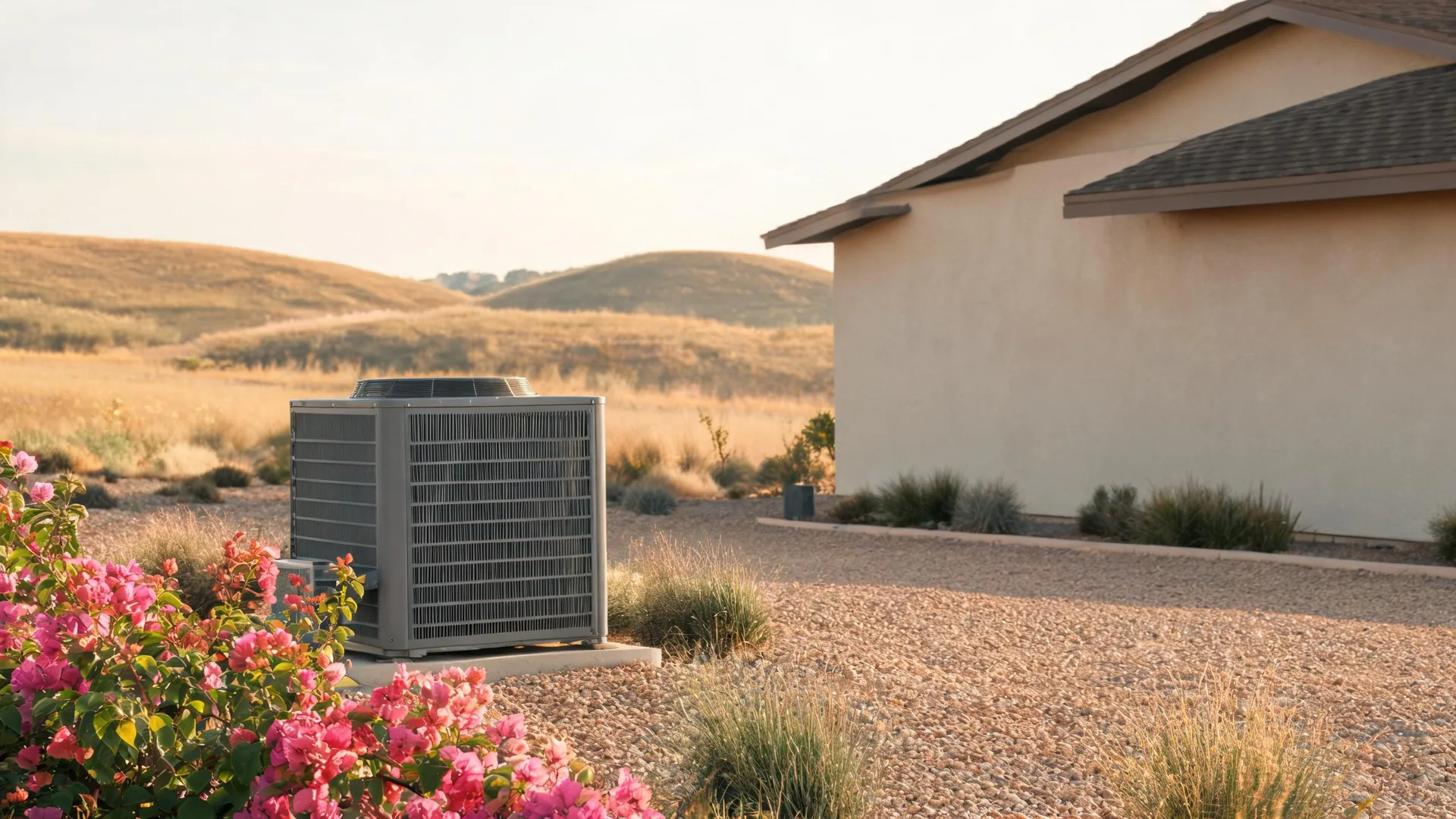
An outdoor heat pump unit mounted on a concrete pad in front of a two-story suburban house.

Heat Pump Installation in Alamogordo, NM

Tell us about the job

Takes about a minute. No obligation.

New system or replacementHeat PumpOtero County, NM
Step 1 of 2

What ZIP code is the job in?

Gas heats a little over half the homes in Otero County, and electricity covers about 22 percent. A heat pump is an electric system, so swapping one in means moving the house off its gas furnace for heating, not just adding a second machine alongside it. That's a bigger change here than in a county where electric heat is already common, and it's worth asking the contractor how your ductwork and your electrical panel handle the switch. Alamogordo gets cold nights in the winter, so the heat pump going in needs to be sized and chosen to keep up once the temperature drops, not just to handle the mild stretches.

7 months
October through April, your system heats
4 months
June through September, it cools
28°F
the average winter night it heats against
89°F
the average summer afternoon it cools against
Isometric cutaway illustration of a single-story house showing interior rooms with furniture, an attic duct system connected to an indoor air handler, and an outdoor condenser unit linked by lines along the exterior wall.
Your system heats October through April and cools June through September.

NOAA nClimDiv, 1991–2020 normals

New Mexico electricity runs 14.20 cents per kilowatt-hour, below the national average.

A heat pump still beats a gas furnace on running cost here, but the top-efficiency model won't pay back its extra price as fast as it would somewhere with pricier power.

Otero County's weather calls for a backup plan, not a bigger heat pump

153 severe weather events from 2015 to 2024
13% of homes statewide lost power a day or more in 2024
83 damaging wind events from 2015 to 2024
Cheap power here changes the math, not the systemAt 14.20 cents a kilowatt-hour, pick the heat pump that fits the house, not the one with the highest rating on the label.

Winter nights average 28°F here, which is cold but not extreme, and the heat pump won't be fighting against long stretches of harder cold the way it would further north. What wears a heat pump down over the years is mostly run time, cycling on and off, pushing through deep cold. That's a lighter load here. Otero County does see hail and damaging wind on a regular basis, so what matters more for a long service life is a solid outdoor unit and a contractor who mounts and protects it well. A mid-range system installed right will hold up fine. You don't need to pay extra for the highest efficiency tier to get a heat pump that lasts here.

Any system installed here has to meet this region's efficiency minimum

Any heat pump installed here now has to hit 14.3 SEER2 and 7.5 HSPF2 at minimum, and the cooling side has its own EER2 floor on top of that. That's the federal rule for this region, not a local add-on, so it's already built into what contractors are quoting. A heat pump that clears these numbers also qualifies for the federal tax credit, which brings the cost down regardless of which qualifying model you pick.

Find a contractor
A man in a dark long-sleeve shirt and worn brown work pants, seen from behind, carries a canvas tool bag up the steps toward a gray front door, with a potted shrub beside the entry.
A white mini-split heat pump outdoor unit mounted on a concrete pad beside a gray-sided house, surrounded by gravel and green shrubs.

Put it in before October, not during it

Heat is the bigger job here. Otero County homes run heat about seven months a year, October through April, against four months of cooling. A heat pump installed in September has a full month to settle in, breakers checked, airflow balanced, before it has to carry the house through its first cold night. Installed in October, it's doing both at once. The same unit, the same install, just less room for anyone to catch a problem before you need the heat to work.

Ask for the load calculation, not just a size

A heat pump should be sized off a room by room load calculation, not matched to whatever the old furnace was rated for. A contractor who quotes a size before looking at your windows, insulation and square footage is guessing. The math decides the size, not the habit of matching what was already there.
Ask what happens below the balance point

Every heat pump has a temperature where it stops keeping up on its own and needs backup heat to finish the job. Ask what that point is for the model being quoted, and what kicks in under it, usually electric resistance coils. A system with a low balance point runs on its own power more of the winter and leans on backup heat less.

Sizing a heat pump is a balance both ways. Too big and it short cycles, blasting the house to temperature and shutting off before it's pulled the moisture out of the air, so the house feels clammy even though the thermostat reads fine. Too small and it runs flat out without ever catching up, leaning on backup heat more than it should and wearing itself down doing it. The load calculation weighs square footage against windows, insulation, ceiling height, how much sun a wall gets, where the doors are. Houses the same size can need different sized systems depending on how well they hold heat. Getting it right the first time is what makes the rest of the install, the ductwork, the controls, the efficiency rating, actually mean something.

A lot of what drives the price isn't the heat pump itself, it's what has to change around it to make the switch work. If the ductwork was sized for a gas furnace, it may need modifying, since a heat pump moves a different volume of air and runs longer at lower output. The electrical panel might need an upgrade to carry the new circuit, especially if backup resistance heat is part of the setup. Where the outdoor unit goes, how the line set runs, whether the old equipment needs removing first, all of that is labor before the system ever turns on. A house with ductwork that's already in good shape costs less to convert than one that needs new runs, even with the same equipment going in. That's why a contractor walks the house before quoting a number, not just the equipment.