

A gas furnace with sheet-metal ductwork and PVC pipes installed in an unfinished basement.

Furnace Repair in Wagon Mound, NM

Tell us about the job

Takes about a minute. No obligation.

RepairFurnace or heatingMora County, NM
Step 1 of 2

What ZIP code is the job in?

Furnaces in Wagon Mound run about nine months a year, September through May. That is most of the calendar spent heating a house against overnight lows that average 18°F in December and January. A system working that many hours a season cycles its igniter, blower motor and pressure switch far more than a furnace in a milder state ever would. Mora County has also logged 76 winter storms, heavy snow, ice and blizzards, and a furnace already running long hours gets pushed harder still when the weather turns. That kind of use wears parts down sooner than you'd expect, which is usually the real story behind a furnace that's started acting up.

9 months
September through May, your furnace is on duty
18°F
the average winter night it heats against
76 winter storms
in ten years, the nights a failure hurts most
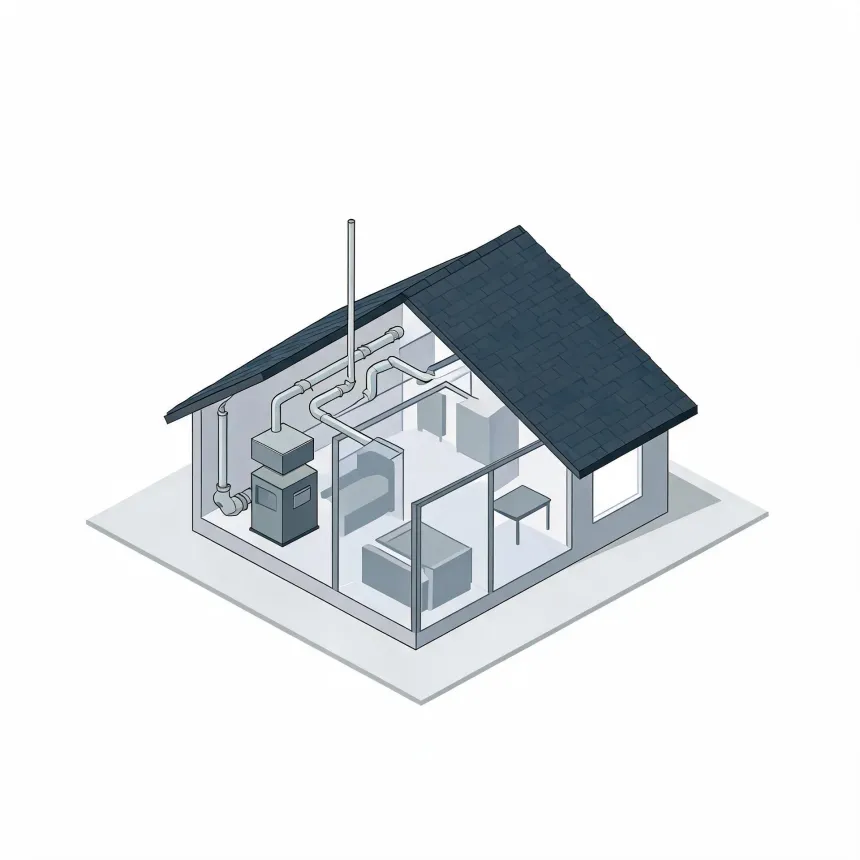
Isometric cutaway illustration of a small house with a dark shingled roof, showing an interior furnace unit, ductwork, and a flue pipe extending through the roof.
Your furnace works hardest from November through April.

NOAA nClimDiv, 1991–2020 normals

Mora County has logged 76 winter storms between 2015 and 2024, which tracks for a place that heats most of the year.

Your furnace is still more likely to need a new igniter or pressure switch than to have been damaged by any one storm.

September is when furnaces here get asked to work for the first time since spring. A weak igniter or a pressure switch that was already marginal tends to fail in those first few cold weeks, not months in. If yours is acting up now, in August, that trouble likely isn't new. It's been sitting there waiting for the load that September brings. Having it looked at before then means you're not the one finding out it won't start once the heat's already needed.

Get the real cause fixed, not just the symptom

Nine months of heating a year and winter storms on top of that wear a furnace down faster than people expect. If yours is acting up, a proper diagnosis finds the part that's actually failing, so the fix holds.

Find a contractor
A man in a dark gray t-shirt and tan work pants, seen from behind, carries a canvas tool bag up porch steps toward a dark front door, with a potted plant beside the porch.
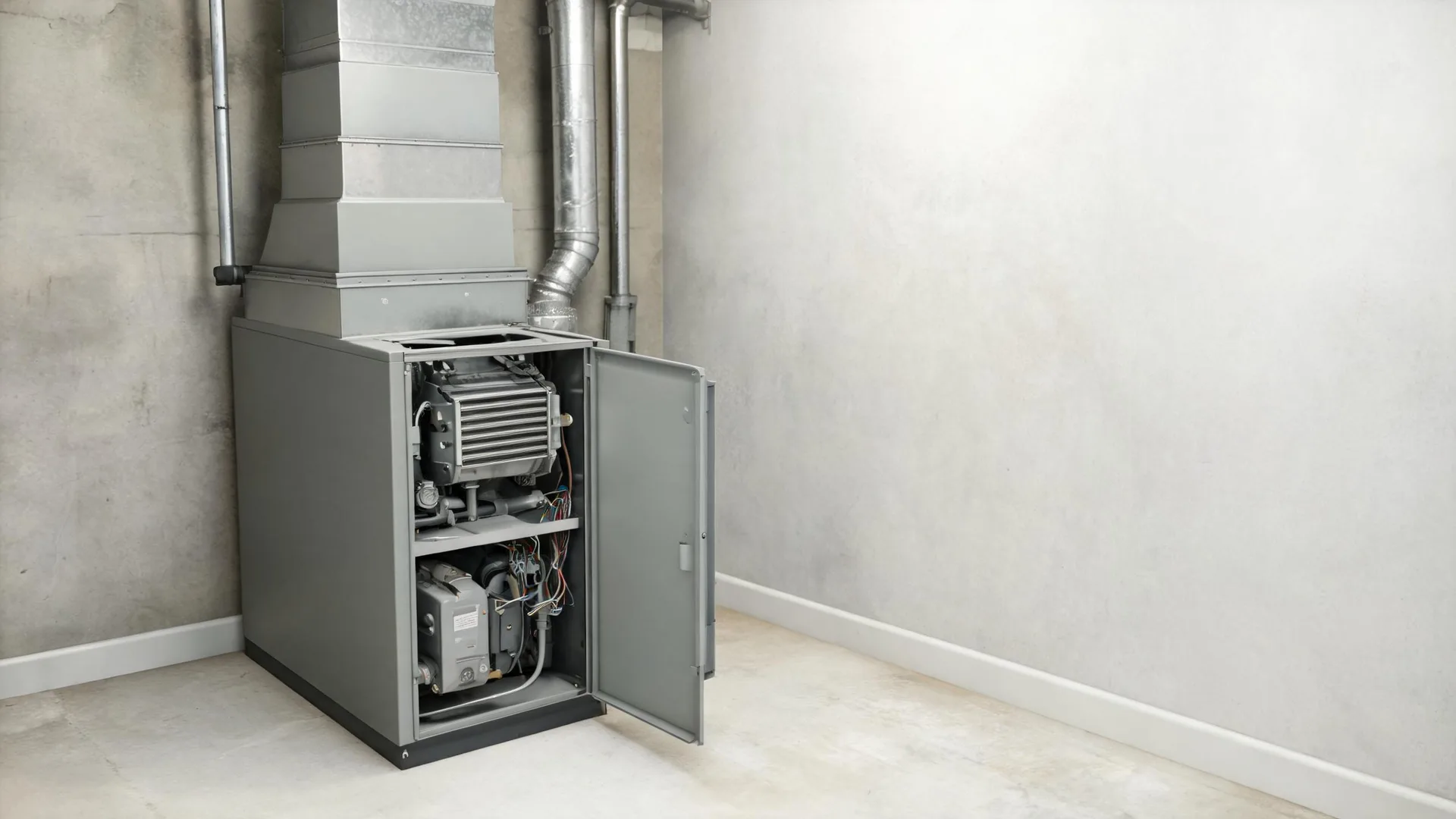
A gray residential gas furnace installed in an unfinished basement, connected to sheet-metal ductwork and PVC pipes.

What actually wears out, and why

Most furnace failures trace back to a handful of parts that do the same job over and over until one day they don't. The igniter is usually first. It heats up and cools down every single cycle, and that repeated stress is what cracks a hot surface igniter or wears out a spark igniter's electrode over time. The flame sensor fouls with a film that builds up cycle after cycle, so the furnace lights, then shuts itself off a few seconds later because it can't confirm the flame is still there. The pressure switch is next. It's a mechanical part that flexes with every cycle, checking that the inducer motor is venting the furnace properly before gas is allowed to flow. Enough cycles and the diaphragm inside it weakens, so it starts reading as open or closed when it shouldn't. The inducer motor itself wears on its bearings the same way any motor does, and a motor that's starting to go often sounds different before it fails outright, a grinding or a whine on startup. Blower motors fail the same way, from simple run time. None of this is about one bad storm or one hard freeze. It's wear that adds up a cycle at a time, and the parts that cycle the most are the parts that go first.

Short cycling means something is cutting the furnace off early

A furnace that fires, runs for less than a minute, then shuts down and starts again isn't resetting itself for no reason. Something is telling it to stop, usually a flame sensor that can't confirm a flame or a limit switch tripping because airflow isn't what it should be. The furnace isn't broken in the sense of refusing to run. It's running and stopping on purpose.
A furnace that won't start at all needs a different kind of attention

No ignition, no blower, nothing when the thermostat calls for heat points somewhere else entirely, often the pressure switch, the igniter itself, or a control board that isn't sending power where it should. This isn't a wait and see problem, since a furnace that won't start at all leaves the house with no backup once the temperature drops.

A furnace that's struggling still gets asked to finish the cycle, and that's usually what turns a small problem into a no-heat call. A cracked igniter that's barely holding on will eventually just break the rest of the way, usually on the cycle you needed it most. A flame sensor caked with film doesn't clean itself by running more. Each cycle adds another layer, until the furnace can't detect a flame at all and shuts itself down for good instead of just stuttering. A pressure switch reading wrong will keep flexing on a weakened diaphragm until it fails to close at all, and then the furnace won't fire no matter how many times it tries. Letting a furnace run through these problems doesn't give them a chance to work themselves out. It just uses up whatever life the failing part had left.

The question isn't always obvious, but there are ways to think it through. A furnace that's failed once from a single worn part, like an igniter or a pressure switch, is usually worth fixing. That part gets replaced, and the rest of the furnace, the heat exchanger, the blower, the cabinet itself, keeps going. It's a different story when the same furnace keeps coming back with a new failure every season, because that's usually not one part wearing out, it's the whole machine reaching the end of its service life at the same time. The heat exchanger matters most here. It's not a part that gets replaced on its own in most cases, since the labor to get at it often costs close to a new furnace anyway. If a contractor finds a crack in it, that's usually the point where repair stops making sense. Age plays into it too, less because of a number and more because parts that have run for many winters are all approaching worn out together, not just the one that failed this time.